
Researchers at the University of Surrey have developed a new smart sensor that can help detect dangerous faults inside lithium-ion batteries and prevent them from escalating into fires or explosions. Lithium-ion batteries are central to the global transition to electric vehicles and renewable energy, but when they fail, the consequences can be severe.
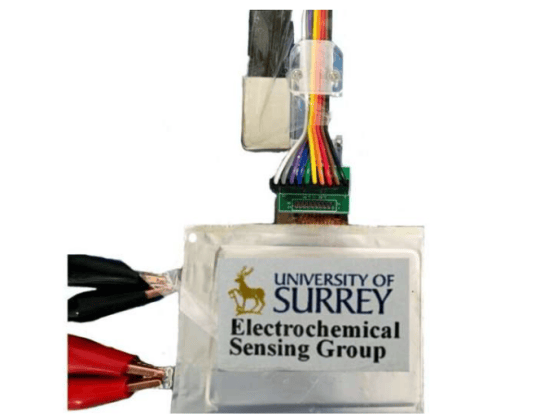
Current sensors located outside the battery react slowly, whereas the advanced sensors developed by the University of Surrey are embedded directly inside the battery. They can monitor temperature, pressure, stress, and chemical changes in real time, providing early warnings and even triggering built-in fire suppression functions.
The technology is scalable, low-cost, and compatible with existing battery manufacturing processes. It is expected to lay the foundation for safer and more reliable electric vehicles, transportation, aviation, and energy storage systems.
Dr. Kai Yang, Lecturer in Energy Materials and Nanotechnology at the University of Surrey's Advanced Technology Institute, said: "Everyone has heard stories of lithium-ion batteries catching fire and being extremely difficult to extinguish. The best way is to prevent fires at the source. This technology has the potential to change the landscape for many critical industries."
The smart sensors are directly integrated into key battery components, such as current collectors and separators, and can quickly and accurately read the internal temperature of the battery. They not only monitor heat but can also actively respond using fire-resistant materials to slow down battery overheating.
Lithium-ion batteries are one of the most expensive components in modern technology. Built-in smart sensors can extend battery life and enable safer recycling of valuable materials, opening up new possibilities for applications in high-risk fields such as aviation, maritime transport, and aerospace.
Professor Ravi Silva, Director of the Advanced Technology Institute at the University of Surrey, said that the UK will ban the sale of new petrol and diesel cars from 2035, but safety concerns — especially the risk of battery fires — remain one of the biggest worries. These battery sensors are crucial for improving safety and sustainability without sacrificing performance. They represent the innovation needed to achieve net-zero goals, supporting industry growth and delivering real benefits to end users.
The University of Surrey has already filed a patent for this technology and is actively seeking collaboration with academic and industry partners. This innovation supports the United Nations Sustainable Development Goal for clean energy and has the potential to create new patents, spin-off companies, and technical jobs, further strengthening the UK's leading position in global battery technology.