
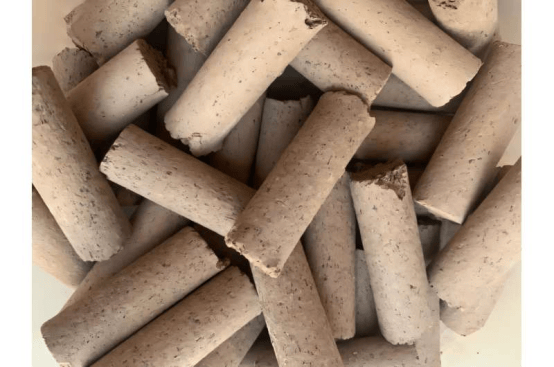
Brazilian researchers have successfully developed a new type of ceramic clay that is lighter than commonly used ceramic clay in civil construction by adding sargassum algae during the manufacturing process.
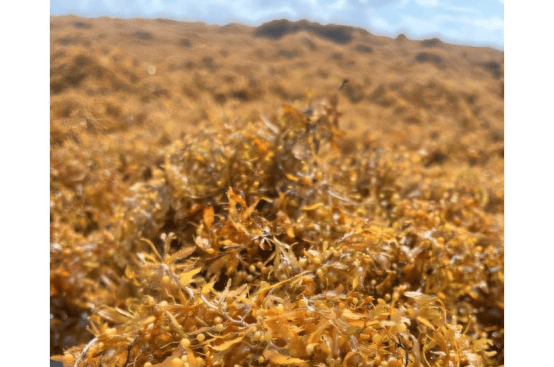
Sargassum, also known as brown algae, is commonly found in the central Atlantic Ocean. However, large quantities are washed ashore on beaches in the Caribbean, the United States, and northern Brazil, causing severe pollution. When accumulated on beaches, the gases released during its decomposition harm human health and damage tourism, fisheries, and local biodiversity.
João Adriano Rossignolo, Professor at the Department of Biosystems Engineering, School of Animal Science and Food Engineering, University of São Paulo (USP), and coordinator of the study, stated that sargassum is usually collected and discarded in landfills with no practical use. Therefore, the research team decided to explore ways to utilize the large amounts of biomass washing up on beaches.
The USP team collaborated with researchers from the Federal University of São Carlos to test the use of algae in manufacturing ceramic clay for applications such as reducing the weight of concrete in construction, improving thermal comfort of panels, and in horticulture. Experimental samples were prepared with 20% and 40% sargassum added, along with a control sample containing 0% sargassum. The samples were formed and sintered in conventional ovens and microwave ovens at temperatures of 800°C, 900°C, and 1,000°C. This process uses heat to compact and solidify the clay.
After the materials were prepared, the researchers conducted multiple tests to evaluate factors such as water absorption rate, porosity, and compressive strength. They also compared the life cycle of traditional expanded clay with different formulations containing sargassum to assess the environmental impact of the product from raw material extraction to final disposal.
The research results were published in the Journal of Building Engineering. The results showed that adding sargassum reduces the apparent density of lightweight ceramic clay aggregates, with the effect being particularly significant at a concentration of 40%. However, only the materials sintered in a microwave oven met the strength requirements at all tested temperatures. In terms of life cycle, the versions containing sargassum demonstrated better environmental performance than traditional expanded clay.
The researchers concluded that lightweight ceramic clay aggregates made from sargassum using microwave sintering represent a viable alternative to mitigate coastal algae damage, reduce natural resource consumption, and improve energy efficiency.
In addition, the team also evaluated the feasibility of using algae to produce particleboards for the furniture and construction industries, as well as fiber-cement bricks, by replacing limestone with sargassum ash. Rossignolo stated that the results were surprising: using 30% sargassum in the panels and replacing 100% of the limestone with its ash fully met current standards and even improved the durability and mechanical properties of the materials.