
The critical role of wind power in the UK's green transition has attracted widespread attention. As a highly debated yet essential energy technology, wind turbines have sparked public opinion divisions, but there is broad consensus that they will play a dominant role in the UK's goal of achieving net zero emissions by 2050.
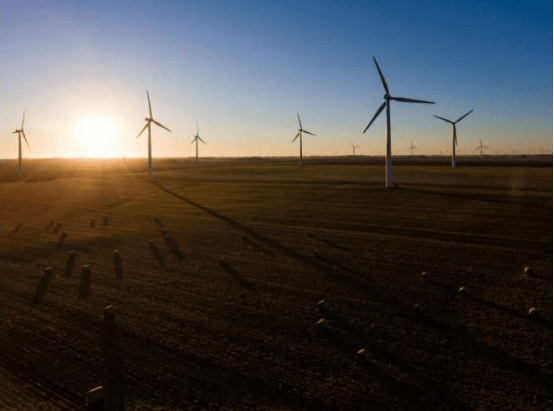
At the policy level, the UK government is actively promoting wind power development. Recently, it approved the construction of one of the world's largest wind farms in Scotland — the Berwick Bank offshore wind farm. The wind farm will feature more than 300 turbines and, once fully operational, will generate 4.1 gigawatts of electricity, enough to power over 6 million households.
From a technical perspective, wind turbines convert the kinetic energy of moving air into mechanical energy, which is then transformed into electricity by a generator. Modern offshore turbines perform exceptionally well, with rotor diameters exceeding 200 meters and tower heights surpassing most skyscrapers. A single turbine can generate enough electricity to supply 15,000 to 20,000 households. Their efficiency approaches the theoretical physical limit (the Betz limit of approximately 59.3%), and the average capacity factor for offshore turbines in the UK North Sea exceeds 40%, while onshore is about 26% — far higher than the UK's average solar capacity factor (10–12%). In terms of energy payback period, most UK wind turbines recover the energy consumed in manufacturing, transportation, and installation within 12 to 24 months, with a service life of 20 to 25 years.
The UK's wind power transition has achieved remarkable results. In 2010, approximately 75% of electricity came from fossil fuels. By 2024, coal had largely exited the power mix, and wind energy has become the largest single source of electricity, contributing about 30%, surpassing natural gas at 26%. Offshore wind power is particularly well-suited to the UK's conditions, with abundant wind resources in the North Sea and relatively shallow waters that facilitate installation. The UK and North Sea coastal countries possess some of the world's top renewable resources. Denmark generated 56% of its energy from wind power in 2024, providing a successful example for the UK.
However, the development of wind power in the UK also faces many challenges. Installing a large number of turbines at high density will transform "wind farms" into "wind power plants," and their widespread impacts are yet to be fully studied. Fluid mechanics research at the University of Oxford is focusing on the interactions between turbines within and between large wind farms, as well as their interactions with wind and the atmosphere, to enable more accurate power generation forecasts.
Addressing the intermittency of wind power is critical, which requires a thorough reform of the national grid and the construction of sufficient energy storage capacity. Maintenance and decommissioning of wind turbines are also challenging. Offshore turbines must withstand harsh marine environments, but advances in drone monitoring, sensor technology, and predictive maintenance have improved reliability and reduced costs. Approximately 85% to 90% of a decommissioned turbine's mass can be recycled, but the blades are difficult to recycle due to their special materials and are currently mostly incinerated or landfilled. The industry is actively exploring innovative alternatives, such as converting blade materials into cement components or using recyclable materials.
To fully realize the potential of wind power, the UK needs to establish a stable and supportive policy framework. The Contracts for Difference (CfD) scheme has been highly effective in reducing costs, but it is still necessary to accelerate grid infrastructure upgrades, invest in port facilities and manufacturing capacity, clarify planning rules, and increase investment in future skilled labor.
The UK has enormous potential in the wind energy sector. The advancement of projects such as Berwick Bank is encouraging, but maintaining development momentum is crucial for achieving the net zero emissions target.