
Electronic devices are undergoing a shift from rigid systems to adaptive platforms. Researchers at Binghamton University are developing "active metal" composites embedded with bacterial endospores, opening a new pathway for dynamic communication and integration between electronic and biological systems. Professor Seokheun "Sean" Choi's team published their findings in the journal Advanced Functional Materials, revealing the potential breakthrough of liquid active metal composites in the field of bioelectronics
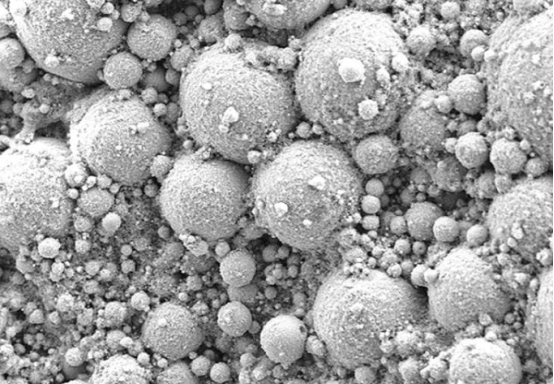
Traditional bioelectronics projects mostly use conductive polymer materials, but integrating liquid metals faces challenges. Their hydrophobicity hinders adhesion to electronic substrates, and exposure easily leads to the formation of an oxide layer, limiting electron flow and disrupting communication between systems. Professor Choi pointed out that polymers are less conductive than metals, and bioelectronic devices are often deployed in harsh environments, requiring self-healing capabilities. Exoelectrogenic bacteria have become key, and he combined liquid metal with dormant endospores of Bacillus subtilis to develop a new type of composite material
"The chemical functional groups on the spore surface interact with the oxide layer of the liquid metal, generating strong attraction, breaking the oxide layer, and restoring the metal's conductivity," Professor Choi explained. This composite material can be easily absorbed by substrates such as paper while maintaining the excellent properties of metal, and its conductivity increases after spore germination. More importantly, the material exhibits self-healing capability, autonomously filling gaps when damaged, providing a solution for situations where damaged circuits are difficult to replace.
Currently, further experiments are needed to control endospore activation and evaluate long-term stability. In the future, such materials are expected to enable wearable or implantable devices to safely connect directly with human tissues, solving communication errors between electronic and biological systems. "Exoelectrogenic bacteria can be seamlessly integrated into living electrodes to connect the two systems," Professor Choi said.