
A recent study published in Nature Catalysis reports a novel system that efficiently captures carbon dioxide from seawater and converts it into precursor materials for biodegradable plastics. The technology, developed by the Shakawa team, offers a sustainable pathway for utilizing marine carbon resources.
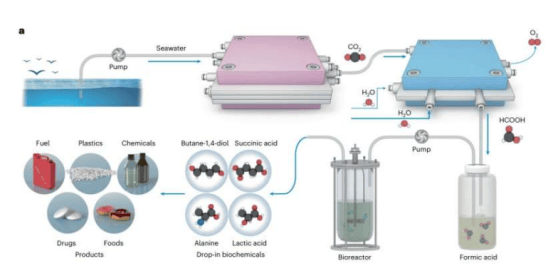
The ocean absorbs about one-quarter of anthropogenic carbon dioxide emissions each year, helping mitigate climate change while also contributing to ocean acidification. The study designs an integrated process combining electrochemical catalysis and microbial conversion, enabling the resource utilization of dissolved carbon dioxide in seawater. The team stated: "The system can capture carbon dioxide directly from natural seawater with an efficiency exceeding 70%."
The carbon capture stage of the system consumes approximately 3kWh of energy per kilogram of carbon dioxide and can operate continuously for over 500 hours. Cost estimates suggest a capture cost of around 230 USD per ton, making it competitive with existing technologies. The captured carbon dioxide is first electrochemically converted into formic acid, which is then further transformed by engineered Halomonas bacteria into succinic acid, a key precursor for biodegradable plastic production.
In bioreactor-scale experiments, the microbial conversion stage achieved a succinic acid yield of 1.37g per liter. This integrated system demonstrates the potential of converting marine carbon resources into high-value chemicals. Researchers noted that, by optimizing catalysts and microbial strains, the platform could be expanded to produce fuels, pharmaceuticals, and other products.