
An international research team has gained new insights into the role of thermal tides in Venus's atmospheric superrotation by analyzing data from Venus spacecraft missions. The study finds that the solar-driven diurnal tide contributes more to sustaining Venus's extreme winds than previously expected. The research is based on observational data collected between 2006 and 2022 by the European Venus Express and Japan's Akatsuki spacecraft.
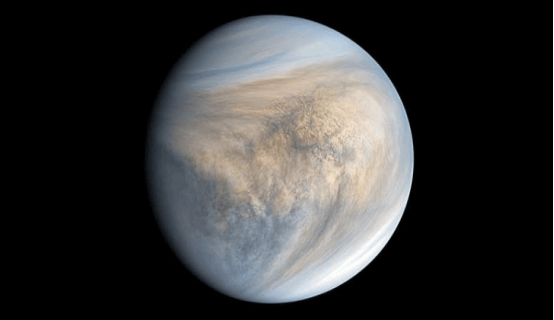
Researchers analyzed changes in radio wave propagation through Venus's atmosphere and combined these observations with numerical simulations. The study focuses on the role of thermal tides in maintaining atmospheric superrotation and finds that the diurnal tide in the southern hemisphere plays a major role in transporting momentum toward the cloud tops. Venus has a rotation period of 243 Earth days, while its atmosphere completes a full circumnavigation in just about four Earth days, making this superrotation characteristic of rocky planets with slow rotation rates and proximity to their host stars.
This study is the first to systematically analyze the spatial distribution of thermal tides in Venus's southern hemisphere. Earlier research suggested that semidiurnal tides were the primary driver of superrotation, but new evidence indicates that diurnal tides have a more significant influence on the formation of Venus's fast wind system. Researchers note that this finding provides a new perspective on Venus's extreme atmospheric dynamics, though further work is needed to clarify the detailed mechanisms of tidal forcing.
By deepening the understanding of Venus's atmospheric superrotation, scientists can better explain meteorological behavior on slowly rotating planets. The findings have been published in the journal AGU Advances.