
Researchers have successfully addressed a major challenge in immunology using artificial intelligence, achieving highly accurate prediction of T cell recognition of peptide antigens. The team developed a novel modeling approach for T cell receptor (TCR)–peptide/major histocompatibility complex (pMHC) interactions based on the AlphaFold 3 AI model, originally designed for protein structure prediction, significantly improving predictive accuracy. The findings have been published in Frontiers in Immunology.
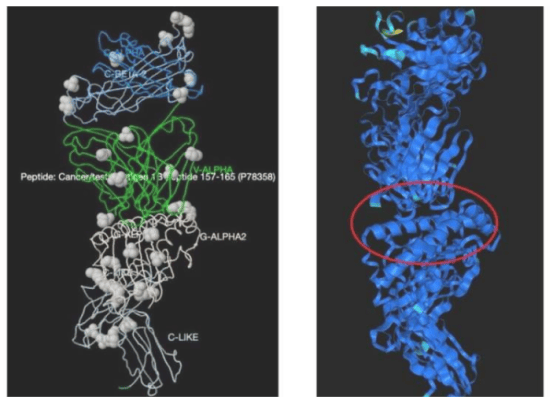
T cells play a dual role in the human immune system: they can eliminate tumor cells and infected cells, but may also attack healthy tissues and trigger autoimmune diseases. The balance of these functions depends on the TCR–pMHC recognition process, which determines whether T cells initiate protective or autoimmune responses. Existing predictive models in this field still face limitations in both accuracy and applicability.
Lead researcher Dr. Jiang Chongming stated: "Inspired by advances in AI-driven structural biology, we evaluated whether AlphaFold could predict how T cells recognize epitopes. The results show that the model can effectively distinguish between immunogenic and non-immunogenic epitopes, enabling reliable high-throughput prediction of T cell responses."
The research team confirmed that AlphaFold-based computational modeling can simulate and identify immunogenic epitopes suitable as vaccine targets. Beyond preventive applications, the approach can also be used to design T cells with higher affinity and specificity, potentially improving the safety and efficacy of T cell therapies for cancer, infectious diseases, and autoimmune disorders.
Chief Scientific Officer Dr. Shen Xiling of the Terasaki Institute added: "Accurate predictive models of TCR–pMHC interactions may fundamentally transform immunotherapy and vaccine development. This represents a key step toward precision medicine that harnesses the immune system to combat disease."
Researchers note that although further validation is required before widespread clinical application, current results demonstrate the potential of deep learning-based structural modeling as a general predictive approach for TCR–pMHC interactions. This breakthrough highlights the potential of AI methods to accelerate drug discovery and immunotherapy design, laying the foundation for safer and more effective treatments.