
In the past, coal mine safety monitoring was often plagued by data jumps and false alarms, rendering the "electronic sentinel" sometimes ineffective and eroding trust in mine safety management. Now, a fundamental solution has finally emerged for this industry pain point that has persisted for decades — an intrinsically safe surrounding rock displacement sensor for mines, which abandons the traditional potentiometer structure and is based on linear motion and digital magnetic sensing technology, has been granted an invention patent by the China National Intellectual Property Administration, heralding a new era of intelligent warning.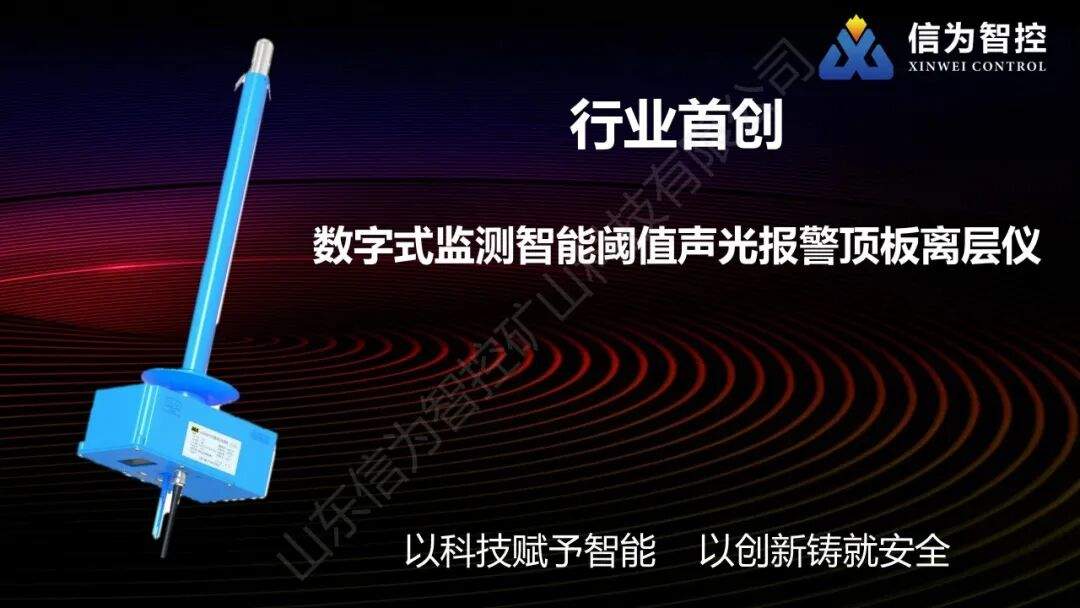
Long-Standing Pain Point in Mine Safety Monitoring
Roof fall accidents in coal and non-coal mine roadways are one of the "top killers" in mining operations. To prevent roof falls, mines widely deploy surrounding rock displacement sensors (commonly known as "roof separation indicators") to monitor rock layer displacement in real-time and issue alerts when displacement exceeds safety thresholds. However, traditional sensors suffer from high failure rates in harsh underground environments with high humidity and dust.
For a long time, mine monitoring equipment, due to physical defects such as aging core components and poor contact, has frequently caused data jumps and false alarms. This has not only led to a crisis of confidence among frontline engineering and technical personnel regarding automated monitoring systems but may also result in real safety risks being artificially "masked," laying the groundwork for serious safety hazards.
Intelligent Surrounding Rock Displacement Sensor Based on Magnetic Sensing Principles
Addressing these pain points, Shandong Xinweizhikong Mining Technology Co., Ltd. filed an invention patent application on November 17, 2025, titled "Method and System for Using an Integrated Magnetic Sensing Intelligent Alarm Surrounding Rock Displacement Sensor," which was published and granted on January 9, 2026 (Publication No. CN121296209A), bringing a thorough "electronic revolution" to roof safety monitoring.
Abolishing the "Minefield" — Replacing Traditional Potentiometers with Digitalization
Traditional roof separation indicators commonly use sliding potentiometers as the core measuring element. In the dusty, humid, and vibrating environment of coal mines, potentiometers are prone to wear and oxidation, leading to unstable resistance values—the direct source of data jumps. The core breakthrough of this invention patent lies in completely abandoning this unstable mechanical contact structure and adopting linear motion and digital sensing technology. This patent, named "Integrated Magnetic Sensing Intelligent Alarm Surrounding Rock Displacement Sensor," achieves real-time, precise monitoring of surrounding rock displacement by applying integrated magnetic sensing and chip technology inside the sensor. By entirely eliminating physical wear components, the design fundamentally prevents data anomalies caused by component aging, achieving a leap in the authenticity of monitoring data.
Decision-Making at the Edge — Embedding the "Brain" into the Sensor
Traditional roof monitoring systems often upload all data to a surface control center for centralized analysis. Once the network is interrupted or a server fails, monitoring ceases to function. This patent implements a groundbreaking "edge computing" concept, highly integrating data collection, display, and intelligent alarm functions within an intrinsically safe sensor. This means the sensor is no longer just a cold data collector but a micro-"safety officer" in itself. When monitoring detects roof displacement exceeding preset safety thresholds, the sensor can independently trigger an audible and visual alarm device, issuing a strong audiovisual alert underground at the first opportunity, buying precious time for personnel evacuation.
Fully Wireless Interconnection — Building an Intelligent Safety Network
The device deeply integrates LoRa and 2.4G, two mainstream wireless transmission technologies for industrial IoT, and can easily integrate into the overall digital mine architecture. The sensor transmits validated displacement data in real-time via the wireless network to the surface dispatch center. Furthermore, the equipment boasts IP68, the highest protection rating, ensuring long-term stable operation in complex roof water seepage and high-humidity environments, achieving dual safety assurance of "real data + advanced warning."
Building an Intelligent, Unmanned "Transparent Geology" Assurance System
1. Empowering Smart Mine Construction, Promoting "Machines Replacing Humans"
The mature application of this technology will enable genuinely unattended roof safety management in underground mining and excavation faces. The device's built-in installation error self-check function ensures deployment reliability. With the proliferation of these intelligent sensing nodes, geological assurance systems will gradually shift from "manual inspections" to "round-the-clock intelligent sensing," accelerating the overall digital and intelligent transformation of mines.
2. Establishing Precise Data-Driven Decision-Making Mechanisms
High-precision, authentic displacement data is the cornerstone for building a mine digital twin system. This system provides reliable real-time input data for geomechanical analysis and roof weighting prediction models, changing the passive situation of decision-making deviations caused by data distortion, making mine pressure analysis and disaster warnings more accurate.
3. Breaking Information Silos, Enhancing Emergency Rescue Efficiency
When an alarm is triggered, the system not only responds locally but also integrates the warning information with the underground personnel precise positioning system to rapidly lock down dangerous areas. The surface command center can grasp the hazardous situation instantly and issue evacuation orders, effectively reducing the risk of casualties during a disaster.
Redefining Mine Safety Sensing Standards
The breakthrough of this "Integrated Magnetic Sensing Intelligent Alarm Surrounding Rock Displacement Sensor" patent technology is no less significant than replacing the "pacemaker" for the mine safety monitoring system. It fundamentally ends the era of relying on mechanical contact measurement from a physical principle standpoint, establishing a new generation of sensing standards centered on purely digital, wear-free magnetic sensing.
When the sensor truly becomes a trustworthy "sentinel," when every millimeter of displacement is faithfully reflected, and every alarm originates from a real danger, then and only then can smart mines truly build a reliable safety defense line.