
Green hydrogen-based steelmaking not only implies low carbon emissions but also holds the potential to become a "flexible energy storage unit" for future power systems with high proportions of renewable energy. A research team led by Professor Lin Cheng from Tsinghua University has, for the first time, established a coupled system architecture for a hydrogen-based direct reduced iron-electric arc furnace zero-carbon steel plant and methanol production, and developed a process-aware demand response scheduling model, providing a theoretical foundation for cross-industry coordination among "steel, power, and chemicals." 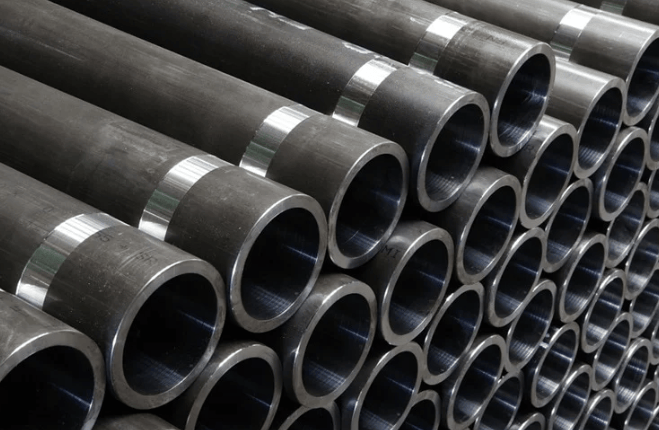
Facing the challenges of global carbon neutrality goals and the flexibility shortage in power systems due to the high penetration of renewable energy, the traditional rigid steel production model urgently needs a transition towards intelligent flexibility.
This research was led by Professor Lin Cheng's team from Tsinghua University, in collaboration with scholars from multiple research directions including the Department of Electrical Engineering and the Energy Internet Innovation Institute.
Core team members include: Qiang Ji, Lin Cheng, Yue Zhou, Ning Qi, Kaidi Huang, Jianzhong Wu, and Ming Cheng, all of whom are researchers from relevant Tsinghua University departments.
Professor Lin Cheng is a professor and doctoral supervisor in the Department of Electrical Engineering at Tsinghua University. His long-term research focuses on power system planning and reliability, energy internet, and the integration and consumption of new energy sources. He possesses deep academic expertise and engineering experience in the intersection of efficient renewable energy utilization and industrial green transformation. Dr. Qiang Ji is the first author of this paper.
System Architecture: First Establishment of a Zero-Carbon Steel Plant-Methanol Coupling Model
The research team, for the first time, established the system architecture for a hydrogen-based direct reduced iron-electric arc furnace zero-carbon steel plant coupled with methanol production (H₂-DRI-EAF-MeOH), clearly characterizing the energy-material flow coupling relationships between electricity, hydrogen, heat, iron, steel, carbon dioxide, and methanol.
To accurately capture the operating constraints of the electric arc furnace while maintaining optimization solvability, the team developed an operational feasible region model, validated using on-site data from a pure hydrogen direct reduced iron-electric arc furnace plant, achieving an average relative error of only 4.1%.
Core Performance: 275.4 MW Peak Shaving Capacity, 17.78% Reduction in Operating Costs
Case studies demonstrate that under a real-time electricity pricing scenario, the zero-carbon steel plant system achieves an average demand response capacity of 275.4 MW, improves the renewable energy-load matching index from 0.262 to 0.508, and reduces total operating costs by 17.78% compared to the baseline scheduling scheme.
The related research was published in Applied Energy (2026 Issue 4), an internationally authoritative journal in the energy field, and the paper was selected as one of the highlighted achievements of the issue.
Industrial Value: Steel Industry Transitioning from "Rigid Load" to "Flexible Grid Regulator"
This technological breakthrough signifies that a zero-carbon steel plant is no longer a passive consumer of the power system but an active flexible regulation resource. Through the synergistic coupling of hydrogen-based steelmaking and methanol production, the steel plant can utilize surplus renewable electricity to produce green hydrogen and methanol, and reduce electricity consumption when the grid experiences power shortages, providing valuable flexibility for power systems with a high proportion of renewable energy. This research provides a theoretical basis for cross-industry coordination among "renewable energy, steel, and chemicals."
This research received funding support from the Simons Foundation and other institutions.