
A study led by PhD student Xiao Lu from the University of Adelaide in Australia, recently published in Chem Catalysis, explores a method of using solar energy systems to convert waste plastics into hydrogen, syngas, and other industrial chemicals. The research aims to promote a sustainable circular economy by giving new value to discarded plastics.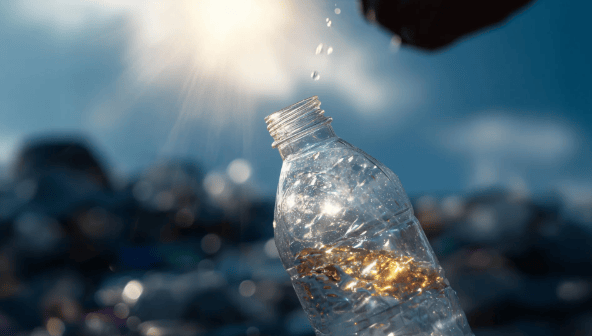
Global annual plastic production exceeds 460 million tonnes, causing significant environmental pollution. Meanwhile, the demand for clean energy is growing steadily. This study views plastics as a resource rich in hydrocarbons. Xiao Lu stated: "Plastics are often seen as a major environmental problem, but they also represent a huge opportunity. If we can use sunlight to convert waste plastics into clean fuels, we can address both pollution and energy challenges simultaneously."
The method, called solar-driven photoreforming, uses photocatalysts to break down plastics at relatively low temperatures, generating hydrogen and other chemicals. Compared to traditional water splitting for hydrogen production, this method offers higher energy efficiency because plastics are more easily oxidized, require less energy, and have greater potential for scaling up.
Professor Xiaoguang Duan from the University of Adelaide noted that the experiments achieved high levels of hydrogen production, along with the generation of acetic acid and diesel-range hydrocarbons. Some systems operated continuously for over 100 hours with good stability. However, scaling up the technology still faces challenges: the composition of plastic waste is complex, different plastics exhibit varying conversion performance, and additives can interfere with the process, requiring effective sorting and pretreatment; photocatalysts need high selectivity and durability, as current versions are prone to degradation; and product separation requires energy-intensive processes. The team is working on improving catalyst design, reactor engineering, and system optimization, including continuous flow reactors and multi-energy coupled systems. The future goal is to enhance energy efficiency and achieve continuous industrial operation.
Xiao Lu said: "This is an exciting field. Through continuous innovation, solar-driven plastic-to-fuel technology can play a key role in building a low-carbon future."
Publication Details: Authors: Xiao Lu, Wenjie Tian, Xiaoguang Duan (University of Adelaide); Title: 《Scientists turn plastic waste into clean hydrogen fuel using sunlight》; Published in: 《Chem Catalysis》(2026); Journal Information: Chem Catalysis