
As the global shipping industry accelerates its green transformation and faces an increasingly complex operational environment, the maintenance model for core ship equipment is undergoing a quiet revolution. Recently, Accelleron, a global leader in turbocharging systems, officially announced the full market launch of its new low-speed engine turbocharger designed for marine two-stroke engines—the ACCX300-L. The introduction of this product aims to break the rigid constraints of traditional dry-docking cycles, using the new concepts of "data-driven" and "exchangeable maintenance" to help shipowners calmly address the multiple challenges of the decarbonization era.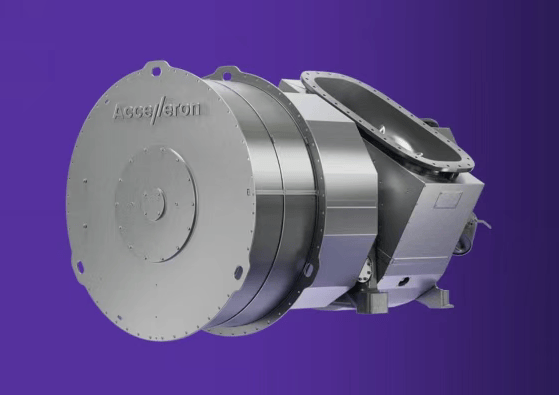
Faced with increasingly stringent emission regulations and the uncertainty of new fuel pathways, modern shipowners urgently need more flexible operational solutions. The original design intent of the ACCX300-L was not merely a hardware upgrade, but to reconstruct a system platform that combines flexibility and long-term effectiveness from a full lifecycle perspective.
Under the traditional model, heavy equipment maintenance is highly dependent on dry-dock schedules, often leading to passive constraints on operational scheduling. The core breakthrough of the ACCX300-L lies in the introduction of the innovative "Cartridge" concept. This design allows the crew to directly replace the rotor assembly during port stays, fundamentally changing the previous operational logic that required dry-docking for overhauls. Data shows that over a ship's 25-year lifecycle, this solution can optimize the number of planned maintenance events from four to three. This not only significantly reduces the risk of prolonged downtime but also achieves significant optimization of total lifecycle costs through precise, on-demand maintenance.
In terms of product architecture, the ACCX300-L has been extremely streamlined, retaining only two core models. This strategy greatly simplifies spare parts logistics and inventory management for fleets, while providing a high degree of configuration freedom: the two models can be installed independently or combined in a "twin" configuration, easily covering the engine requirements of different power ranges. Particularly against the current backdrop of widespread slow steaming in the shipping industry, the automatic cut-in/cut-out function of its "twin" configuration performs excellently—when the engine load falls below a threshold, one turbocharger automatically shuts down, ensuring the other always operates in its optimal efficiency range. This effectively reduces low-load fuel consumption throughout the year, achieving cost reduction and emission cuts.
Furthermore, the ACCX300-L has powerful built-in connectivity genes. Combined with Accelleron's Turbo Insights function, shipowners can utilize existing onboard data signals such as speed and temperature to obtain real-time health insights into the turbocharger. Paired with maintenance agreements like Turbo MarineCare, equipment management will truly move from "experience-based judgment" to "data-driven decision-making," greatly enhancing cost control and planning predictability.
Christoph Rofka, President of Accelleron's Medium and Low Speed Engines division, stated: "The ACCX300-L is more than a technological evolution; it is a reimagining of the turbocharging concept around the real operational challenges faced by today's shipowners and operators. By combining next-generation turbocharging technology, a new 'exchangeable' maintenance concept, data connectivity capabilities, and a streamlined product series, we give our customers greater initiative in asset allocation, equipment maintenance, and operations. In the current environment of continuous market volatility, this powerful adaptability is no less important than performance itself."
It is reported that since its initial launch in 2023, the ACCX300-L has successfully passed all qualification certification tests and is now officially available for supply to the global market. For the shipping industry at the crossroads of energy transition, this technological solution, which balances immediate benefits with long-term compliance, will undoubtedly become a solid shield for sustainable ship development.
Editor's Note: As "decarbonization" becomes a mandatory question for the shipping industry, the role of equipment suppliers is also quietly changing, shifting from mere hardware providers to co-creators of full lifecycle solutions. The value of Accelleron's ACCX300-L lies not only in the more efficient turbocharger itself but also in its breaking of the physical boundaries of dry-dock maintenance, redefining the maintenance rhythm with data. In an uncertain market environment, the ability to autonomously control time and pace is itself a highly competitive "green asset."