
When a super-large diameter shield machine, measuring 12 meters, tunnels deep underground, even a posture deviation of just a few millimeters can trigger segment misalignment, ground settlement, or even breakthrough accidents. How can this cumbersome steel behemoth be made to travel "perfectly" along the design axis? When data, algorithms, and physical equipment achieve deep coupling between the virtual and real worlds, the intelligent construction of shield tunnels has finally entered a new era of "global optimization."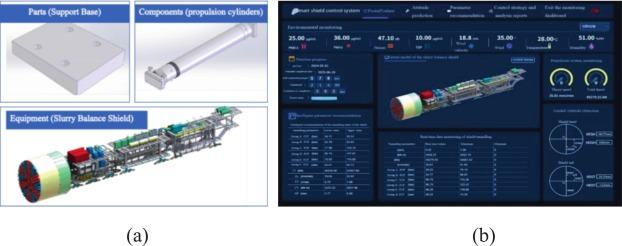
Moving Beyond the "Local Optimum" Trap: Why Are Existing Optimization Methods Insufficient?
In shield tunnel construction, complex nonlinear coupling relationships exist among over a dozen variables, such as thrust, cutterhead torque, and advance speed. Traditional parameter adjustments based on manual experience often lead to trade-offs—optimizing advance speed might cause posture deviation; resolving posture deviation might introduce new engineering risks.
Associate Professor Chen Ke's research group at Huazhong University of Science and Technology identified a core problem in their study: existing optimization methods based on statistical analysis and numerical simulation either struggle to capture nonlinear interactions under geologically heterogeneous conditions or incur excessively high computational costs. Furthermore, in deep learning, algorithms frequently get trapped in "local optima"—meaning the so-called "best solution" found by the algorithm is only optimal within a narrow range, not in a global sense.
Faced with this industry pain point, the research team proposed a bold idea: rather than letting the algorithm grope in the dark, first let a "digital twin" of the shield machine in the virtual world explore all possibilities.
A Three-Layer Architecture Unlocks the Full Chain from Data to Decision-Making
The research team broke through the technical ceiling of traditional methods by introducing an integrated solution of "layered architecture + explainable AI + hybrid optimization."
Layered Digital Twin Architecture—Rehearsing Every Cut in the Virtual World
This framework integrates data acquisition, preprocessing, modeling, and optimization into a unified four-layer architecture, where each module performs its specific function and links in real-time. The data layer is responsible for cleaning and structuring the massive tunneling parameters and geological information acquired by the on-site sensor system; the model layer builds a high-fidelity digital twin model based on historical data, mapping the multi-scenario responses of the physical shield machine and soil mass; the optimization layer undertakes the core computational tasks; the feedback layer dynamically transmits the optimization results back to the physical equipment, guiding actual construction adjustments.
The full-parameter optimization strategy means the framework is not limited to adjusting local parameters but incorporates all variables—thrust, torque, speed, etc.—into a unified optimization model. It performs a global search within the virtual space of the digital twin to find the optimal solution that transcends local traps.
SHAP Explainable AI—Providing a "Trustworthy Calculator" for Decision-Making
Although the predictive capability of the digital twin framework is strong, how can on-site engineers be convinced of its conclusions? The research team introduced the SHAP (Shapley Additive Explanations) explainability method. By quantifying the marginal contribution of each construction parameter to the prediction results, it accurately identifies the key control parameters that have the greatest impact on shield posture.
This "explainable AI" framework transforms the tuning of shield parameters from an algorithmic black box into a traceable, verifiable, and transparent engineering decision-making tool.
ABC-NSGA-III Hybrid Optimization Algorithm—Finding the Global Optimum Faster
This is the core engine of the entire framework. The research team organically coupled the Artificial Bee Colony (ABC) algorithm with the third-generation Non-dominated Sorting Genetic Algorithm (NSGA-III):
Artificial Bee Colony (ABC): Responsible for quickly locating the feasible solution space, avoiding entrapment in local optima;
Third-generation Non-dominated Sorting Genetic Algorithm (NSGA-III): Conducts a high-dimensional Pareto front search globally, finding a set of non-dominated Pareto optimal solutions among multiple conflicting objectives (such as posture deviation, advance speed, and energy consumption).
ABC handles wide-area "pathfinding," while NSGA-III performs fine "computation." Their synergy ensures both convergence speed and solution set quality, representing an algorithmic synergy effect where 1+1>2.
Shanghai Airport Link Line Delivers Results, Global Optimization Rate Exceeds 32%
The framework underwent complete validation based on the Shanghai Airport Link Line project. This project is located in a complex underground geological zone between Pudong New Area and the Hongqiao Hub, placing extremely high demands on shield posture control.
After comparing various optimization schemes, the study found that "full-parameter optimization" achieved the best performance, with an overall optimization rate reaching 32.02%. In comparative analyses involving multiple objectives, this framework significantly outperformed existing benchmark methods in both convergence speed and solution quality, reducing shield posture deviation by 2.21% to 17.13%. The full-parameter optimization strategy enables the framework to simultaneously capture the synergistic effects of multiple variables, resolving the industry-wide chronic issue of trade-offs.
This achievement has been applied in the actual construction of the Shanghai Airport Link Line. The new generation cloud-edge-device intelligent tunneling system has realized a normal mode of "attended, unmanned operation," increasing comprehensive tunneling efficiency by 33%.
From Engineering Demonstration to Industry-Wide Promotion
1. Large-Diameter Shield Tunneling in Rail Transit
With the large-scale construction of the "Eight Vertical and Eight Horizontal" high-speed rail network and metropolitan intercity railways, the application of super-large diameter shields over 10 meters is becoming increasingly widespread. This framework is already poised for deployment in major projects such as the Pearl River Estuary Tunnel on the Shenzhen-Jiangmen Railway and the Jintang Waterway Tunnel on the Ningbo-Zhoushan Railway.
2. Urban Utility Tunnels and Underground Engineering
In medium-sized shield tunneling and pipe jacking scenarios, this framework can be moderately simplified to provide precise parameter adjustment solutions for urban utility tunnels, underground parking lots, and mined subway stations, significantly reducing construction risks and enhancing project quality.
3. Transferability to Similar Construction Scenarios
The ABC-NSGA-III hybrid optimization algorithm possesses strong industry transferability—from TBM tunnel boring to mining method tunnel construction, from cross-sea immersed tube tunnels to deep geological repositories for nuclear waste, any field involving multi-variable, multi-objective optimization stands to benefit.
4. Closed Loop of Industry-Academia-Research in Shield Intelligent Construction
With the accumulation of engineering practice experience and the continuous iteration of new optimization algorithms, this framework is evolving towards a "real-time closed-loop control" stage. In the future, the digital twin framework will also integrate federated learning and multi-source heterogeneous information perception technologies, enabling cross-project knowledge transfer and collaborative optimization while protecting data privacy.
Transforming Tunneling from a "Black Box Project" to a "Transparent Project"
For a long time, underground engineering has been regarded as an invisible and intangible "black box"—geologically complex, with numerous variables, where risk prediction relies entirely on experience. The true value of this breakthrough by Huazhong University of Science and Technology lies in shifting shield construction decision-making from "empirical intuition" to "data intelligence + algorithm-driven."
The research paper explicitly states in its introduction: the control of shield tunneling remains inherently complex, and inappropriate parameter settings can lead to shield posture deviation, subsequently causing trajectory misalignment, segment displacement, or even structural damage. Through the organic integration of SHAP explainability analysis, the ABC-NSGA-III hybrid optimization, and the layered digital twin, the researchers not only broke through the "local optimum" bottleneck at the algorithmic level but also validated the practical feasibility of a "global 32.02% optimization rate" through engineering practice.
This also signifies that the construction management of shield tunnels has advanced from a "manual-centric" phase into a high-level intelligent stage dominated by "data and algorithms."