
In May 2026, on a brand-new production line at the ironmaking plant of Tianjin Iron Works in China, the low-temperature waste gas at 200-300°C discharged from the sinter annular cooler was not vented into the atmosphere as usual. Instead, it was drawn into a vertical drying system, dehydrating high-moisture lump ore to the optimal charging state—the entire process consumes not a single cubic meter of blast furnace gas and burns not a drop of fuel. The commissioning of this system has successfully overcome two major technical challenges in the steel industry: the resource utilization of low-temperature sinter waste gas and the low-cost, high-efficiency drying of lump ore.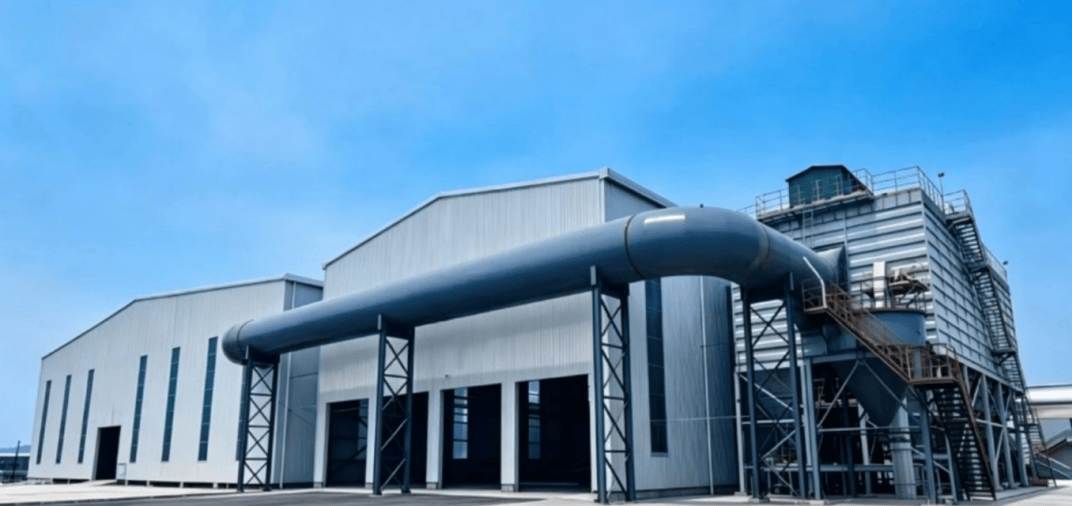
One Steel Plant, Two Persistent Dilemmas
The pre-ironmaking processes—sintering, pelletizing, and ironmaking—consume nearly 70% of the energy in the entire steel production flow and contribute over 90% of pollutant emissions. Among these, two contradictions have long remained unresolved:
Low-temperature sinter waste gas has "nowhere to be used." When the sinter annular cooler cools the sintered ore, it generates a large amount of low-temperature flue gas at 160-300°C. This temperature range is awkward—too low for efficient power generation and not cost-effective for heating gas. The vast majority of steel enterprises can only dedust and then directly vent it or produce low-quality steam. This waste gas, carrying enormous heat, is referred to in the industry as "wasted treasure," with the annual heat loss equivalent to millions of tons of standard coal.
Lump ore suffers from "the drawbacks of moisture and the difficulty of removing fines." Lump ore is the most economical raw material for blast furnace ironmaking—it does not require high-temperature agglomeration like sinter or pellets, and its price per ton is about 100 yuan lower than clinker. However, the moisture content of lump ore often reaches as high as 8%-12%, and the fines in wet lump ore are very difficult to screen out. When wet lump ore is charged into the furnace, moisture evaporation "steals" a large amount of heat from the blast furnace, and the fines worsen the permeability of the burden column, leading to an increased fuel rate and frequent hanging and slipping. Consequently, many steel enterprises have to control the lump ore ratio at a low level of 10%-15%, failing to fully realize its cost advantage.
On one hand, large quantities of low-temperature waste heat are being wasted; on the other, a highly cost-effective raw material cannot be used more due to excessive moisture—using the former to solve the latter represents a perfect "carbon reduction + cost reduction" win-win path.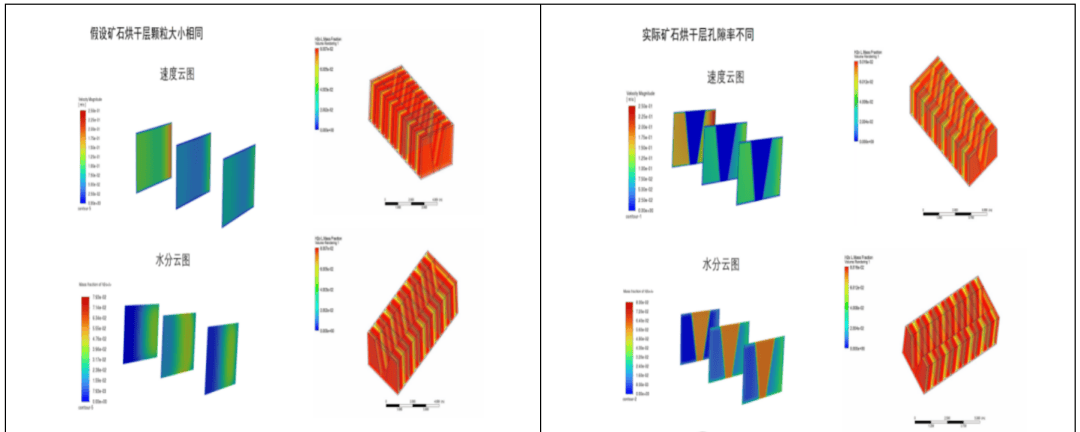
China's First "Low-Temperature Vertical Drying" Technology
After several years of collaborative industry-university-research efforts, Puyang Dalong Industrial Group Co., Ltd. and the School of Metallurgical and Ecological Engineering at the University of Science and Technology Beijing jointly developed a technical solution completely different from traditional approaches. Constructed by Chongqing Yanlong Energy Conservation and Environmental Protection Technology Co., Ltd., the engineering implementation was completed at the ironmaking plant of Tianjin Iron Works Co., Ltd.
Innovation 1: Not a Single Cubic Meter of Gas Burned, All Using "Waste Heat"
Traditional lump ore drying commonly uses a rotary kiln with gas combustion at high temperatures of 600-800°C. This not only consumes large amounts of blast furnace gas but also requires supporting desulfurization and denitrification facilities, with processing costs reaching about 15 yuan per ton of lump ore.
The R&D team took a different approach, actively reducing the drying temperature from over 600°C to a low-temperature range of 150-350°C. This adjustment seems simple but represents a fundamental shift in core logic—drying is merely a means, while screening is the goal. The greatest harm of lump ore to the blast furnace is not the moisture itself, but the high fines ratio caused by inadequate screening due to moisture. As long as the moisture content of lump ore is reduced from 8%-12% to below 3%, efficient screening can be achieved, controlling fines below 5mm to within 5%, fully meeting blast furnace requirements. There is no need to pursue "extreme drying"—this means a lower-grade heat source can be used. Based on this breakthrough in principle, the R&D team boldly adopted the 200°C-300°C low-temperature waste gas from the sinter annular cooler as the sole heat source, completely eliminating dependence on fossil fuels and gas.
Innovation 2: Vertical Drying, a Technical Breakthrough for Drying Agglomerated Materials
In terms of equipment form, the team moved beyond the horizontal rotary kiln commonly used in the industry and developed a vertical drying furnace specifically for agglomerate drying, successfully obtaining national patent authorization.
Vertical drying adopts a counter-current heat exchange structure where "material enters from the top and exits from the bottom, hot gas enters and exits from the sides": lump ore is fed from the top of the furnace, slowly descending by gravity without any mechanical rotating parts; hot air is evenly fed from multiple points on the side of the furnace body, creating cross-flow penetrating heat exchange with the lump ore; a patented structure is arranged inside the furnace to extend the contact path between hot air and material, significantly improving thermal efficiency.
The advantages of this design are obvious:
Small footprint, only 1/3 of a rotary kiln;
Almost no moving parts, enabling long-term maintenance-free operation of the furnace body;
Extremely low material wear, avoiding secondary degradation of lump ore during the drying process;
Thermal efficiency exceeding 85%, with exhaust gas emission temperature below 80°C.
Innovation 3: Deep Coupling with "Zero Interference" to the Existing Site
In the implementation of the Tiantie project, the R&D team achieved seamless integration with the existing pre-ironmaking system:
The gas extraction point is directly selected in the low-temperature section of the annular cooler, with the site chosen to minimize flue gas transport distance and reduce temperature drop;
The drying exhaust gas is dedusted and discharged in compliance with standards, adding no extra environmental burden;
The finished lump ore can be directly transported to the blast furnace ore bin, without changing the original charging process.
This "low intervention, high integration" design concept allowed the new system to be quickly commissioned without halting production or modifying the main process flow.
Triple Carbon Reduction: One Project, Three Major Environmental Benefits
According to preliminary data estimates from the project's trial production phase, the environmental benefits of this system are extremely significant:
First: Zero gas consumption. Completely eliminating the use of blast furnace gas or natural gas, saving tens of millions of cubic meters of blast furnace gas annually, equivalent to an annual carbon reduction of about 5,400 tons.
Second: Waste heat resource utilization, reducing direct venting. The low-temperature sinter waste gas, originally vented directly, is fully utilized, with its heat energy "completely extracted," increasing the waste heat recovery rate of the sintering process by 8-10 percentage points.
Third: Reduction in blast furnace fuel rate. After drying, the moisture content of lump ore drops from 8%-12% to below 3%, significantly reducing the moisture entering the furnace. It is estimated that for every 1% decrease in burden moisture, the coke rate can drop by about 0.5 kg/t. Combined with improved permeability from reduced fines, the comprehensive fuel rate is expected to decrease by 2-5 kg/t.
The superposition of these three benefits makes this project a typical demonstration project for "synergizing pollution reduction and carbon reduction to enhance efficiency" in the steel industry.
Cost Reduction and Efficiency Enhancement: The Cost Advantage of Lump Ore Processing Stands Out
For steel enterprises, no matter how advanced the technology, the final measure is the economic account. Compared to the traditional high-temperature rotary kiln drying process, the low-temperature vertical drying process saves 3-6 yuan per ton in fuel costs alone. Based on the Tiantie project's processing capacity of 2.27 million tons per year, the annual fuel cost savings alone amount to nearly ten million yuan.
More crucially, the high-quality dried lump ore allows the blast furnace to significantly increase the proportion of lump ore charged. Currently, the average lump ore ratio in Chinese steel enterprises is only 12%-15%, but after the Tiantie project is operational, the lump ore ratio is expected to exceed 20-25%. Comprehensive calculations show that this project can create direct economic benefits of tens of millions of yuan annually for Tiantie.
Restructuring the Blast Furnace Burden Structure
For a long time, China's blast furnace burden structure has relied on a path of "high sinter ratio, high pellet ratio." The R&D team's technological breakthrough provides steel enterprises with a completely new path of "replacing pellets with high-quality dried lump ore":
Reducing pellet consumption: For every additional ton of dried lump ore used, one ton of pellets can be saved, reducing pollution emissions from pellet roasting at the source;
Improving burden permeability: Lump ore with a post-screening fines ratio of ≤5% completely solves the permeability deterioration caused by fines entering the furnace;
Increasing the charged ore grade: Lump ore typically has a grade 5-6 percentage points higher than sinter. Using a large proportion increases the comprehensive charged ore grade, which is conducive to reducing the slag ratio and fuel consumption.
With the reduction in the fines ratio of lump ore after drying and screening, the blast furnace burden structure is fundamentally optimized, significantly reducing the comprehensive pre-ironmaking cost of charged materials. Steel enterprises are freed from excessive dependence on pellet resources, greatly enhancing the industry's ability to cope with upstream raw material price fluctuations.
Technological Independence: Over 10 National Patents Applied For
Behind this technological breakthrough lies years of deep industry-university-research cooperation between Puyang Dalong Industrial Group Co., Ltd. and the School of Metallurgical and Ecological Engineering at the University of Science and Technology Beijing. Addressing challenges such as low drying efficiency under low-temperature heat source conditions, uneven material distribution, and localized high moisture content, the R&D team established a complete R&D system of "simulation model + cold-state experiment + industrial verification." Focusing on core aspects like material distribution models, air distribution structures, dust-proof sealing, and modular design, over 10 national patents have been applied for cumulatively, with invention patents accounting for more than half. The core technologies are completely independently developed and controllable.
Radiating from Tianjin Across China, From Waste Elimination to Value Creation
The profound significance of this "zero gas consumption" lump ore drying system extends far beyond a single steel enterprise:
Deeply empowering the green transformation of the steel industry: With the carbon peak target looming for China's steel industry, the pre-ironmaking system is the main battlefield for carbon reduction. This technology provides a low-cost, replicable "carbon reduction + cost reduction" win-win path, offering a reliable technical template for industry-wide promotion.
Restructuring blast furnace burden and enhancing risk resilience: As the global iron ore supply chain continues to fluctuate, the ability to replace high-priced pellets with low-cost lump ore directly translates into market competitiveness for steel enterprises. This technology enhances the strategic flexibility of China's steel industry in responding to global raw material market fluctuations.
Promoting synergy in the mining and metallurgical industry chain: This technology can also be extended to the lump ore pre-treatment stage in mining enterprises, promoting green synergy across the entire mining-beneficiation-metallurgy industry chain.
For major steel enterprises in China, the technical path of replacing blast furnace gas with low-temperature waste heat for lump ore drying has been fully validated as successful. The system's operation and maintenance costs are significantly lower than traditional rotary kiln processes, offering highly advantageous investment payback periods and enormous potential for cost reduction and efficiency enhancement, comprehensively solving the core pain point of enterprises "daring not to use more lump ore."
Drying Lump Ore with Waste Heat, Reducing Costs and Enhancing Efficiency Through Technological Innovation
From "wasted treasure" to "clean heat source with zero gas," the low-temperature waste gas from the sinter annular cooler has completed a full closed loop from futile venting to economic value creation; from "daring not to use more lump ore" to "charging in large proportions," lump ore has achieved a leap from being overlooked to fully releasing its value.
Drying lump ore with waste heat, reducing costs and enhancing efficiency through technological innovation—this path has been successfully forged, and the future is promising.
With the successful validation of this technology at a ten-million-ton steel base in China, a "low-carbon + low-cost" intelligent drying model with traceable origins, controllable processes, and economic viability has been established. This "pillar of a great power" is transforming "waste heat" into a true engine driving the green transformation of the steel industry.