
On May 26, 2026, the Beijing Institute of Aeronautical Materials (BIAM) of the Aero Engine Corporation of China (AECC) celebrated its 70th anniversary. The reporter learned from the institute that its Aircraft Cabin Transparent Components Division is dedicated to polishing the "eyes" of domestic aviation equipment, while the Rubber and Sealing Materials Division has achieved full coverage from basic formula research to application product development.
Polishing the "Eyes" of Domestic Aviation Equipment
As China's earliest specialized institution engaged in the research and development of aviation cockpit transparent materials, the predecessor of BIAM's Aircraft Cabin Transparent Components Division was the Transparent Materials Professional Group established in 1962. After more than 60 years of development and accumulation, this division has become a leading institution in China in the fields of manufacturing organic glass transparent components, inorganic glass transparent components, and the analysis and application research of transparent materials for aviation.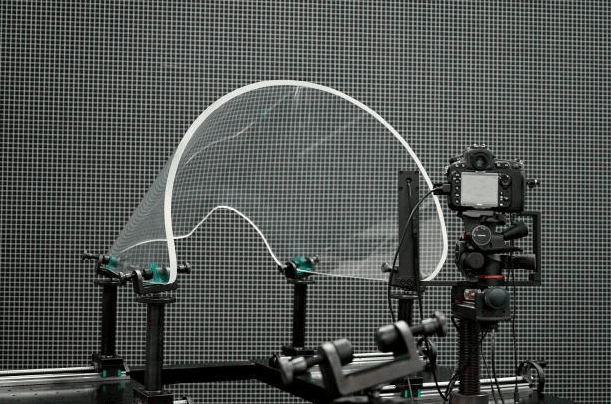
In terms of organic glass transparent components, it undertakes the development and production tasks for advanced fighter aircraft transparent components and leads China in the development and application of new transparent materials and research on new manufacturing processes. In terms of inorganic glass transparent components, it has significant advantages in the development of windshield transparent components for advanced helicopters.
Researchers point out that aviation transparent components are the "eyes" of an aircraft and, more importantly, the "lifeline" for pilots. Their importance is reflected in two key dimensions: First, as a "window" ensuring visibility, they must possess high light transmittance and low optical distortion, providing pilots with a clear, undistorted view even in complex environments like high altitudes, rain, and fog, allowing them to accurately perceive the external environment and complete all operations. Second, as "armor" for safety protection, they need to withstand the buffeting of high-speed airflow, extreme loads from high and low temperature variations, and also resist bird strikes and foreign object impacts, building a solid physical barrier for pilots and protecting them from external threats.
The Aircraft Cabin Transparent Components Division stated that through every precision polishing process and every technological breakthrough, the division polishes the "eyes" and fortifies the defense lines for domestic military and civilian aircraft. In the future, it will continue to deeply cultivate the field of aviation transparent components, supporting the high-quality development of China's aviation industry with more advanced technology and more reliable products.
Establishing a Full-Chain Technical System
The Rubber and Sealing Materials Division of AECC BIAM, one of the specialties established when the institute was founded in 1956, has now developed into the only core institution in China specializing in the full-chain research, trial production, and engineering application of aviation rubber and sealing materials.
Over the past 70 years, this division has undertaken a large number of major national aviation equipment support development tasks, successively overcoming multiple core technologies, and establishing a full-chain technical system from basic research and application development to batch production and life assessment. Its overall technical level is internationally advanced, providing irreplaceable key material guarantees for China's aviation, aerospace, and other fields vital to the national economy and people's livelihood.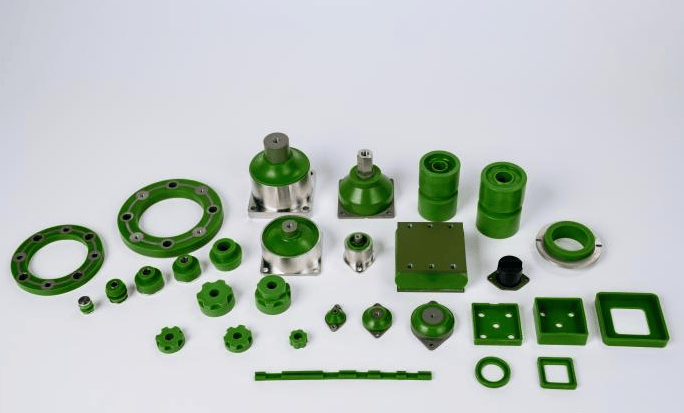
At the R&D level, the division has established five research and engineering technology centers, respectively responsible for the research, engineering application, and industrialization of sealant materials, organic functional materials, special rubber materials, rubber elastic components, and vibration damping and noise reduction materials, achieving full coverage from basic formula research to application product development.
Focusing on aviation rubber and sealing materials, the Rubber and Sealing Materials Division possesses full-process integration capabilities and a complete range of products, covering aviation non-metallic materials such as aviation rubber, sealants, adhesives, and elastic components.
Currently, multiple elastic components have been finalized and applied, completely breaking foreign technological blockades. The developed sealant categories cover a full series of products including low-density, high-temperature resistant, fireproof, lightning strike resistant, and anti-corrosion types, mainly used in critical parts such as aircraft fuel tanks, fuselages, windshields, and access panels, achieving multiple functions like sealing, anti-corrosion, and electromagnetic protection. Multiple rubber seals, rubber profiles, and damping materials are applied in civil aircraft and commercial aviation engines, steadily advancing the independent guarantee of rubber materials for domestic civil aircraft.
In terms of industrial application, besides serving major aviation original equipment manufacturers and accessory factories, the rubber and sealing material technologies and products are also widely used in aerospace, shipbuilding, ordnance, electronics, the nuclear industry, as well as many fields of the national economy such as high-speed rail, heavy trucks, and new energy photovoltaics. For example, electronic potting compounds provide insulation, moisture-proof, and shock-proof protection for precision electronic components; rubber vibration isolators provide core guarantees for the smooth operation and noise reduction of high-speed trains; long-life sealing rings can work stably for long periods in nuclear radiation environments, ensuring the safe operation of nuclear power plants.
In terms of cooperation networks, domestically, the Rubber and Sealing Materials Division is a core supplier for many central enterprises, fully supporting the localization process of China's civil aircraft materials; internationally, its products are exported in batches to internationally renowned aviation enterprises, demonstrating strong international competitiveness.
The division revealed that in the future, technologically, it will continue to tackle new materials that are high-temperature resistant, lightweight, highly reliable, and multi-functionally integrated to match the R&D needs of next-generation aviation equipment; industrially, it will continuously improve the product portfolio, accelerate the airworthiness certification process, fully realize the localized independent guarantee of civil aircraft rubber sealing materials, and strive to build a higher-level industrialization platform for new aviation materials.