
Spiral concentrators are renowned for their no-power operation and low running costs, widely used in the beneficiation of iron ore, tin ore, titanium ore, etc. They have long relied on manual visual observation of color differences in the mineral band to adjust the cutter—a situation that has finally been broken.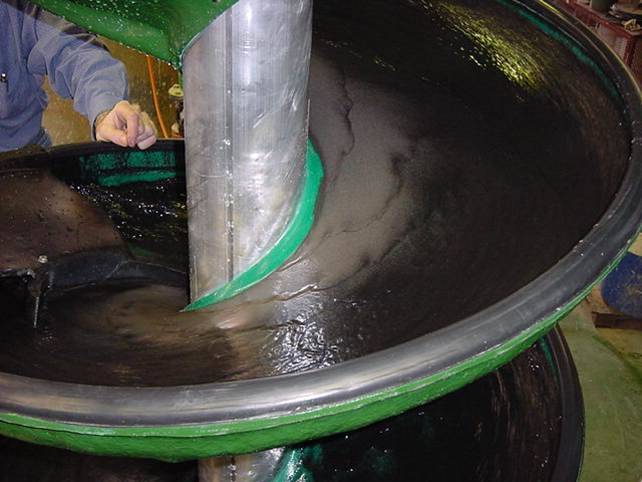
On May 26, 2026, a research team led by Professor Liu Huizhong from Jiangxi University of Science and Technology published a breakthrough study in Scientific Reports, a journal under Nature. For the first time, they integrated an improved YOLOv5 deep learning algorithm with an adaptive mechanical interception system, equipping spiral concentrators with "smart eyes" and "dexterous hands," achieving millisecond-level automatic adjustment of mineral band identification and separation interfaces.
Rotating at Several Revolutions Per Minute, Mineral Band Fluctuations Are Hard to Control
Spiral concentrators are among the most widely used gravity separation equipment. After the slurry is fed from the top, it flows downward along the spiral trough. Lighter minerals are washed to the outer edge as tailings, heavier minerals accumulate along the inner edge as concentrate, and the middle zone becomes middlings. Theoretically, the mineral band is stable, and the separation interface is clear.
However, in actual production, factors such as fluctuations in ore washability, changes in feed concentration, and shifts in particle size distribution often cause random drift of the mineral band. Traditional operations rely on workers' visual observation and manual adjustment of cutters, which are subjective and have a delayed response. This not only leads to fluctuations in concentrate grade and recovery rate but also creates an efficiency bottleneck where multiple spiral troughs cannot be precisely controlled simultaneously.
Human eyes are slow to see and erratic to adjust, while swirling flows change rapidly—spiral concentrators need an automation revolution.
Improved YOLOv5 Model: Detection Accuracy 90%, Frame Rate 63 FPS
The research team from Jiangxi University of Science and Technology built a closed-loop intelligent control system:
"Smart Eyes": Algorithm Improvements for Blurred Mineral Band Edges
Traditional object detection algorithms face extreme challenges in spiral concentrator applications: blurred mineral band edges, dynamic changes in band width, and highly unstable lighting conditions due to slurry water vapor fluctuations.
The team integrated three key improvements into the YOLOv5 algorithm:
Introduction of attention mechanisms (CAM and SAM): Enables the model to focus on core features of the mineral band, suppressing background noise interference such as slurry mist and reflections
Addition of a small object detection layer: Captures gradient changes in mineral band edges with thicknesses of only a few millimeters
Adoption of the CIoU loss function: Improves regression accuracy of mineral band bounding boxes, adapting to wide dynamic fluctuations
Experimental results show that under extreme operating conditions of spiral concentrators, the improved model achieves a detection accuracy of approximately 90% and a detection speed of 63 frames per second, meeting industrial real-time control requirements.
"Dexterous Hand": Adaptive Interception System with Millisecond Response
After detecting boundary shifts, the system coordinates the servo-driven cutter slider group. Under algorithm instructions, the interceptor can automatically push forward or retract within milliseconds, always calibrating the separation interface to the optimal position.
Experimental data show that this adaptive interception system achieves a control accuracy of over 90%, with rapid and reliable response, meeting the dual demands of precision and speed in industrial production.
Protecting High-End Metal Raw Materials for "Made in China"
The application scenarios of spiral concentrators cover strategic resources from traditional bulk minerals to high-end manufacturing:
Steel and Special Alloy Industry: Used for roughing and cleaning of metals such as iron, titanium, and chromium
Aerospace and Electronic Materials: Gravity recovery of rare metals such as tantalum, niobium, tungsten, and tin
New Energy Industry Chain: Pre-treatment and purification of lithium ores such as lepidolite and amblygonite
Clean Coal Utilization: Upgrading of coarse coal slime
Through intelligent upgrades, this technology will significantly enhance the comprehensive utilization level of low-grade associated and co-produced minerals and tailings resources in China, providing core support for securing the supply chain of critical metals.
Laboratory results are just the first step. The team is committed to promoting the industrial implementation of a multi-spiral array cluster control system:
Group Control Intelligent Coordination: A single industrial host uses AI to integrate and schedule dozens of spiral troughs, overcoming the drawback of traditional processes where "the head and tail are hard to manage simultaneously"
Edge Intelligent Computing: Achieves millisecond-level real-time detection and control on-site at the beneficiation plant, without relying on cloud transmission
Upstream Linkage Optimization: Integrates control data from crushing and grinding stages to achieve full-process intelligent regulation
The new technology not only reduces costs and increases efficiency for beneficiation plants (estimated to save over 40% in labor costs and improve concentrate recovery by 3%–8%) but also builds a new-generation technology foundation for green and intelligent beneficiation.
As stated in the paper: This adaptive interception system significantly enhances the automation and intelligence level of spiral concentrators, helping to achieve more stable product quality and reduce labor costs. China's mines will move from "human eye monitoring" to a new stage of full-process intelligent decision-making.