
On June 16, the 9×6-meter high-power wind wall laboratory of Shaanxi Yulin Heyi Aerospace Technology Innovation Co., Ltd. officially entered the equipment installation phase. As the first large-scale intelligent wind field experimental platform for low-altitude aircraft in Northwest China, this project will fill the gap in professional testing platforms for large low-altitude aircraft in the region upon completion, providing key scientific and technological support for the high-quality development of the low-altitude economy.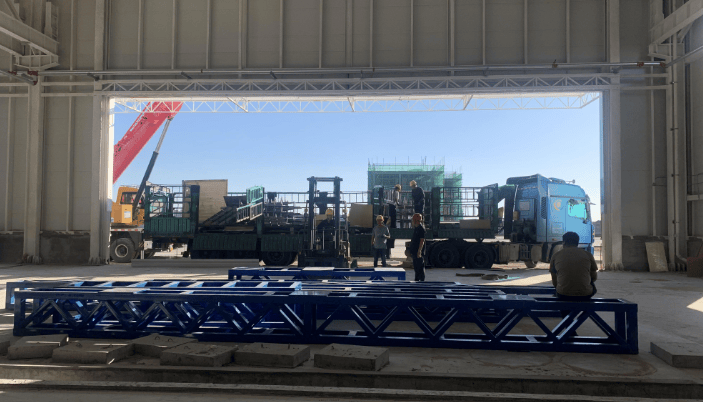
It is understood that the laboratory has a net height of 6 meters and a net width of 9 meters, equipped with 600 sets of array-type intelligent wind field modules. The wind speed can be continuously adjusted from 1 meter per second to 20 meters per second, with a system response time of no more than 2 seconds. The platform can accurately simulate normal breezes to strong winds of Force 8 on the Beaufort scale, replicating gusts, wind shear, gradient turbulence, and complex non-standard wind fields in valleys and urban environments, fully meeting the testing needs for high-risk scenarios such as drone takeoff and landing near the ground and flight in complex terrain.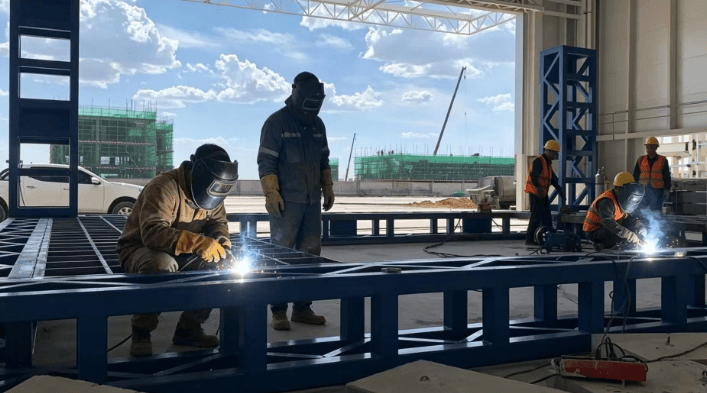
"Unlike traditional small-scale testing equipment, this platform does not require the creation of scaled models and can directly conduct full-size tests of various low-altitude aircraft with a wingspan of less than 8 meters, avoiding data deviations at the source," said He Xiukun, a technical expert from Shenyang Aerospace University. The project is equipped with an intelligent sensing and multi-level safety redundancy system, integrating monitoring, collection, diagnosis, and protection. Installation and commissioning are expected to be completed by the end of August, with a monthly output value of 15 million yuan after operation.
This wind wall laboratory will complement the existing 4×3-meter return-flow wind tunnel, forming a complete testing system that accommodates both high and low speeds and various aircraft sizes. Once the project is in place, it will fundamentally change the current situation where local enterprises must send equipment out for testing, effectively reducing research and development and testing costs. Wang Xin, Director of the Jingbian Intelligent Unmanned Systems and General Aviation Industry Science and Technology Innovation Center, stated that the industrial park will provide full-process follow-up and coordination, offering comprehensive support for the project's construction.