
Shield tunneling machines traverse rivers and seas, with depths of tens of meters underground being unfathomable and risks unpredictable—this has been a century-old pain point in tunnel engineering. Now, a "smart brain" with over 200 billion parameters is transforming shield construction from "experience-driven" to "AI-driven." On June 16, 2026, China's first shield tunnel vertical domain large model, "Shenyuan," was officially deployed in Nanjing, marking a new intelligent phase for China's underground engineering construction.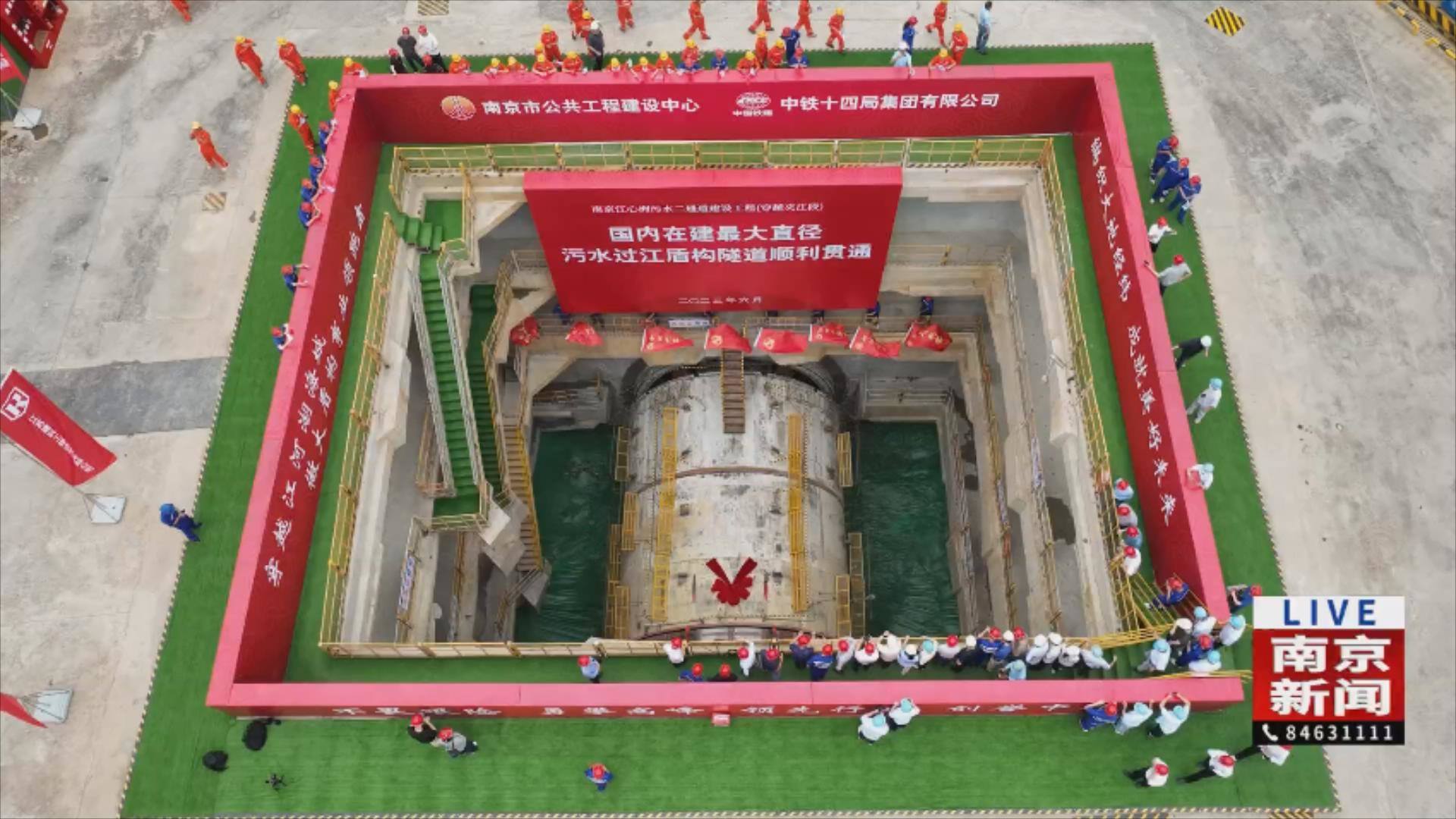
From "Blind Tunneling" to "Intelligent Tunneling": A Century-Old Challenge in Underground Engineering
Shield tunneling machines, hailed as the "king of engineering machinery," are widely used in tunnels for subways, railways, highways, and hydropower projects. However, unlike surface construction, the greatest difficulty in shield tunneling lies in the unknown nature of the underground environment—invisible and intangible, with risks such as sudden rock layer changes, river water ingress, and ground subsidence often occurring unexpectedly during excavation.
In the past, shield tunneling heavily relied on the on-site experience of engineers: What thrust force should be used in complex strata? What should the cutterhead rotation speed be? How should grouting pressure be controlled? These questions were often answered by the intuition of seasoned experts. A misjudgment could lead to equipment damage at best or safety accidents at worst.
A deeper challenge is that shield construction involves massive amounts of data—excavation parameters, settlement monitoring, geological surveys, historical cases—but this data is scattered across various stages, lacking systematic integration and intelligent analysis capabilities. Data exists, but "wisdom" does not.
A "Shield Expert" with 200 Billion Parameters
In early 2026, the "Shenyuan Large Model" successfully passed the "Trusted AI Large Language Model" special evaluation organized by the China Academy of Information and Communications Technology (CAICT), achieving a Level 4+ rating and becoming the first shield tunnel vertical domain large model in China to receive national authoritative certification. CAICT's large model evaluation is widely recognized as a "touchstone" and "bellwether" in China's AI technology field, with this assessment strictly reviewing 16 key capability items ranging from underlying technical support to upper-level service capabilities.
The technological breakthroughs of the "Shenyuan Large Model" are reflected in three aspects:
First, ultra-large-scale parameters and a mixture-of-experts architecture. The "Shenyuan Large Model" is the core of China Railway 14th Bureau Group's "Digital Intelligent Shield 3.0" system, with a parameter scale exceeding 200 billion, making it China's first ultra-large-scale mixture-of-experts (MoE) model in the large-diameter shield tunneling field. The MoE architecture means the model consists of multiple "expert" modules internally, automatically invoking the most suitable "expert" to handle different problems, significantly improving inference efficiency and professionalism.
Second, the world's first general knowledge graph for shield construction. Leveraging over 20 years of large-diameter shield construction practice by China Railway 14th Bureau Group, the R&D team has accumulated full-chain, full-cycle massive data resources and collected over 800,000 academic papers and domain monographs related to shield construction, pioneering the construction of the world's first general knowledge graph system for the shield construction field, systematizing and structuring scattered professional knowledge.
Third, a "four-integration" technical system. The model builds a technical system integrating "real-time data + expert experience + industry knowledge + model algorithms." It can understand user intent through voice intelligent interaction, automatically decompose tasks, quickly retrieve massive distributed data, and comprehensively analyze multi-source information such as excavation parameters, settlement data, and historical cases in conjunction with the knowledge graph.
From "Reactive Response" to "Proactive Pre-Control"
Before high-risk operations such as tunneling under riverbeds or through complex strata, staff can query "Shenyuan" in real time for construction plans. The model provides objective, accurate forward-looking construction suggestions and highlights potential risks.
In the Qiantang River tunnel project of the Hangzhou Xiaoshan Airport Line, the "Shenyuan Large Model" and its application system were successfully piloted, automatically generating excavation parameter suggestions and construction plans for crossing risk sources, with content highly matching expert review opinions, validating its decision-support capabilities.
To date, the intelligent management and control platform centered on the "Shenyuan Large Model" has supervised 154 shield machines, issued over 100,000 parameter alerts, and nearly 31,000 risk alerts.
Guo Shouzhi, Deputy Director of the Science and Technology Innovation and Digital Center of China Railway 14th Bureau Group's Large-Diameter Shield Company, stated: "Similar to intelligent driving in automobiles, as AI applications deepen, I believe we will one day achieve autonomous decision-making in 'shield intelligent driving.'"
From "Pilot" to "Standard"
Currently, the "Shenyuan Large Model" has applied intelligent management and control technology in several key projects, including the Nanjing Metro Line 4 river-crossing tunnel, Nanjing Metro Line 11, the Fifth Bridge Jiajiang Tunnel, and the Jianning West Road and Yanshan Road river-crossing tunnels. China Railway 14th Bureau Group plans to deploy this technology in all new projects by 2026, covering the entire shield construction process.
More notably, China Railway 14th Bureau Group has taken the lead in applying for standards related to the construction guidelines for large models in the shield tunneling field with CCSA (China Communications Standards Association). This means the engineering practice experience of the "Shenyuan Large Model" is being rapidly transformed into industry-wide norms, promoting the large-scale empowerment of artificial intelligence in the underground engineering sector.
From "reactive response" to "proactive pre-control," from "experience-driven" to "AI-driven"—the deployment of the "Shenyuan Large Model" is not only the success of a technological product but also a paradigm shift in China's underground engineering construction model.