
Recently, a Chinese research team has made new progress in the field of quantum communication. Teams led by Pan Jianwei and Xu Feihu from the University of Science and Technology of China, in collaboration with Sun Yat-sen University, Shanghai Jiao Tong University, and other institutions, have achieved a long-distance chip-based quantum communication network based on the twin-field quantum key distribution protocol, and have obtained a secure key rate exceeding the repeaterless key capacity over a fiber distance of up to 540 km.
Quantum key distribution enables remote users to share information-theoretically secure keys. Combined with the one-time pad encryption method, it can theoretically achieve unconditionally secure communication. The twin-field quantum key distribution protocol can overcome the limitation of the linear decline in key rate with distance in traditional quantum key distribution, making it an important technical route for long-distance fiber-based quantum communication networks. However, this protocol imposes high requirements on laser coherence, link stability, and system control precision, making practical deployment challenging.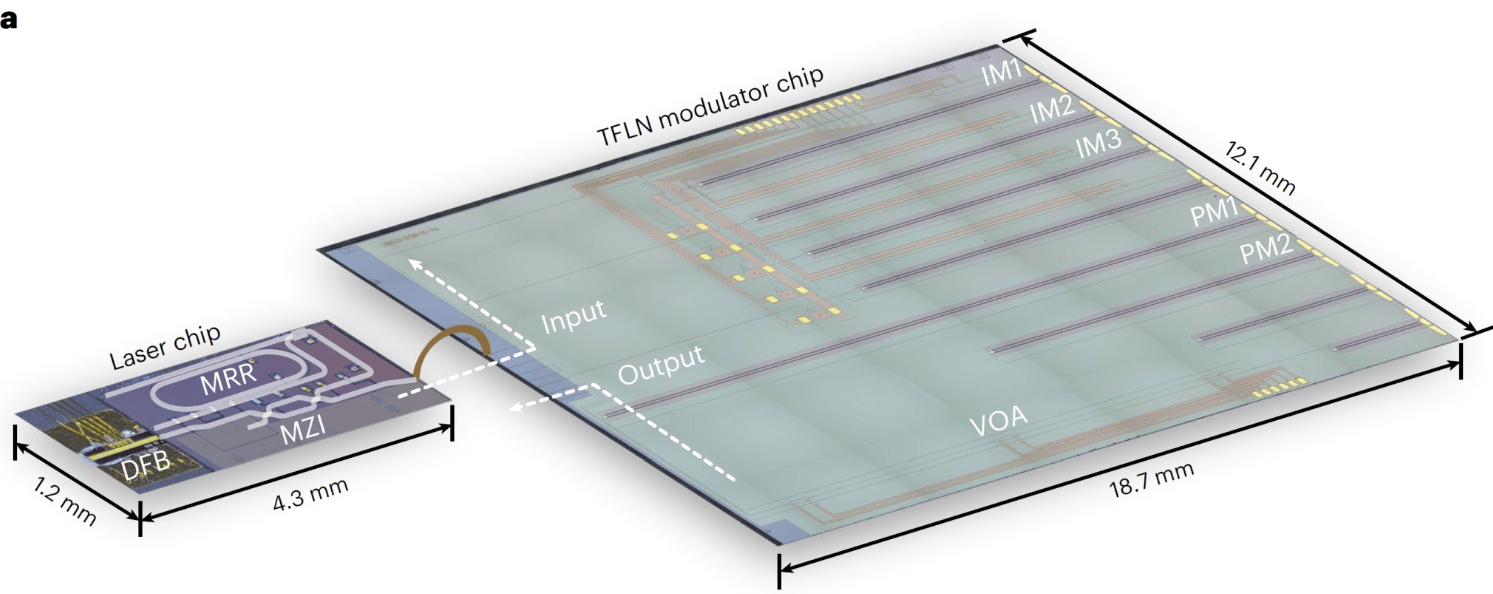
Figure 1 Hybrid integrated photonic chip of silicon nitride and thin-film lithium niobate
The core breakthrough of this research lies in the chip-based transmitter. The research team developed a hybrid integrated photonic chip combining silicon nitride and thin-film lithium niobate, integrating a self-injection locked laser chip based on high-quality-factor silicon nitride microring resonators with a thin-film lithium niobate photonic integrated chip incorporating multiple intensity modulators, phase modulators, and variable optical attenuators. The on-chip laser achieves a narrow linewidth output of 100 Hz, while the thin-film lithium niobate modulator achieves a modulation bandwidth of 25 GHz, a half-wave voltage of 2.6 V, and an extinction ratio of 34 dB.
In terms of network architecture, the research team proposed a quantum leaf-spine network structure. This structure consists of a user layer, a leaf layer, and a spine layer. Users access the network through chip-based transmitters, and quantum signal routing and measurement are completed via optical switches and measurement units. Compared to single-link testing, this structure is closer to the requirements of practical quantum communication networks, enhancing user access capacity, network scalability, and connection flexibility.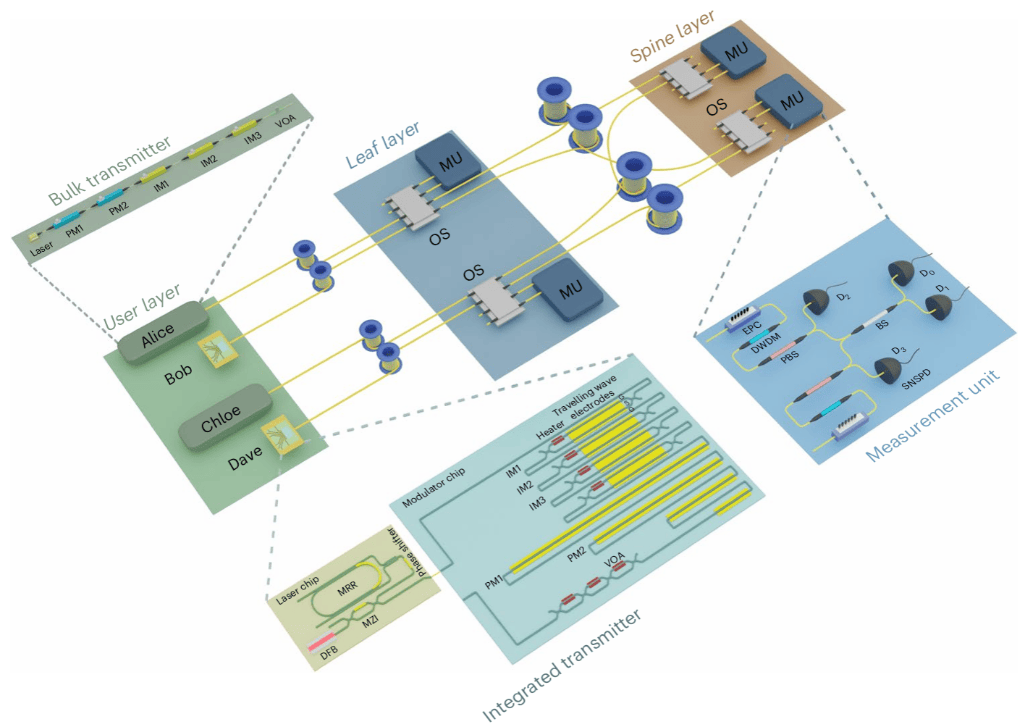
Figure 2 System diagram of a four-user integrated chip-based quantum key distribution network
In the experiment, the research team constructed a four-user chip-based twin-field quantum key distribution network and demonstrated connections between different user configurations over fiber distances of 40 km and 403 km, respectively. In further experiments, the system achieved a secure key rate of 2.93 bps over a 540 km ultra-low-loss fiber link with a total loss of 91.5 dB, surpassing the repeaterless key capacity by a factor of 9.
The results also included network performance simulations. Based on experimental parameters, the quantum leaf-spine network can support over 50 users for high-quality video calls over a fiber distance of 50 km. This indicates that the chip-based quantum communication network not only validates long-distance transmission capabilities but also demonstrates the potential for future expansion into multi-user metropolitan quantum networks.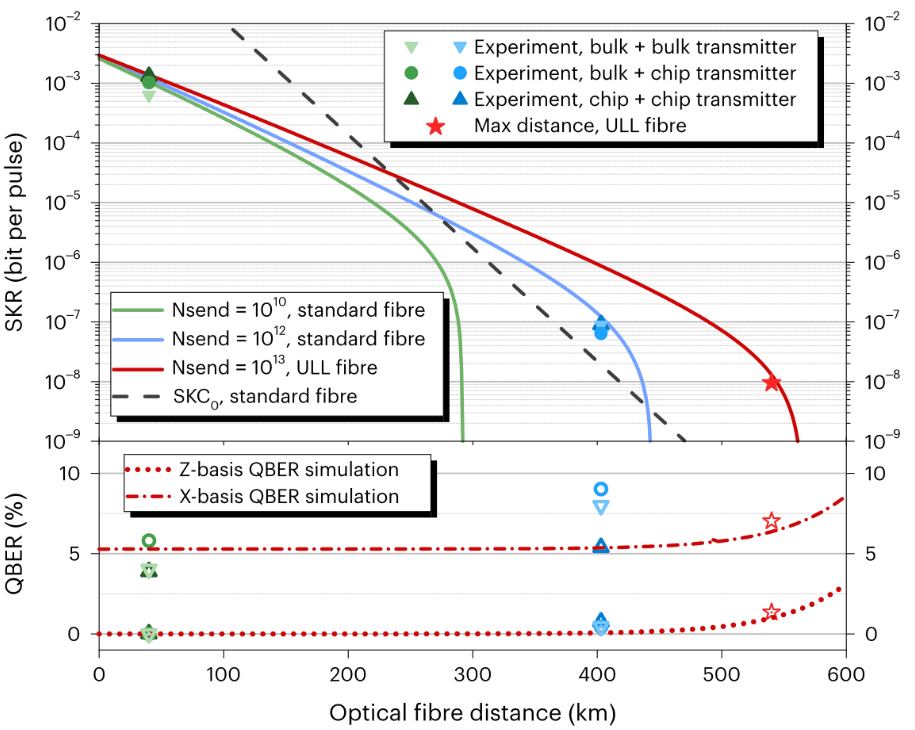
Figure 3 Experimental key rate results of the quantum key distribution network
The significance of this achievement lies in combining photonic integrated chip technology with long-distance quantum communication network architecture. Traditional quantum communication systems often suffer from issues such as large equipment size, high cost, and high system complexity. The chip-based approach helps promote miniaturization, stabilization, and cost reduction of the transmitter, providing a technical foundation for the future deployment of large-scale quantum communication networks.
However, this achievement is still in the scientific verification stage. To move toward larger-scale applications in the future, further challenges need to be addressed, including chip consistency, system engineering, long-term stable operation, network management, standard interfaces, and industrial chain support. Especially in real metropolitan and intercity networks, quantum signal transmission will face complex conditions such as environmental fluctuations, link losses, node scheduling, and equipment maintenance.
Future observation will focus on the engineering progress of the chip-based transmitter, the operational performance of the quantum leaf-spine network as the user scale expands, compatibility with existing fiber-optic communication networks, and whether this technology enters metropolitan quantum communication test networks. If subsequent verification progresses smoothly, long-distance chip-based quantum communication networks are expected to become an important technical direction for secure communication infrastructure.