
On June 24, at the International Supercomputing Conference (ISC 2026) held in Hamburg, Germany, the latest global IO500 storage performance list was officially released. China's Sugon independently developed ParaStor F9000 all-flash storage system ranked first in both the production full-node and 10-node core lists, setting a new world record, demonstrating that China's domestically produced high-end storage systems have entered the global leading ranks in I/O capabilities for high-performance computing and artificial intelligence scenarios.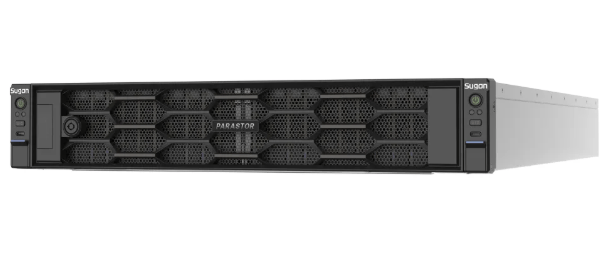
The IO500 benchmark targets high-performance computing and AI data-intensive tasks, focusing on evaluating storage system performance under real workloads, including data read/write, metadata processing, concurrent access, and overall system throughput. Unlike tests that only measure single-point peak performance, the production list emphasizes whether the system has been running long-term in a real production environment, possesses redundant design, stable service capabilities, and the ability to continuously support business workloads. ParaStor F9000's simultaneous top ranking in both the production full-node and 10-node lists means it not only achieves high performance in large-scale deployment scenarios but also maintains high efficiency in smaller node configurations.
The key to this achievement is not just "running fast," but validating high-end storage performance in real business environments. Large model training, scientific computing, simulation analysis, and massive data processing all generate intensive I/O requests. If the storage system cannot keep pace with the data read/write rhythm of the computing cluster, GPU, CPU, and network resources will experience waiting, reducing the utilization rate of the entire computing system. ParaStor F9000 is designed to address precisely this issue: under conditions of tens of thousands of GPU clusters, high concurrent access, and long-term continuous operation, it ensures data flow capabilities match the scale of computing power.
China's Sugon ParaStor F9000 adopts a distributed all-flash architecture, achieving full-stack independent research and development at both hardware and software levels, and synergizes with computing and network systems. All-flash storage provides lower latency and higher concurrency, while the distributed architecture helps maintain throughput and stability as nodes expand. For AI training clusters, model parameters, training samples, checkpoint files, and intermediate results require frequent read/write operations, and the storage system's bandwidth, latency, and metadata processing capabilities directly impact training efficiency.
The production full-node list more closely resembles the real deployment environment of large computing centers, while the 10-node list better reflects the system's architectural efficiency under constrained scale. ParaStor F9000's simultaneous achievement of first place in both lists indicates that its performance is not solely dependent on stacking node numbers, but results from comprehensive capabilities in software scheduling, data distribution, cache strategies, fault recovery, and concurrency control. For domestically produced high-end storage, this holds greater engineering significance than leading in a single metric.
The value for technological innovation is reflected in three aspects. First, domestically produced high-end storage systems setting records on an authoritative international list validates the feasibility of independently developed architectures in the global high-performance storage competition. Second, the achievement targets core AI and high-performance computing infrastructure, not just a single consumer-grade hardware breakthrough. Third, the system has been operating in real large-scale clusters, providing a replicable underlying storage solution for subsequent large model training, scientific computing, industrial simulation, and data analysis.
High-end storage has long been a critical bottleneck in computing infrastructure. Computing chips determine the upper limit of computing power, networks determine node collaboration efficiency, and storage determines whether data can be continuously, stably, and quickly supplied to computing systems. As the scale of large model parameters, training data, and scientific computing data continues to expand, storage systems have evolved from backend supporting equipment to a core capability of computing platforms. China's Sugon ParaStor F9000's top ranking on both IO500 lists and record-breaking performance fills the high-end storage performance verification gap for domestically produced computing infrastructure.
This achievement also demonstrates that China's high-performance computing industry chain is transitioning from single-point device breakthroughs to system-level collaboration. For high-end storage to truly enter the global leading ranks, it requires simultaneous capabilities in hardware design, distributed file systems, cluster scheduling, network adaptation, reliability engineering, and long-term operations. ParaStor F9000's dual-list first place at ISC 2026 provides a new landmark sample for domestically produced high-end storage in the international technical evaluation system. Subsequent application effects still need continuous verification in larger-scale AI clusters and more industry scenarios.