
Chile is one of the countries with the highest number of tailings ponds globally, storing vast amounts of water. Against the backdrop of severe drought and increasingly intense competition for water in the mining industry, a research team from the University of Chile has developed an innovative water treatment system integrating nanofiltration, nanotechnology, and a bioreactor. This system enables the safe recovery and recycling of tailings pond water, offering a new solution for sustainable water management in arid mining regions.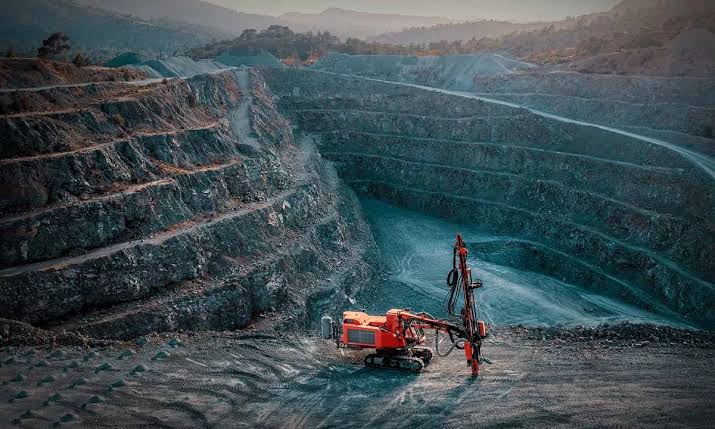
The "Water Bank" in Tailings Ponds Awaits Development
Chile is the world's largest copper producer and one of the countries with the most tailings ponds. These ponds store substantial amounts of water—like a dormant "water bank"—yet it has long remained underutilized. Because tailings pond water contains sulfates, arsenic, and various heavy metals, direct discharge or reuse without treatment poses serious threats to the environment and human health.
Meanwhile, Chile is facing a severe water scarcity crisis. Competition for water between mining, agriculture, and urban use is intensifying, making the search for new water sources a core issue for sustainable mining development. In this context, the University of Chile research team has turned their attention to tailings ponds as a "neglected water source."
Three-Stage Integrated Treatment System
This research project, titled "Prototype of a New Sustainable Integrated System for Treatment and Recovery of Tailings Pond Water for Agricultural Irrigation and/or Aquifer Discharge," is funded by ANID (Chile's National Research and Development Agency) under the FONDEF IDeA I+D 2024 grant. It is led by Andreina García, a professor in the Department of Mining Engineering at the University of Chile and a researcher at the Advanced Mining Technology Center (AMTC).
The research team has developed a three-stage integrated treatment system that progressively removes various pollutants from tailings pond water:
Stage One—Nanofiltration: As a pretreatment unit, it performs initial purification of tailings pond water, removing suspended solids and large-molecule pollutants.
Stage Two—SolArsenic Nanotechnology: This is one of the system's core technologies. The nanomaterial has high adsorption capacity, selectively removing arsenic from the water while also adsorbing valuable metals from the tailings wastewater, creating conditions for subsequent resource recovery.
Stage Three—Bioreactor: Led by Yasna Tapia, an AMTC researcher and scholar at the University of Chile's Faculty of Agricultural Sciences, the bioreactor module removes residual sulfates and heavy metals, ensuring effluent quality meets safety standards for agricultural irrigation or aquifer recharge.
Circular Economy: Value Restructuring from "Wastewater" to "Resource"
The core innovation of this project lies not only in water treatment itself but also in its circular economy design philosophy—while treating tailings pond water, the system also achieves resource utilization of multiple by-products:
Bio-compost: The biomass generated by the bioreactor during treatment can be converted into bio-compost for phytoremediation of tailings ponds, providing soil amendment materials for ecological restoration.
Valuable Metal Recovery: Some of the metals adsorbed by the SolArsenic nanomaterial have economic value and can be recovered through subsequent processes, generating additional economic benefits for mines.
This "water recovery—metal extraction—bio-compost" trinity model upgrades traditional "tailings pond water treatment" into "comprehensive utilization of tailings pond resources," offering a new value paradigm for mining waste management.
Codelco Innovation and Glauben Ecology Jointly Advance the Project
This two-year project involves deep participation from Codelco Innovation Center and Glauben Ecology as collaborating partners. AMTC researchers Santiago Montserrat, Rodrigo Quezada, and Ayleen Celedón have also contributed to the technical development.
Codelco, as the world's largest copper producer, provides a channel for industrial-scale validation and input on practical application needs. Glauben Ecology offers professional support in ecological restoration and environmental technology. This collaborative model of "academic research—technology development—industrial validation" significantly shortens the transition cycle from laboratory to mine site.
Opening New Water Sources for Arid Mining Areas
Alleviating Water Competition Between Mining and Agriculture
In arid mining regions like Chile, mining and agriculture have long competed for limited water resources. This technology can safely treat and recover tailings pond water for agricultural irrigation or aquifer recharge, securing mining production while opening new water sources for surrounding agricultural communities.
Reducing Mining Water Footprint to Meet Stricter Environmental Requirements
As global environmental demands on mining increase, tailings pond management has become a core challenge for mining companies. This technology helps mining companies significantly reduce their water footprint and comply with increasingly stringent environmental regulations.
Supporting Chile's National Tailings Pond Sustainable Management Plan
This research project aligns closely with the goals of Chile's National Tailings Pond Sustainable Management Plan—recovering water resources through technological innovation, reducing environmental impact, and advancing waste resource utilization. Its outcomes can provide key technical support for the plan's implementation.
Promotion to Arid Mining Regions Worldwide
As the country with the most tailings ponds globally, Chile's management experience has global demonstrative significance. This technology framework can be extended to mining regions facing similar drought and water competition pressures, such as Peru, Australia, and western China, offering a "Chilean solution" for sustainable water management in the global mining industry.
From "Environmental Liability" to "Resource Asset"
The deeper value of this University of Chile research lies in redefining the role of tailings ponds. For a long time, tailings ponds have been viewed as an "environmental liability" for mining—occupying land, posing pollution risks, and incurring high management costs. This technology demonstrates that tailings ponds can become a "resource asset" for water, valuable metals, and ecological restoration materials.
As project leader Andreina García stated: "Recovering water from tailings ponds and treating it to appropriate standards can alleviate pressure on water sources and steer mining toward a more sustainable development path."