
In July 2026, China's Shougang, in collaboration with a leading Chinese engineering machinery enterprise, successfully launched the 690MPa-grade high-strength longitudinally variable thickness steel plate Q690E-LP. This is not just a material upgrade, but a technological leap from "two-dimensional flat plates" to "three-dimensional profiled plates"—achieving the world's first industrial production of 690MPa-grade high-strength thin-gauge variable thickness steel plates, filling an international gap in this field.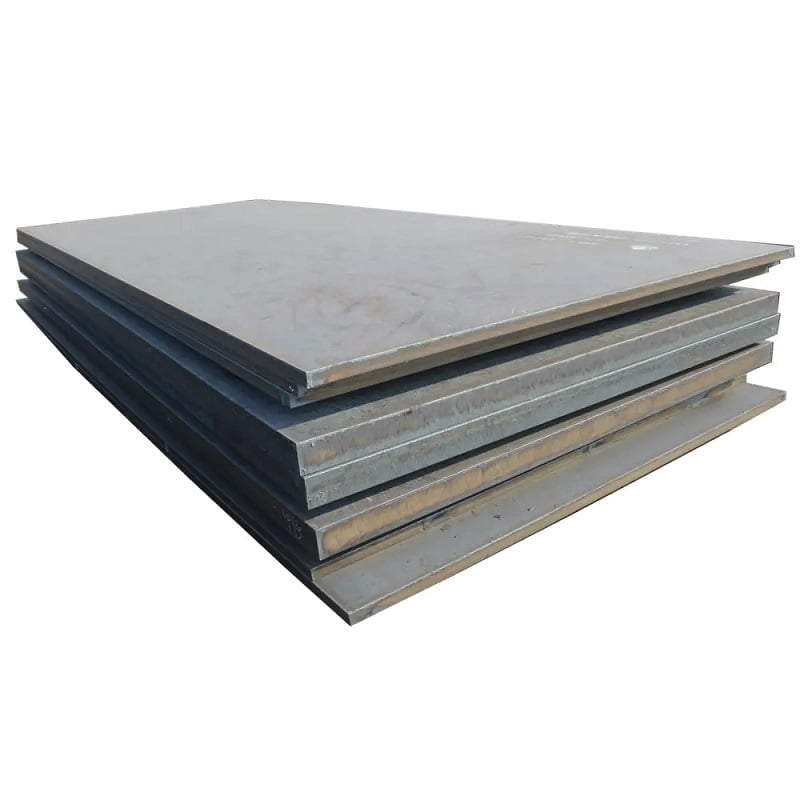
Uneven Stress Distribution, Yet Only Uniform Thickness Plates Available via "Welding and Shaping"
For a long time, the equipment manufacturing industry has been plagued by a persistent pain point: large structures experience highly uneven stress—high stress at the root and low stress at the ends—yet designers only have uniform thickness steel plates at their disposal.
The traditional approach involves beveling thick and thin plates and forcibly butt-welding them together. The weld seam becomes an inherent "weak link"—prone to stress concentration, fatigue cracking, excessive weight, and cumbersome processes. Welding alone accounts for over 30% of the manufacturing time for a single piece of equipment, keeping the processing cost per ton of steel persistently high.
Previously, only a few companies outside of China could produce variable thickness steel plates, but the maximum strength was limited to the Q460 grade, remaining within the low-strength, large-thickness category. Ultra-thin, high-strength variable thickness steel plates had no global precedent, product, or experience. The engineering equipment industry had to "settle for the next best option," machining flat plates into wedge shapes through repeated milling—time-consuming, material-wasting, and cost-inflating.
"Thicken where stress is high, thin where stress is low—use the best steel where it matters most!" Shougang's medium-thick plate research team targeted this pain point and boldly proposed a novel concept: allowing the steel plate's thickness to continuously vary along its length, with a robust root and a slender end, perfectly matching the stress curve.
Three Core Technological Breakthroughs
From "Multi-Plate Welding" to "Single-Plate Forming": Thickness Variation Up to 50%
Q690E-LP completely overturns traditional steel usage logic. The plate's thickness continuously varies along its length, with a maximum thickness difference of up to 50%, directly transforming "multi-plate welding" into "single-plate forming," eliminating weld seam risks at the source and achieving ultimate weight reduction.
Strength Grade Leap from Q460 to Q690: Filling a Global Technology Gap
Previously, variable thickness steel plates were mainly used for low-strength structural steel in bridges, ships, and other fields, with a maximum grade of only Q460. Shougang has elevated the strength grade to 690MPa and adapted it for thin-gauge products, directly filling the global technology gap for high-strength, thin-gauge variable thickness steel plates.
Deep Production-Sales-Research Collaboration: From "Material-Adaptive Design" to "Material-Empowered Design"
Project leader Lu Shiping from the Technology Research Institute's Wide and Heavy Plate Division led the team deep into the engineering machinery production line, observing the entire process of crane outrigger stress, welding, and assembly. The team brought their solutions to directly collaborate with the customer's designers—while the customer drew mechanical calculation diagrams, Shougang explained rolling logic, jointly determining the structural plan.
"Previously, the design was finalized, and the steel mill produced accordingly; now, the material comes first, and the design adapts." Shougang is not merely a material supplier but a definer of design rules. The 690MPa variable thickness steel plate, inherently "gradient-enabled," shifts equipment design from "accommodating materials" to "material empowerment"—one customer designer remarked: "Before, we designed based on available materials; now, whatever design we envision, the material can be tailored to achieve it."
Core Performance Advantages
| Indicator | Q690E-LP | Traditional Solution |
|---|---|---|
| Strength Grade | 690MPa | Q460 (Maximum) |
| Thickness Variation | Continuous gradient, up to 50% thickness difference | Uniform thickness or welded assembly |
| Number of Weld Seams | No weld seams, single-plate forming | Multiple weld seams |
| Structural Weight | Significantly reduced | Excessively heavy |
| Fatigue Life | Substantially extended | Weld seam fatigue prone to cracking |
| Processing Steps | Greatly simplified | Numerous steps |
The successful production of the first variable thickness 690MPa-grade steel plate delighted the collaborating customer: weld seams disappeared, weight was reduced, and service life was extended.
Application Prospects
Typical application scenarios for Q690E-LP steel plates include:
Engineering Machinery: Key load-bearing components such as crane outriggers, booms, and large excavator dipper arms. Lightweight design can directly enhance equipment operational efficiency and energy economy.
Mining Equipment: Components under extreme heavy-load conditions, such as mining dump truck body frames and hydraulic supports.
Energy Equipment: Wind turbine towers, offshore platforms, etc.
Previously, LP steel plates had already demonstrated lightweight value in fields like bridges and ships. By advancing this technology to the 690MPa high-strength grade, Shougang has directly opened up application space in extreme heavy-load scenarios such as engineering machinery and mining equipment.
Industry Significance
The successful launch of Q690E-LP holds industry significance beyond the introduction of a new product:
First, it pioneers a new approach for high-end equipment design—shifting materials from "passive adaptation" to "active empowerment," and design from "accommodating materials" to "material-led innovation."
Second, it fills the global technology gap for high-strength, thin-gauge variable thickness steel plates.
Third, it explores an innovative paradigm of "deep production-sales-research collaboration"—Shougang proactively steps forward, bringing research to customer workshops, aligning production lines with complete machine development, and turning user pain points into innovation starting points.
As "welding and shaping multiple plates" becomes history, the "single-plate forming" high-strength variable thickness steel plate is redefining the lightweight boundaries of high-end equipment.