
At the Dahaize Coal Mine in Yulin, Shaanxi, belt conveyors stretch for kilometers along the tunnels, with tens of thousands of idler rollers rolling day and night. Responsible for their "check-ups" and "surgeries" is a tireless, uncomplaining "new colleague"—the idler roller replacement robot.
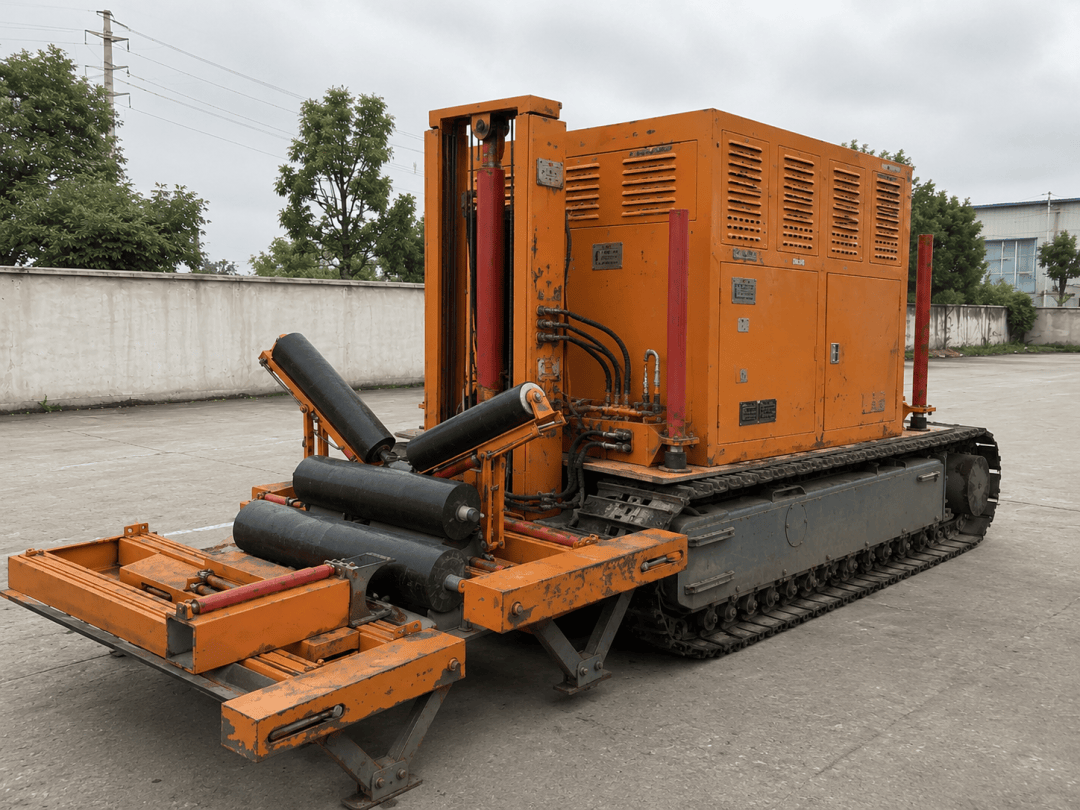
Idler roller replacement robot
This intelligent robot was developed by the team of Professor Zhang Qiang from the College of Mechanical and Electronic Engineering at Shandong University of Science and Technology (hereinafter referred to as "SDUST"). In recent years, the team has integrated multiple technologies to solve operational challenges in special mining scenarios.
Idler rollers are the "joints" of conveyors. In the humid, dusty, and heavily loaded underground environment, these "joints" are prone to wear and jamming. If a failure goes undetected, it can cause belt misalignment and coal spillage, or even lead to safety accidents.
How tough was replacing idler rollers in the past? Miners had to carry dozens of kilograms of tools, walk along the tunnels step by step for inspections, and once a problem was found, they had to stop the machine, then squeeze into the narrow gap between the belt and the crossbeam to complete disassembly and installation.
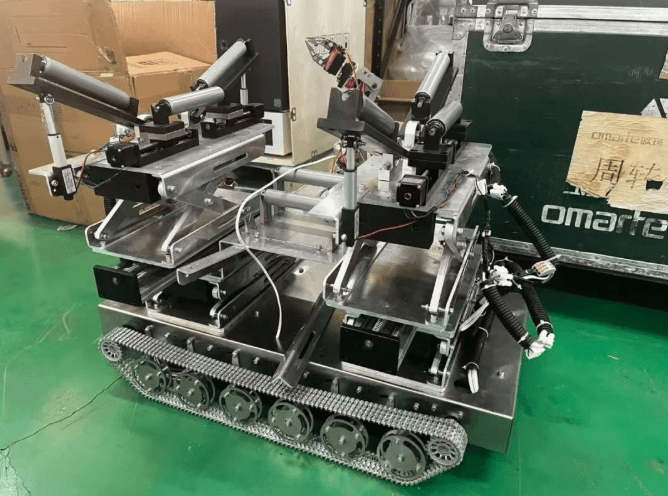
Engineering prototype of the idler roller replacement robot
The change began when Dahaize Coal Mine approached SDUST with a request: Could a robot be built to replace manual inspection and replacement of idler rollers? Zhang Qiang immediately led his team to Yulin, going down into the mine alongside the miners. They walked the entire conveyor line, precisely measuring key dimensions such as tunnel width, belt height from the ground, and idler roller bracket spacing.
"In the lab, it's not difficult for a robotic arm to grasp standard workpieces, but once in the narrow, dimly lit underground environment, the difficulty skyrockets," Zhang said. The cramped tunnel space and large amounts of suspended coal dust drastically reduce the recognition rate of machine vision. Additionally, due to long-term load-bearing and corrosion, idler roller brackets are often deformed, making it difficult for the robot to align and grip them based on standard dimensions from blueprints.
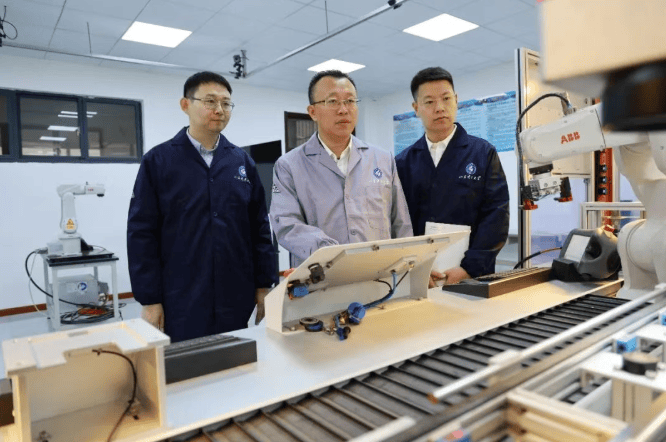
Zhang Qiang (center) guiding students in experiments
To overcome these challenges, Zhang's team "set up camp" in the mining area for months, repeatedly refining multi-sensor fusion algorithms and control parameters, iterating dozens of times through field tests underground. Ultimately, the robot developed a set of exceptional skills: autonomously walking along the conveyor in narrow tunnels, accurately identifying faulty idler rollers using multi-sensor fusion technology, and completing the entire process of disassembly, gripping, and installation in confined spaces.
Without satellite signals underground, how does the idler roller replacement robot navigate? This is its most impressive feature. Zhang said, "For the robot to be truly useful underground, the key is precise positioning without relying on satellite navigation." In the mine, darkness, dust, vibration, impact, and various equipment obstructions create a complex environment with heavy signal interference. The team built a multi-source fusion positioning system, enabling the robot to "understand" the underground environment and achieve centimeter-level positioning under extreme conditions.
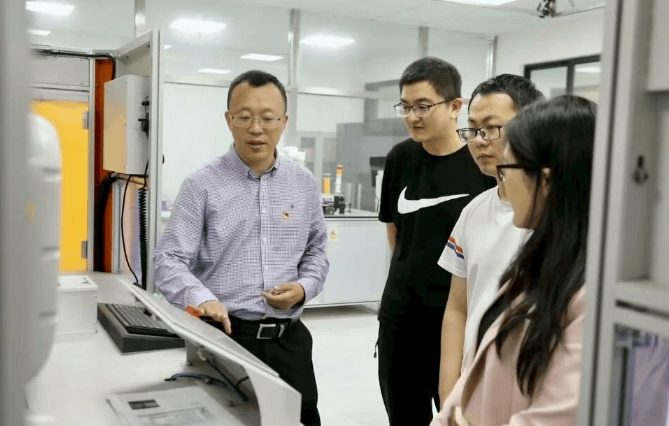
Zhang Qiang (left) guiding students in experiments
Today, this idler roller replacement robot has freed miners from high-risk, heavy labor, but Zhang's team hasn't stopped. Recently, they led the acquisition of a key national-level research project, targeting an even tougher challenge in the industry—intelligent excavation of hard rock rectangular cross-section tunnels.
"The industry's challenges are our research topics," Zhang said. Next, the team will focus on breakthroughs in key technologies such as efficient hard rock cutting, adaptive support for rectangular cross-sections, and coordinated control of excavation, support, and transport processes. They aim to develop an integrated robotic system for excavation, support, and transport, embedding the roots of new productive forces deeper and more firmly beneath the coal sea.