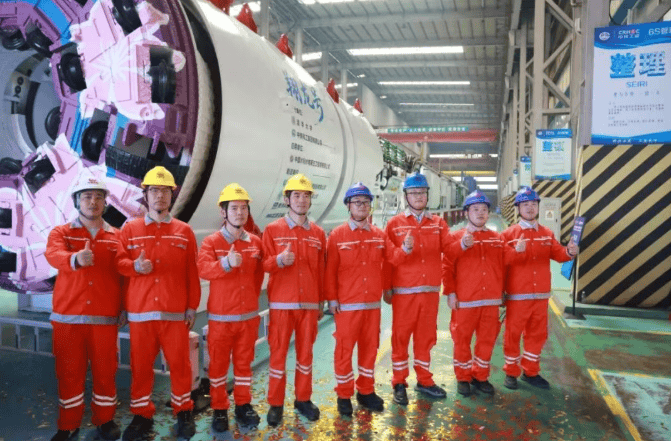
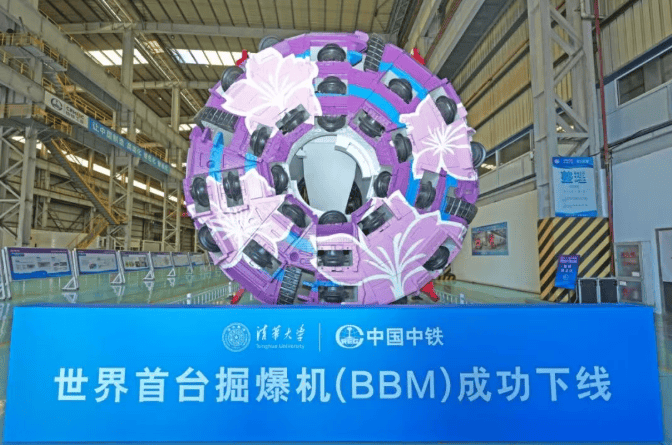
On August 1, the world's first tunnel boring and blasting machine (BBM), jointly developed by Tsinghua University and China Railway Science and Industry's subsidiary China Railway Ke Gong, officially rolled off the production line in Jiangxia, Wuhan. This equipment integrates the advantages of two mainstream construction methods—tunnel boring machines and drill-and-blast techniques—achieving for the first time the fusion of boring and blasting on a single machine. It provides a brand-new technical solution for constructing long tunnels in complex geological conditions, filling a gap in the field of integrated construction equipment for complex geological tunnels.
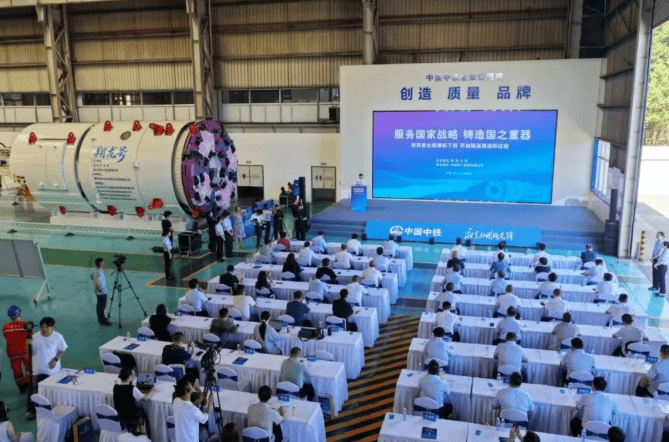
Core Innovation: Combining Two Construction Methods into One
"The greatest innovation of the BBM is the successful integration of the drill-and-blast method into a boring machine," explained a technical staff member from the R&D team. The core breakthrough of the equipment lies in its original hollow cutterhead structure. Through the coordinated operation of the hollow cutterhead and the central cutterhead, the BBM can freely switch between multiple operating modes, including blasting at the front while boring at the rear, boring at the front while blasting at the rear, and full-face boring, allowing it to flexibly adapt to various working conditions. When facing extremely complex strata such as high ground stress or large deformation in soft rock, the equipment can carry out pre-treatment operations through its central channel, including advanced grouting reinforcement, pre-splitting, and emergency support, thereby preventing safety risks such as collapses and machine jamming at the source and significantly enhancing tunnel construction safety.
Green and Efficient: Converting Muck into Aggregate for On-Site Resource Utilization
This BBM combines high efficiency with environmental friendliness. The equipment is equipped with a dedicated rock pillar crushing device that can process rock pillars and waste slag generated during tunnel excavation into construction aggregates on site. This not only greatly reduces the need for off-site muck disposal and lowers construction costs, but also enables the recycling of tunnel spoil. Combined with an integrated on-site lining construction mode, it truly achieves green and low-carbon tunnel construction. The equipment will subsequently be deployed in pumped-storage hydropower station projects for demonstration applications. The research team will rely on real-world operating data from the project sites to continuously advance the intelligent and refined upgrading of the BBM, integrating systems such as intelligent surrounding rock identification, advanced construction forecasting, and autonomous intelligent boring, propelling the equipment from "usable" to "user-friendly" and "intelligent" across the board.
Multiple Original Technologies Empower Adaptation to Various Extreme Conditions
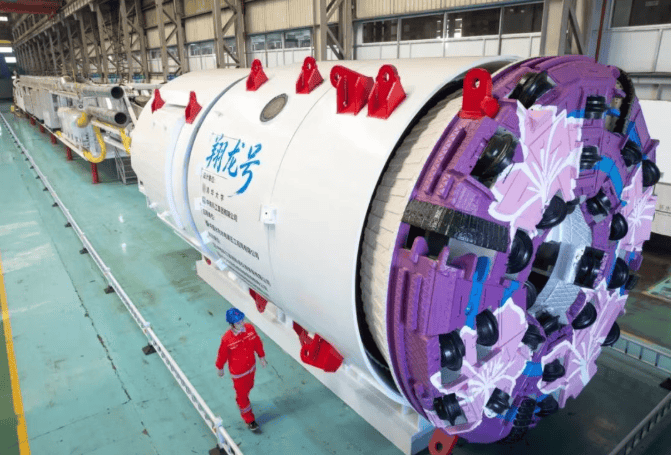
Since the inception of the project, the Wuhan Science and Technology Innovation Bureau, where China Railway Ke Gong is located, has provided strong support. The successful launch of this BBM has completely broken the inherent design conventions of similar equipment both domestically and internationally. The equipment integrates multiple independently developed original core technologies, with the entire machine and all core components achieving full self-reliance and control, comprehensively addressing pain points in tunnel construction. Among these, the retractable gauge cutters can flexibly adjust the tunnel excavation cross-section, improving the efficiency of in-tunnel construction and relocation; the self-adaptive retractable tail shield accommodates various segment specifications, ensuring the stability of support structures in complex strata; the explosion-proof buffer structure absorbs blasting impact forces, providing comprehensive protection for the main machine and precision components; and the dual independent belt systems enable the classified transport of muck and aggregate, optimizing the construction process.