
Over a decade ago, China's collaborative robot industry was nearly nonexistent, with core components almost entirely monopolized by foreign suppliers. Today, AUBO (Beijing) Intelligent Technology Co., Ltd., a collaborative robot leader incubated by Beihang, has ranked first in domestic shipments and second globally for five consecutive years, with products sold to over 60 countries worldwide.
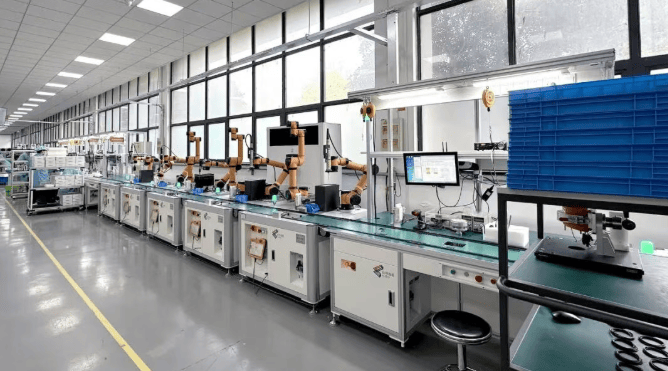
From laboratory prototypes with only 5% maturity to a fully self-controllable supply chain, and then to leading the formulation of international industry standards, Wei Hongxing, Dean of the Embodied Intelligence Robot Research Institute at Beihang University, and his team have written a vivid chapter on how university research achievements move "from the bookshelf to the shelf" through more than a decade of practice.
Over a decade ago, China's collaborative robot industry was almost a blank slate: core components such as harmonic reducers and controllers had long relied on imports, whole-machine precision was poor, operating systems were closed, and foreign giants firmly held sway over the industry.
As one of the earliest teams in China to engage in robotics research, and thanks to sustained support from programs such as the "863 Plan" and key R&D projects, Wei Hongxing's team achieved significant breakthroughs in key technologies including independent design and manufacturing of joint components, whole-machine precision optimization, and open operating system architecture. However, these laboratory achievements were difficult to translate into productive capacity for enterprises.
"On one hand, our research at the time was perhaps too cutting-edge for companies to adopt; on the other hand, there was indeed a considerable gap between laboratory technological breakthroughs and products ready for immediate deployment on production lines," Wei Hongxing admitted. It was precisely for this reason that they conceived the idea of establishing their own company to turn research outcomes into products.
In 2015, AUBO Intelligent was born, releasing its first prototype in the same year.
However, with only 5% product maturity, it could not enter the market. The team then immersed themselves in laboratories and workshops, refining processes step by step—tackling the localization of core components while addressing shortcomings in engineering and mass production.
After more than a decade of relentless effort, AUBO Intelligent has delivered an impressive performance. What makes Wei Hongxing even prouder is that by breaking through core component technologies such as controllers and harmonic reducers, their company has achieved full-stack self-sufficiency and 100% localization, driving the improvement of China's collaborative robot industry chain.
The transformation of scientific achievements is often described as "a narrow escape from death," with the hardest hurdle being the "Darwinian Dead Sea" between laboratory prototypes and mature products. Moreover, AUBO Intelligent's steadfast commitment to a full-chain self-developed route from its inception made the journey even more challenging.
AUBO Intelligent's success is inseparable from the support of Beihang's smooth technology transfer and transformation mechanisms.
When the research team decided to start a business, Beihang gave firm support—at a time when technology transfer systems were still underdeveloped, the university completed patent evaluation and public disclosure procedures at the fastest possible speed, transferring four core generic technologies including visual positioning and drive control to AUBO Intelligent, pressing the "accelerator" for the startup.
Today, AUBO Intelligent has become a "dual chain leader" in collaborative robots and mobile manipulation robots. Its Zibo production base alone has brought together 35 upstream and downstream enterprises, fostering a robotics industry cluster worth 5 billion yuan locally, and completing the leap from single-point technological breakthroughs to driving an entire industrial ecosystem.
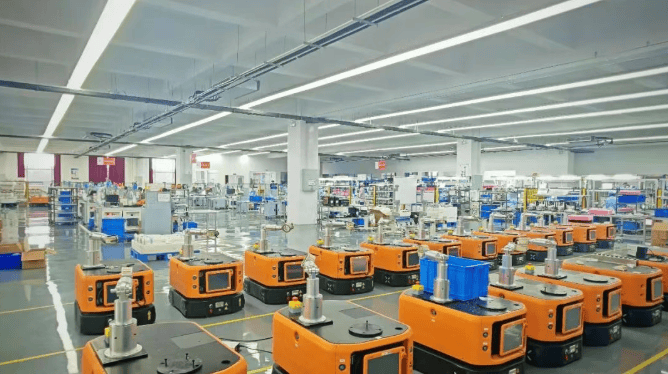
Key components of collaborative robots were long controlled by foreign players, but AUBO Intelligent, in partnership with Beihang University, is rewriting the competitive rules through "standards."
Leveraging high-efficiency harmonic drive technology, China led the formulation of the first international standard for robot modularity, which has been directly adopted by the United States, the European Union, Japan, and other countries and regions, becoming an important benchmark for global robot modular design.
Some have often believed that university research is "too far from industry," but Beihang's practice proves that the fundamental research strengths of universities are precisely the core confidence for breakthroughs in hard technology—from key components to operating systems to standard systems, AUBO Intelligent's core competitiveness stems from Beihang's research accumulation.
Currently, Beihang is replicating this proven model in the frontier track of embodied intelligence.
In 2025, the Embodied Intelligence Robot Research Institute at Beihang University was established, integrating research resources from multiple schools and departments, with Wei Hongxing serving as its first dean. AUBO Intelligent provides the institute with training platforms, processing technologies, and rapid prototyping of key components, allowing cutting-edge innovation to take root directly in industrial soil.
"The classroom for embodied intelligence students is right in the research institute, where they will directly participate in R&D and also gain exposure to production processes. We hope the institute will incubate more enterprises like AUBO Intelligent in the future, blazing a trail for the development of embodied intelligence in China," Wei Hongxing said.