
Successful mass production of T1200 grade
China takes the lead in carbon fiber
At the production base of Zhongfu Shenying Carbon Fiber Co., Ltd. in Lianyungang, Jiangsu Province, company executive Chen Qiufei showed reporters the T1200-grade carbon fiber that they globally debuted in mass production this March.
Chen Qiufei explained, "A single bundle contains 12,000 filaments. They are extremely fine, yet incredibly strong, reaching 8,000 megapascals—more than 10 times the strength of ordinary steel. Its density is exceptionally light, less than one-quarter that of steel. A T1200-grade carbon fiber rope as thick as a finger can lift a fully loaded C919 large aircraft."
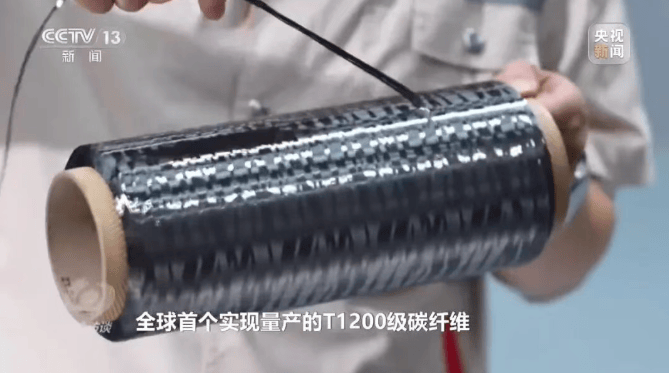
Carbon fiber, hailed as "black gold" and "king of new materials," is widely used in high-end manufacturing sectors such as aerospace and wind power, serving as a critical strategic material underpinning major national projects. However, more than 20 years ago, China could not independently produce even a single carbon fiber, completely constrained by foreign companies.
Chen Qiufei told reporters that carbon fiber is classified into different grades based on tensile strength—the higher the value, the greater the performance and technical difficulty—
T300 grade is the basic general-purpose grade; T700 grade is used in civilian industries such as wind power and new energy vehicle manufacturing; T800 grade is a core material in the aerospace sector; T1000 grade and above belong to the ultra-high-strength category, targeting cutting-edge national defense and aerospace fields such as rockets and satellites.
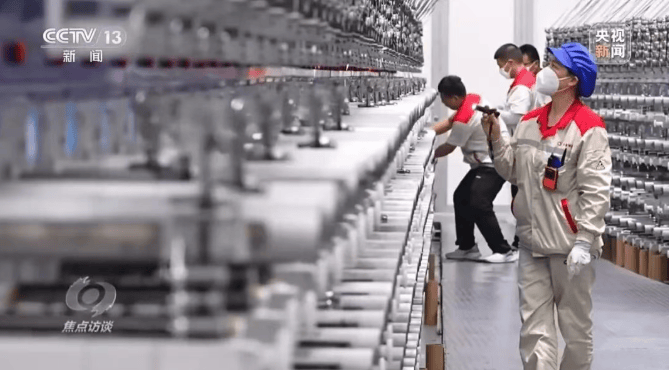
Starting from the T300 grade, China had been following behind. It was not until this year's successful mass production of T1200 grade that China took the lead in the carbon fiber field for the first time.
They fought for more than four years to reach this day. Chen Qiufei stated, "International leading companies have been deeply engaged in carbon fiber for over 50 years. It took them more than a decade to develop from T1100-grade to T1200-grade carbon fiber, and they have yet to achieve mass production. From R&D to mass production, we took just over four years—I believe that is an extremely fast pace."
Nearly 10,000 trials conducted
New quality productive forces are forged through hard work
New quality productive forces are forged through hard work—this was the most profound impression the reporter gained during the research visit to Zhongfu Shenying.
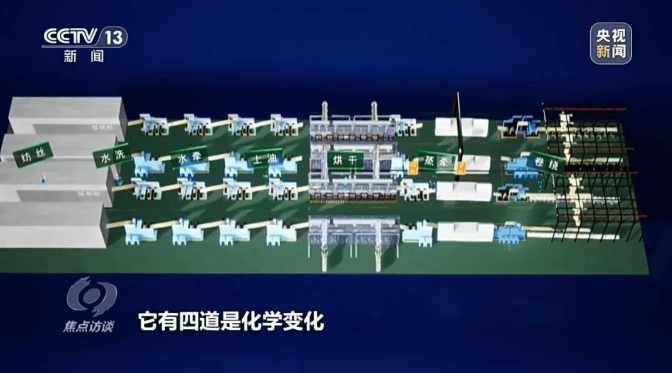
Producing carbon fiber, from white precursor fibers to the final transformation into black carbon fiber, involves over 300 process steps and more than 3,000 control parameters—it can be described as "a complex and precise dance of parameters."
Zhang Guoliang, chief scientist of Zhongfu Shenying Carbon Fiber Co., Ltd., stated: "Carbon fiber is a systematic project. Its complexity lies in the transformations—there are four chemical changes and four physical changes. The furnace temperature must rise step by step from 200 degrees Celsius to over 2,000 degrees Celsius, and each step significantly impacts the next. These eight transformations combined make the entire production process of carbon fiber extremely complex."
T1200-grade carbon fiber must achieve a tensile strength of 8,000 megapascals—the highest strength of carbon fiber in the world today. From laboratory R&D to engineering-scale mass production, the biggest challenge the development team faced was defect control in carbon fiber.
Previously, developing T1100-grade and lower-grade carbon fibers required controlling defects at the sub-micron level, whereas developing T1200-grade carbon fiber requires controlling defects at the sub-nanometer level. To achieve a viable yield rate for mass production, defects must be strictly controlled from the molecular structure design of the precursor fibers through every process step.
A relevant executive of Zhongfu Shenying Carbon Fiber Co., Ltd. recalled,the entire process route went through repeated trial and error, with nearly 10,000 experiments conducted.
Seamless integration of technological and industrial innovation
New technologies and processes tested directly on production lines
Just as the development team was iterating through trial and error to find a technical breakthrough, in 2023, a leading Japanese carbon fiber company announced the successful laboratory development of T1200-grade carbon fiber, with plans for engineering-scale mass production by 2026. This ignited the fighting spirit of the Zhongfu Shenying development team.
To meet national strategic needs and catch up with world-class standards, technological innovation and industrial innovation are seamlessly integrated here, with new technologies and processes tested directly on production lines.
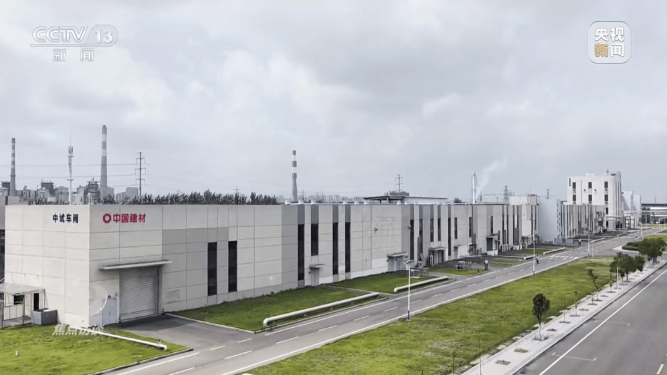
To transform laboratory scientific and technological achievements into real productive forces, a small-scale pilot production is generally required before further large-scale mass production can be achieved. To accelerate the formation of new quality productive forces, the Zhongfu Shenying development team chose a rapid industrial innovation path—going directly from 1 to N.
Chen Qiufei stated that the reason they were able to break through a generation of carbon fiber material in just over four years is attributed to validation on engineering-scale production lines, allowing for a swift transition to mass production once validated.
Zhang Guoliang believes that the accumulation over the past two decades and more, with technological progress never ceasing, means that in the future, the strength and performance of carbon fiber can be elevated to yet another level.