
On August 6, the world's first 16-megawatt tension-leg floating wind platform, the "Haiyou Anlan," was successfully connected to the Lufeng oilfield power grid, officially supplying green electricity directly to the offshore oilfield. This marks China's deep-sea floating wind power equipment technology reaching the forefront of the world and successfully pioneering a new technical route for the country's offshore wind power development.
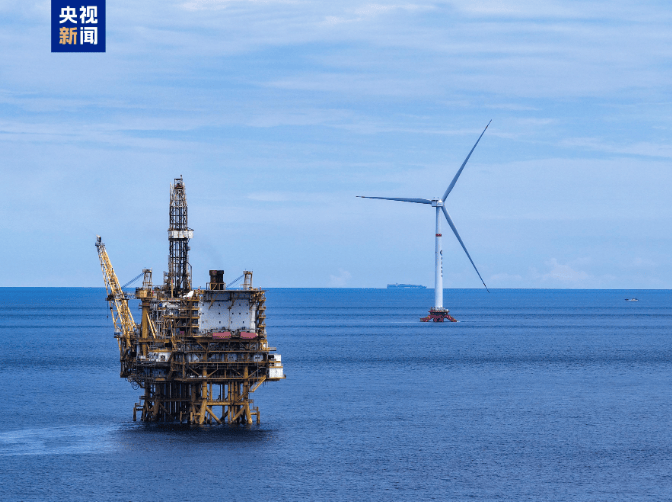
The tension-leg floating wind platform is a large-scale floating facility specifically designed and built for developing deep-sea wind power, consisting of an upper floating body, a subsea anchoring foundation, and a mooring system. The "Haiyou Anlan" is installed at the Lufeng oilfield, at a water depth of 136 meters and 136 kilometers offshore. Standing nearly 110 stories tall, it is equipped with a 16-megawatt typhoon-resistant turbine, independently designed and built to withstand extreme conditions of Category 17 typhoons, with a service life of 25 years.
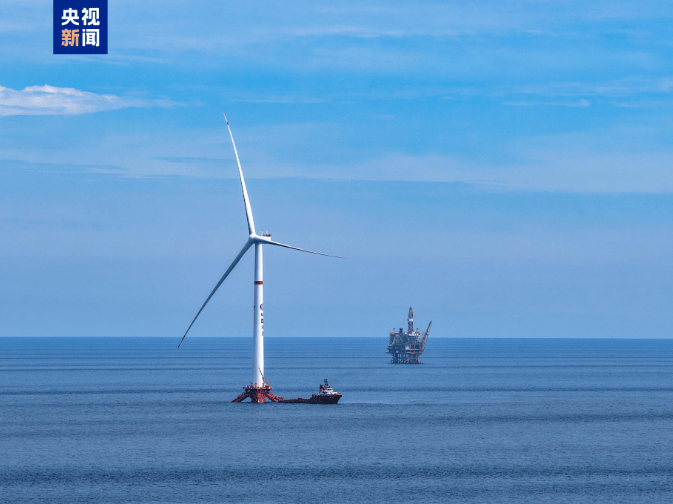
The "Haiyou Anlan" is connected to the Lufeng oilfield power grid via a submarine cable approximately 4.3 kilometers long. Due to the high volatility of wind power, the project pioneered a combined power supply model integrating offshore wind power, fuel oil power generation, and energy storage, enabling a high proportion of offshore wind power to be integrated into the oilfield power grid.
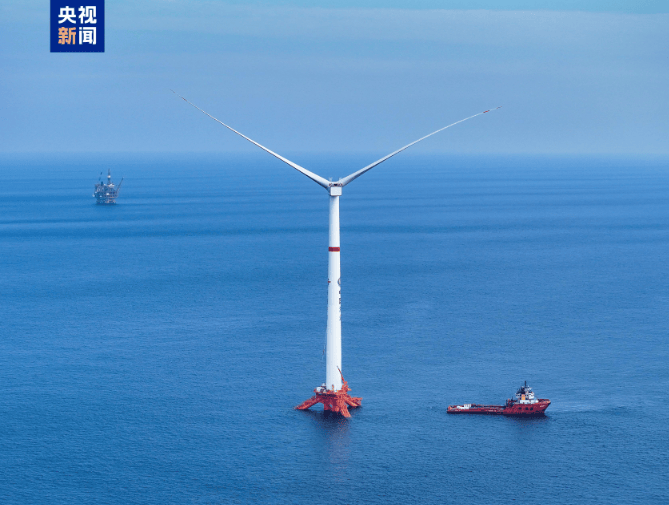
Once operational, the "Haiyou Anlan" is expected to provide 54 million kilowatt-hours of green electricity to the oilfield annually, equivalent to saving 15,000 cubic meters of fuel oil and reducing carbon dioxide emissions by 35,000 tons.