
The Princess Elisabeth Island project, developed by Belgian grid operator Elia Group, has reached a key milestone. On August 20, the TM Edison consortium (comprising DEME and Jan De Nul) completed the installation of the 23rd and final caisson in the North Sea, 45 kilometers off the Belgian coast, marking the completion of the foundation structure of the world's first artificial energy island.
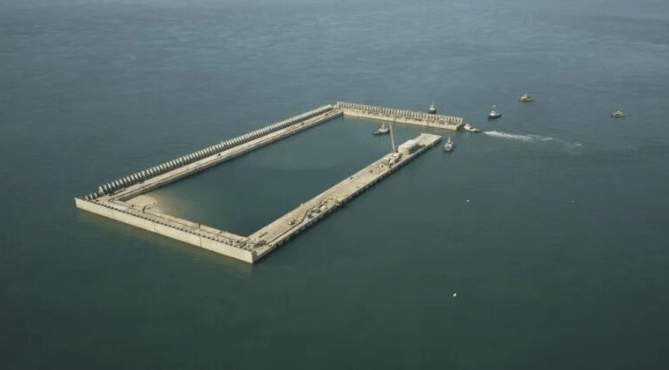
The 23 caissons together form the outer protective structure of the energy island. Each caisson weighs approximately 22,000 tons and measures 58 meters in length, 28 meters in width, with heights ranging from 23 to 32 meters (depending on whether a wave wall is included). These caissons were constructed in Vlissingen, the Netherlands, with around 300 people involved in construction daily, and each caisson taking approximately three months to build.
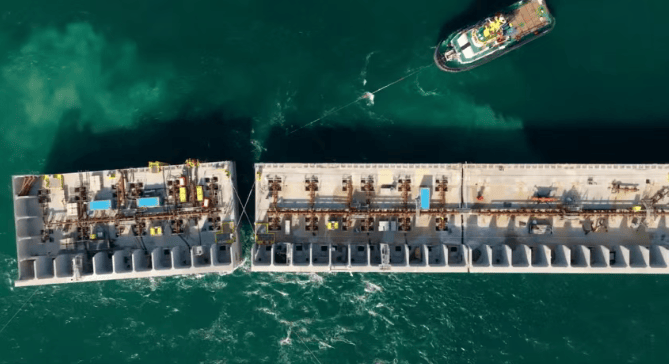
The project now transitions to its next phase—over the coming months, sand will be filled within the enclosed area formed by the caissons to create the island. According to the plan, export cables will be installed between 2027 and 2028, electrical equipment in 2029, with final completion scheduled for 2031.
Princess Elisabeth Island will become the world's first artificial energy island integrating both high-voltage direct current (HVDC) and high-voltage alternating current (HVAC) systems, transmitting at least 2.1 GW of offshore wind power from the Princess Elisabeth zone to the Belgian mainland.