
According to WeDoAny.com, sourced from Beijing University of Posts and Telecommunications, the space computing cloud, the world's first to provide on-orbit experimental services to external users and led by the university, has officially begun offering regular on-orbit computing services.
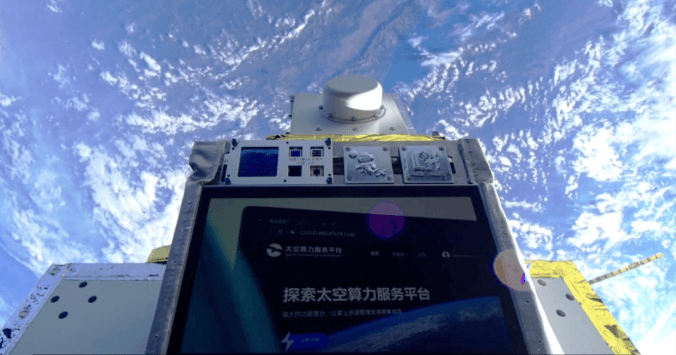
The space computing cloud consists of an on-orbit service platform, a ground station service platform, and an operations service platform. By integrating task orchestration, computing scheduling, data processing, and service provisioning across satellite platforms, space servers, ground stations, and ground data centers, it achieves end-to-end automation of complex operations, providing users with full-lifecycle computing services covering task application, deployment, execution, monitoring, and result delivery.
The space computing cloud has developed three core technical capabilities: establishing an autonomous, controllable, open, and compatible "space operating system" ecosystem, transforming one-time on-orbit experiments into reusable, iterable platform-based services; building a cloud-native software runtime foundation tailored for space environments, supporting flexible deployment, on-demand evolution, and long-term reliable operation of on-orbit software; and enabling collaborative scheduling of satellite payloads, providing a critical foundation for real-time on-orbit data processing and autonomous satellite decision-making.
Since entering on-orbit service, the space computing cloud has operated stably, supporting on-orbit experimental tasks in key scenarios such as big data computing, 6G communications, and distributed storage. It supports mixed-criticality task deployment, has completed hundreds of space computing invocations, and served over one hundred users. Based on a domestically developed native software and hardware ecosystem, the large model inference energy efficiency ratio has reached 10 tokens/Joule (Tokens/J), and the coverage rate of space computing services has exceeded 10%.
It is understood that the space computing cloud has currently developed sustained service capabilities in real-time data processing, low-latency intelligent decision-making, and iterative enhancement of satellite network capabilities, expanding new service boundaries and application scenarios for various satellite systems. Its value lies not only in "delivering computing power to space," but also in establishing a schedulable, reusable, and operable on-orbit digital infrastructure. This will drive the evolution of satellites from single-task carriers to networked intelligent nodes, accelerate the transformation of the space information industry from "delivering hardware" to "continuously delivering services," and foster new industrial growth points for satellite internet, 6G, commercial aerospace, and emergency communications.