
High-temperature superconducting tape now has a cheaper and stronger "skeleton." A research team from the Technical Institute of Physics and Chemistry, Chinese Academy of Sciences, has successfully developed a new "skeleton" for high-temperature superconducting tape—an iron-based alloy substrate (DW01). The key performance indicators of superconducting tape prepared with this substrate are significantly superior to those of traditional Hastelloy substrate products, marking an important step forward in China's achievement of independent and controllable core materials for high-temperature superconducting tape.
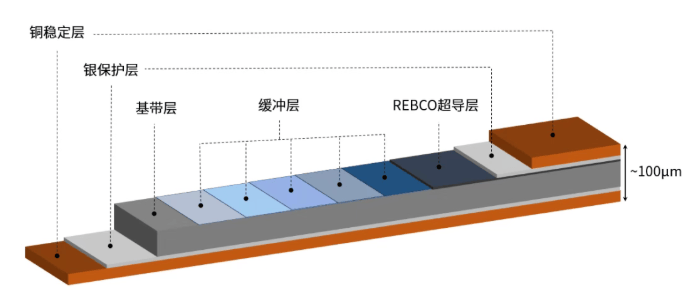
High-temperature superconducting tape is an advanced material capable of conducting electricity with almost zero resistance under high currents and strong magnetic fields. It is mainly used in fields such as controlled nuclear fusion, superconducting power, and superconducting accelerators. It looks like a thin metal strip, but in reality, several layers are stacked inside. The actual superconducting layer that conducts electricity is extremely thin, and beneath it, there must be a sturdy and durable "base," namely the substrate. This substrate acts like the skeleton of the human body, needing to withstand bending, stretching, and drastic temperature changes.
Over the past few decades, this "skeleton" has been made almost entirely of Hastelloy (C276). More than half of this alloy consists of the relatively expensive nickel, along with rare metals such as molybdenum, tungsten, and cobalt, while inexpensive iron accounts for only five percent, keeping raw material costs consistently high. More importantly, this material has been in use for nearly 30 years, leaving little room for performance improvement.
To address this challenge, the team of Researcher Li Laifeng and Researcher Shi Li from the Technical Institute of Physics and Chemistry, Chinese Academy of Sciences, in collaboration with Shougang Research Institute and Beijing Beiye New Materials Company, started with iron-based alloys and developed the DW01 substrate over more than three years. Its main component is common iron, and the raw material cost is only one-quarter that of the C276 substrate.
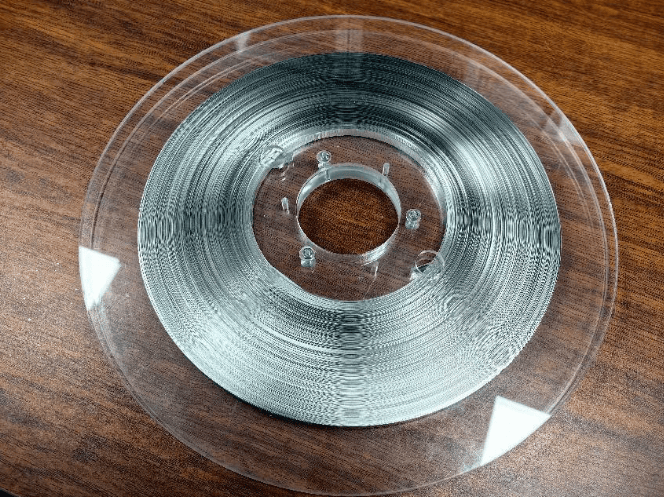
Second-generation high-temperature superconducting tape using an iron-based alloy substrate
Being inexpensive is not enough—performance is the key. In May this year, Shanghai Superconductor Technology Co., Ltd. successfully produced a product-grade superconducting tape using the DW01 substrate. Tests showed that at minus 196 degrees Celsius and under zero field, the critical current of a 12-millimeter-wide silver-plated tape reached 647 amperes. When the tape was elongated by 0.6%, the critical current of the DW01 substrate tape dropped by less than 10%, while that of the C276 substrate tape dropped by more than 50%. "This shows that the new 'skeleton' is more durable and less likely to damage the superconducting layer when bent or subjected to stress," said Li Laifeng.
In addition, the magnetic and electrical resistance properties of the DW01 substrate are also superior to those of the C276 substrate, helping to reduce energy loss during use. The team has applied for six invention patents covering the composition and manufacturing method of the DW01 substrate. Currently, key indicators such as thickness precision and surface quality of the DW01 substrate have met supply standards, satisfying the requirements for industrial production.
Industry experts believe that the DW01 substrate not only opens a new path for the domestic production of high-temperature superconducting tape but also, with its excellent high-field performance and significant cost advantages, provides strong support for China to seize the commanding heights of global competition in the superconducting industry.