
The Fraunhofer Institute for Ceramic Technologies and Systems (Fraunhofer IKTS) in Germany has released research progress on resource recovery technology for end-of-life neodymium-iron-boron (NdFeB) magnets. Under the framework of the EU NEO-CYCLE project, the institute, together with TU Bergakademie Freiberg, has developed two recycling processes—solid-state chlorination and electrochemical treatment—to extract neodymium, boron, iron and other materials from discarded hard drive magnets. The research team has carried out experimental validation of both technical routes and is advancing the development of selective hydrometallurgical separation technology, with plans to build a pilot facility.
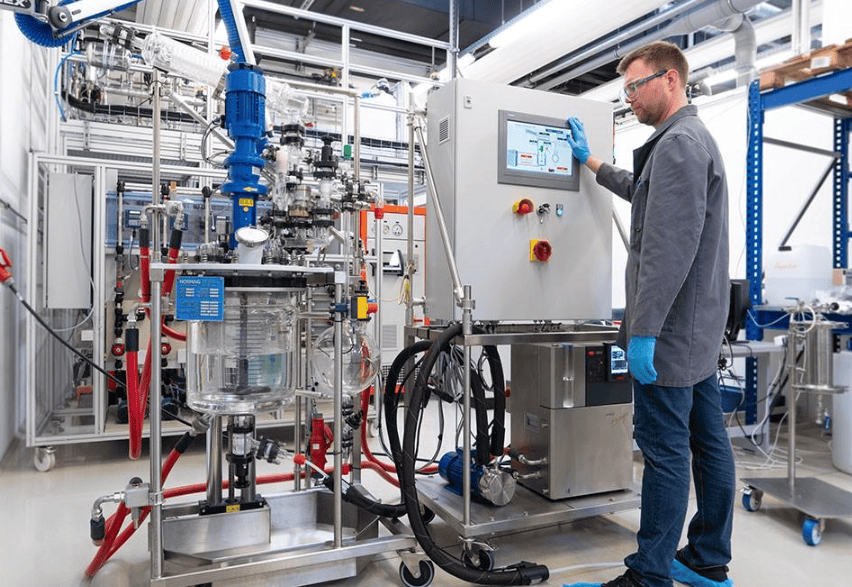
The solid-state chlorination process, led by TU Bergakademie Freiberg, uses ammonium chloride to treat NdFeB magnet material recovered from end-of-life hard drives. Through heating, the metal components are converted into metal chlorides while high-purity ammonia solution is generated. This process has previously been patented and applied in fluorescent lamp recycling. The latest magnet recycling trials show that metal chlorides can be separated more efficiently from magnet material, achieving near-complete metal extraction with relatively small amounts of chemical reagents.
The other technical route employs electrochemical treatment, placing crushed end-of-life magnet material in an electrochemical reactor with dilute sulfuric acid and other electrolytes as the reaction medium. A boron-containing solution is first extracted from the magnets, then concentrated to obtain raw materials suitable for chemical and pharmaceutical production. The products from both processes then enter further separation stages, and researchers will compare the technical applicability of the different treatment methods.
The Fraunhofer IKTS research team is responsible for downstream metal separation and process water treatment, using selective hydrometallurgical technology to separate neodymium and iron and further recover high-purity metal salts. The institute's project technical documentation also lists a recovered neodymium oxalate sample with a purity of 95%, as well as a pilot-scale electrodialysis metal purification system with a capacity of 160 liters. The separation technology combines organic acid extraction, selective precipitation, crystallization and membrane treatment processes to advance the purification of recovered products and the recycling of process liquids.
The NEO-CYCLE project is funded by the EU's Horizon Europe program with a four-year research period. Project partners are advancing the planning of a pilot facility for the recycling processes, aiming to convert neodymium, boron and iron from end-of-life magnets into recycled raw materials for use in the chemical, pharmaceutical, hydrogen energy and fertilizer industries, and to reduce chemical reagent and fresh water consumption through the combination of multiple processes.