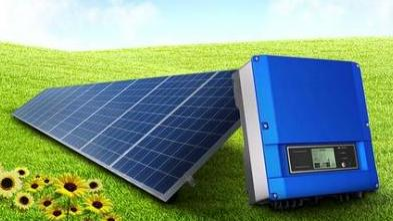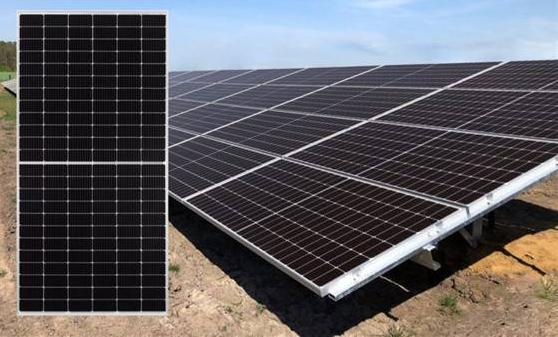



Photovoltaic modules are the core part of solar power generation systems. They work by converting solar energy into electrical energy. The module is mainly composed of several parts, such as solar cells, encapsulation materials, and electrical connection devices. Photovoltaic modules come in a variety of specifications and can be classified according to several aspects, such as size, power, and cell type.
Common sizes include 1650×992mm, 1956×992mm, 2000×1000mm, 1200×600mm, 1560×810mm, 1956×810mm, etc.
Photovoltaic modules can be classified into polycrystalline silicon, monocrystalline silicon, and amorphous silicon according to the cell type. Polycrystalline silicon and monocrystalline silicon modules are widely used in rooftops, power stations, etc., while amorphous silicon modules are more commonly used in outdoor applications such as billboards and solar water pumps due to their self-cleaning and stable energy characteristics.
The power of common polycrystalline silicon modules generally ranges from 250 - 500Wp, while the power of monocrystalline silicon modules may be 290W, 300W, etc.
Other specifications. Photovoltaic modules also have other detailed specifications, such as thickness and cell arrangement. For example, the thickness of a standard photovoltaic module is approximately 35mm to 40mm, and the cell arrangement can be different configurations, such as 60 cells or 72 cells.