

EN 1871 Thermoplastic Road Marking Paint
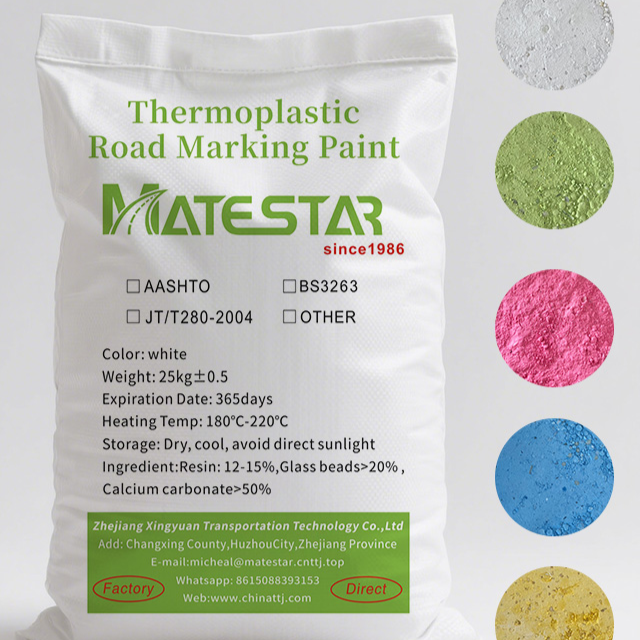
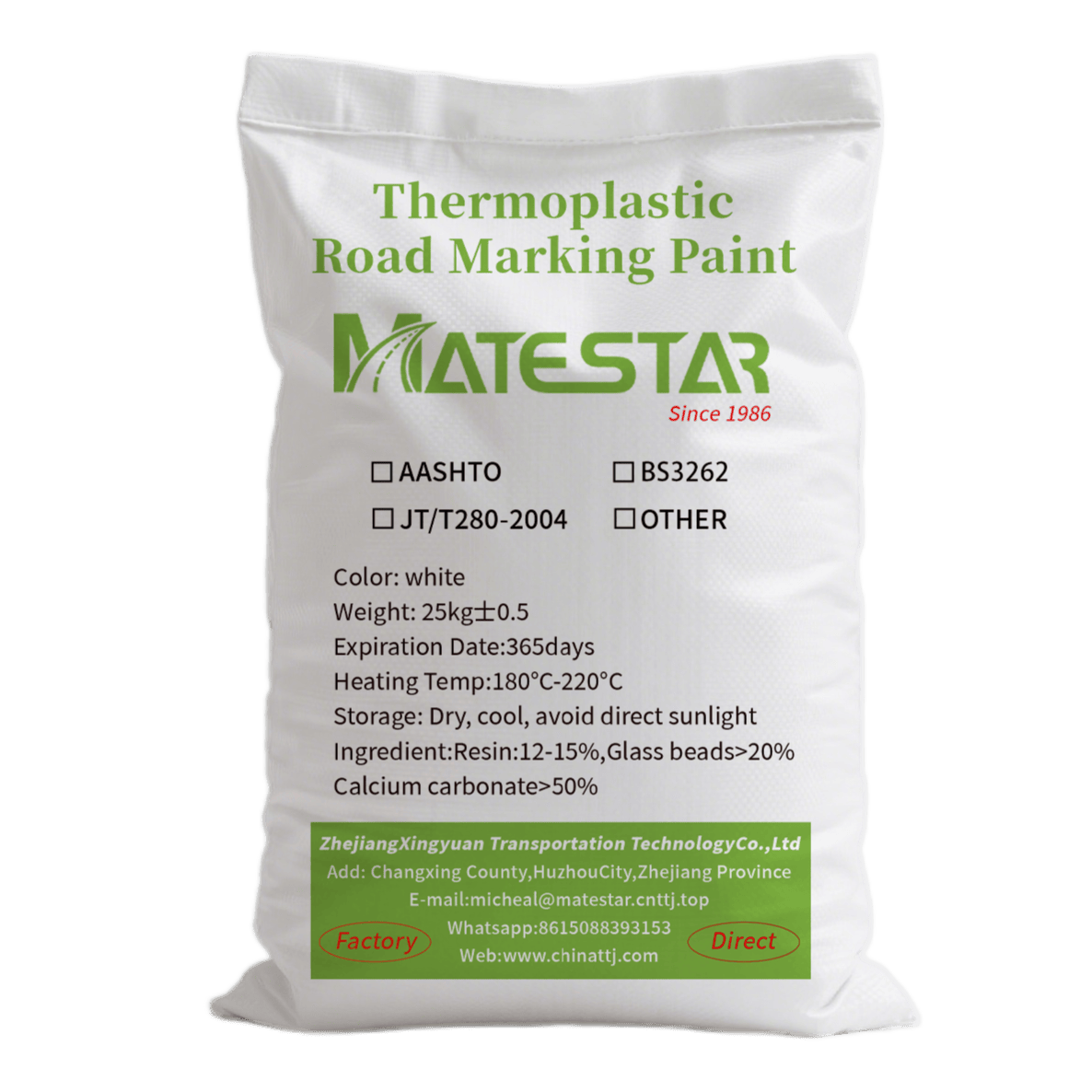
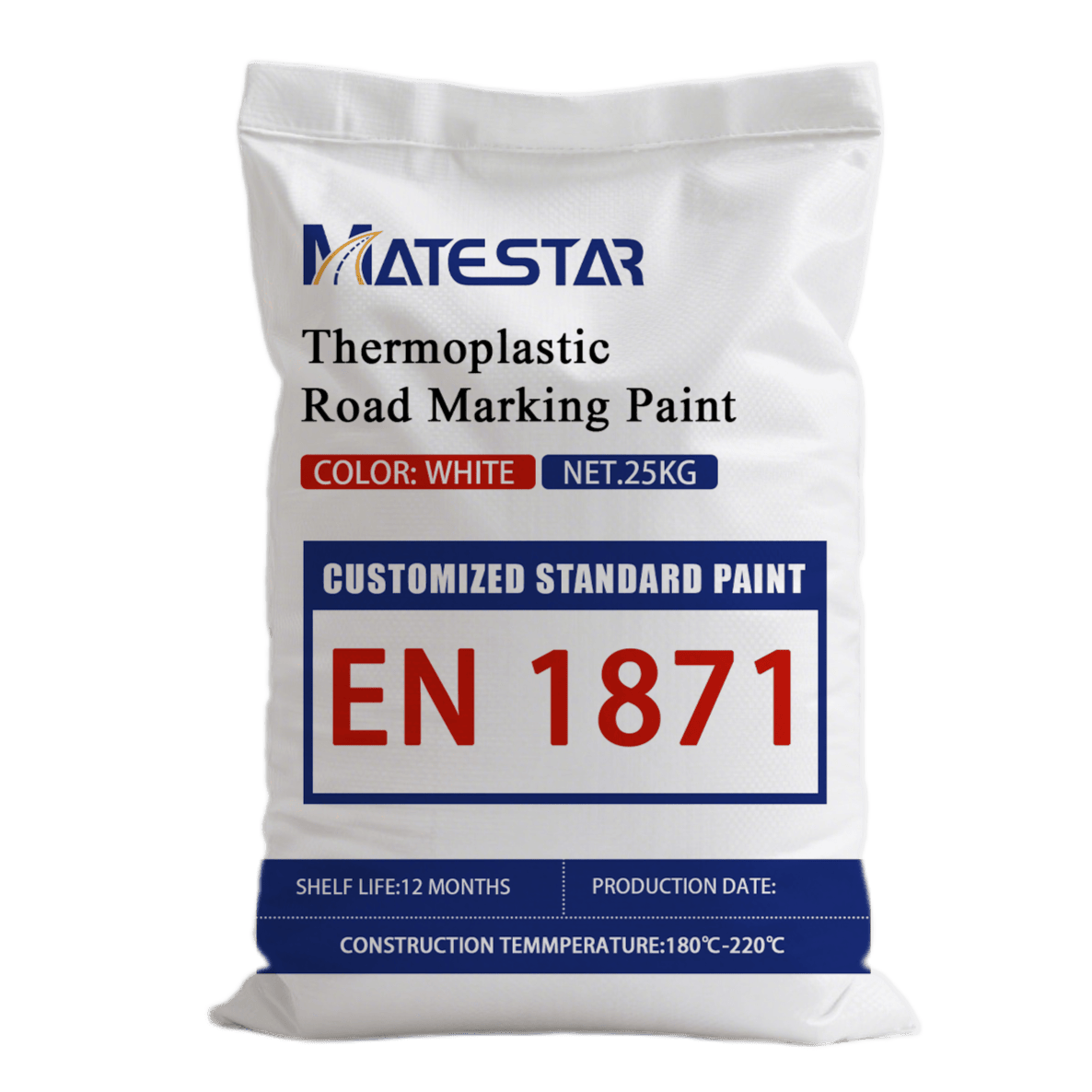
MATESTAR supplies EN 1871 thermoplastic road marking paint for projects requiring European-standard road marking materials. This hot-applied thermoplastic paint is suitable for white and yellow road markings, including road line marking, thermoplastic line marking, pedestrian crossings, arrows, symbols and other traffic markings.
Our thermoplastic road marking paint can be adjusted according to project specifications, including binder resin, titanium dioxide, glass beads for road marking, luminance factor, chromaticity, softening point, drying time, skid resistance, alkali resistance, and application method.
What Is EN 1871 Thermoplastic Road Marking Paint?
EN 1871 thermoplastic road marking paint refers to hot-applied thermoplastic road marking material supplied for projects that require EN 1871-type physical property testing. EN 1871 is a European standard for road marking materials, covering paint, thermoplastic and cold plastic materials used for permanent or temporary road markings.
For thermoplastic road marking paint, the material is supplied in solid powder or granular form, heated to a molten state, and applied to the road surface by screed, extrusion or spray equipment. After cooling, it forms durable road markings with good visibility, adhesion and wear resistance.
EN 1871 thermoplastic paint was not defined only by a fixed formula. It is more related to physical performance, such as luminance factor, chromaticity, softening point, UV ageing resistance, alkali resistance, skid resistance, cold impact resistance, and glass bead system.
Key Features of EN 1871 Thermoplastic Road Marking Paint
European-Standard Physical Property Focus:
EN 1871-type thermoplastic road marking paint is designed around physical performance requirements, not only the raw material percentage. Important indicators may include luminance factor, chromaticity, softening point, UV ageing, alkali resistance, and cold impact resistance.
White and Yellow Road Marking Paint:
The material is commonly supplied in white and yellow for road markings, road line marking, lane lines, edge lines, pedestrian crossings, arrows, and traffic symbols.
Hot-Applied Thermoplastic Material:
The product is heated before application and applied by screed, extrusion, or spray equipment, depending on project specification and marking method.
Glass Beads for Road Marking:
Premix glass beads and drop-on glass beads can be used to improve retroreflectivity and nighttime visibility of reflective road markings.
Binder Resin and Pigment System:
The binder resin, titanium dioxide, pigments, fillers, and glass beads are adjusted to support brightness, color stability, wear resistance, flowability, and application performance.
Project-Based Formula Adjustment:
Formula can be adjusted according to tender requirements, local climate, road surface, traffic level, required softening point, skid resistance, and application method.