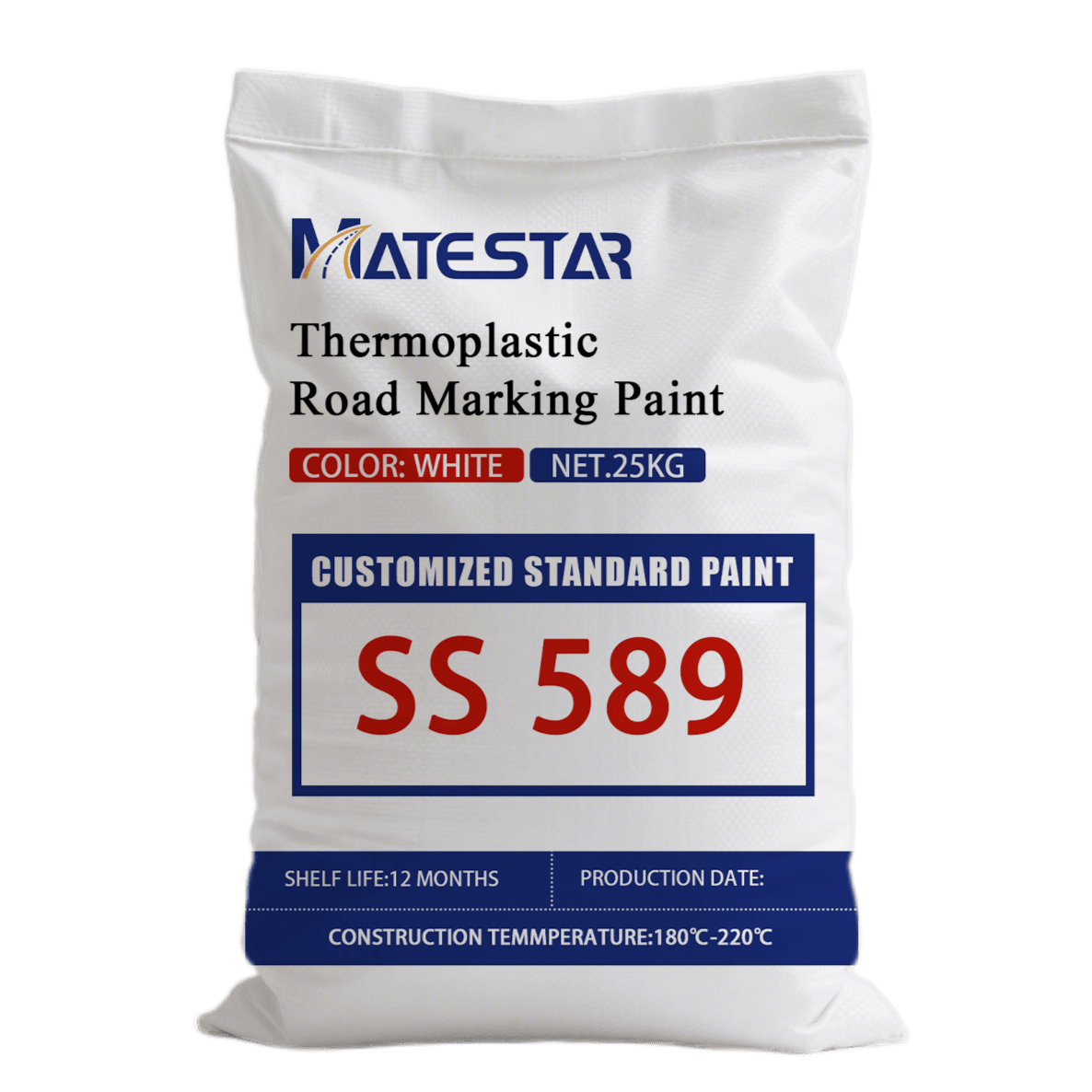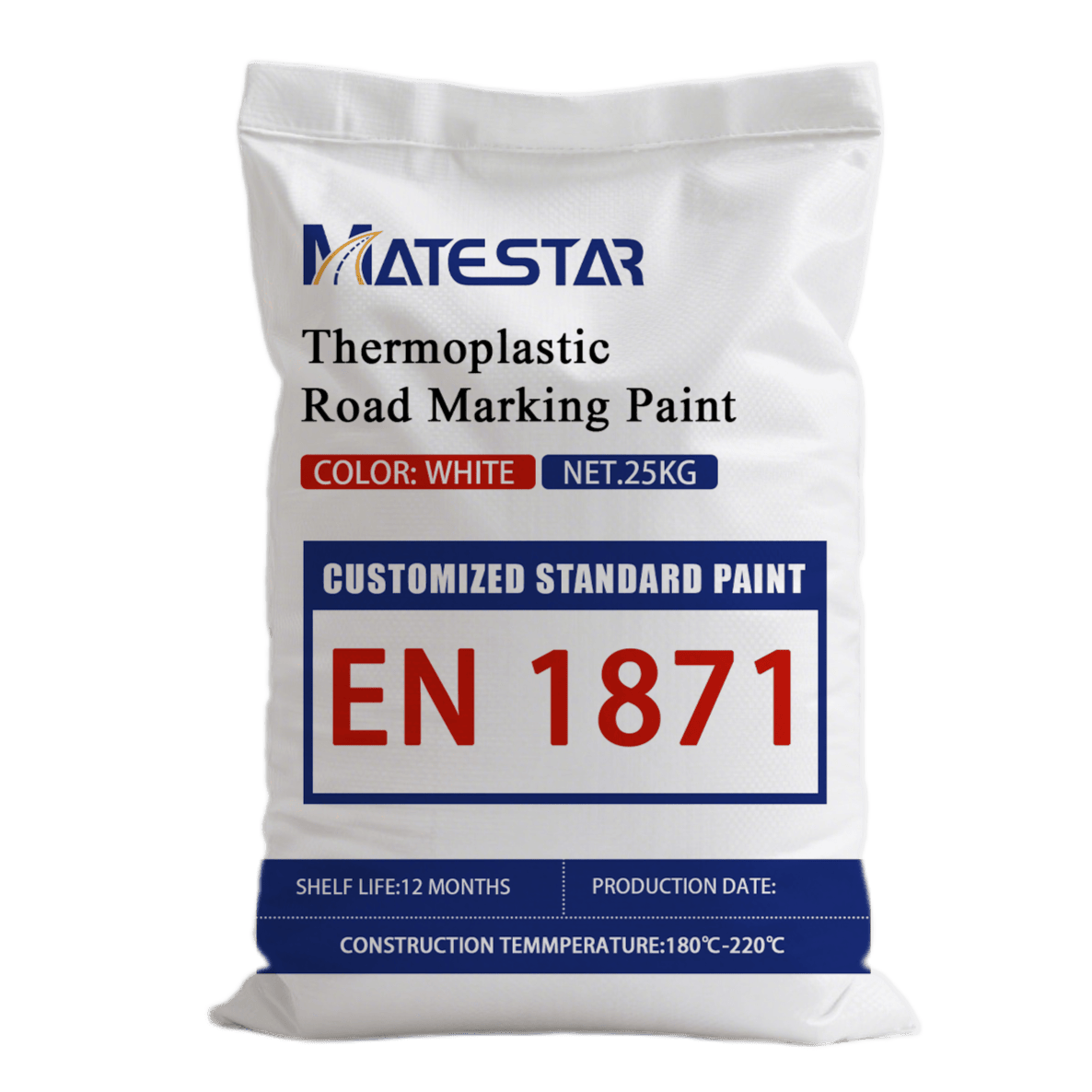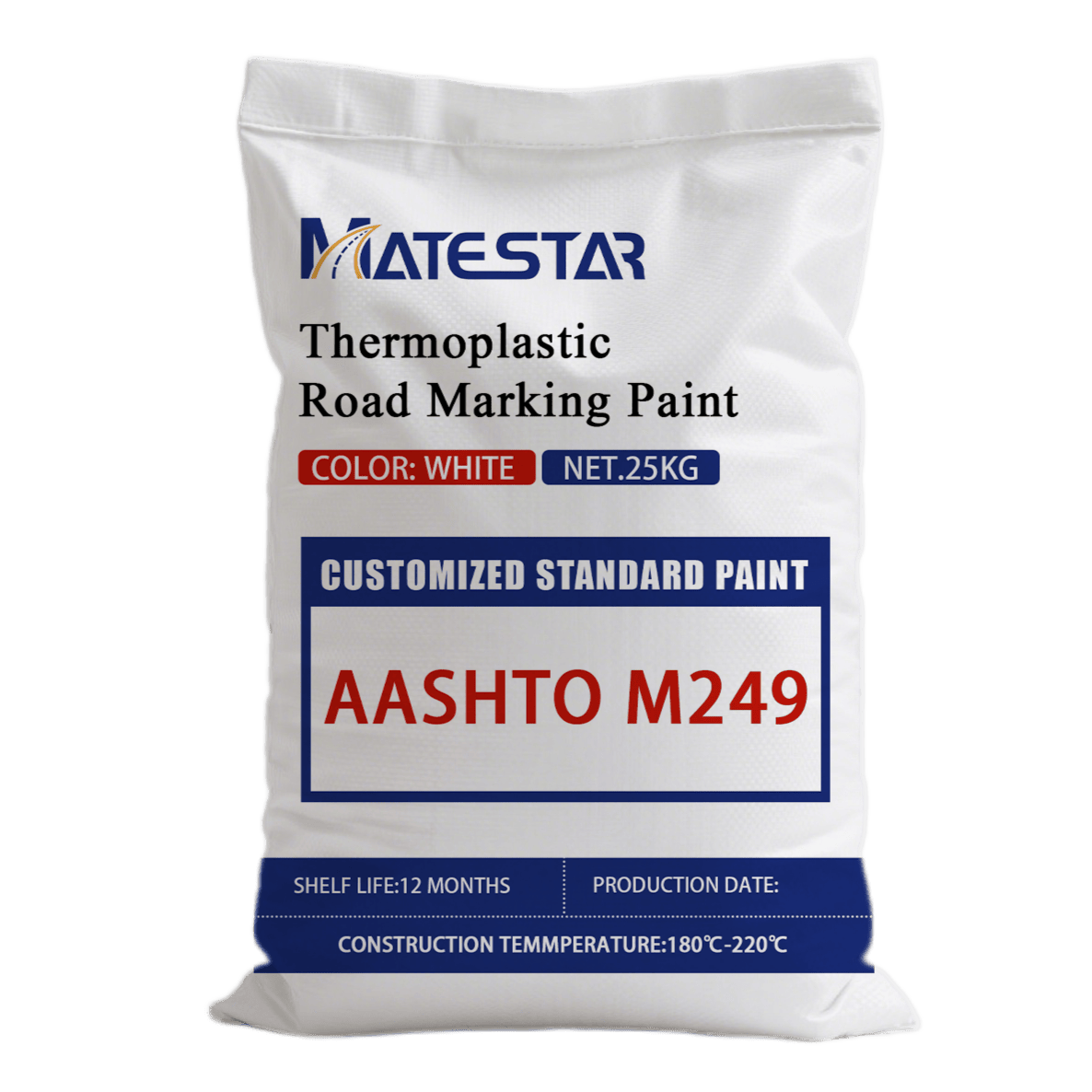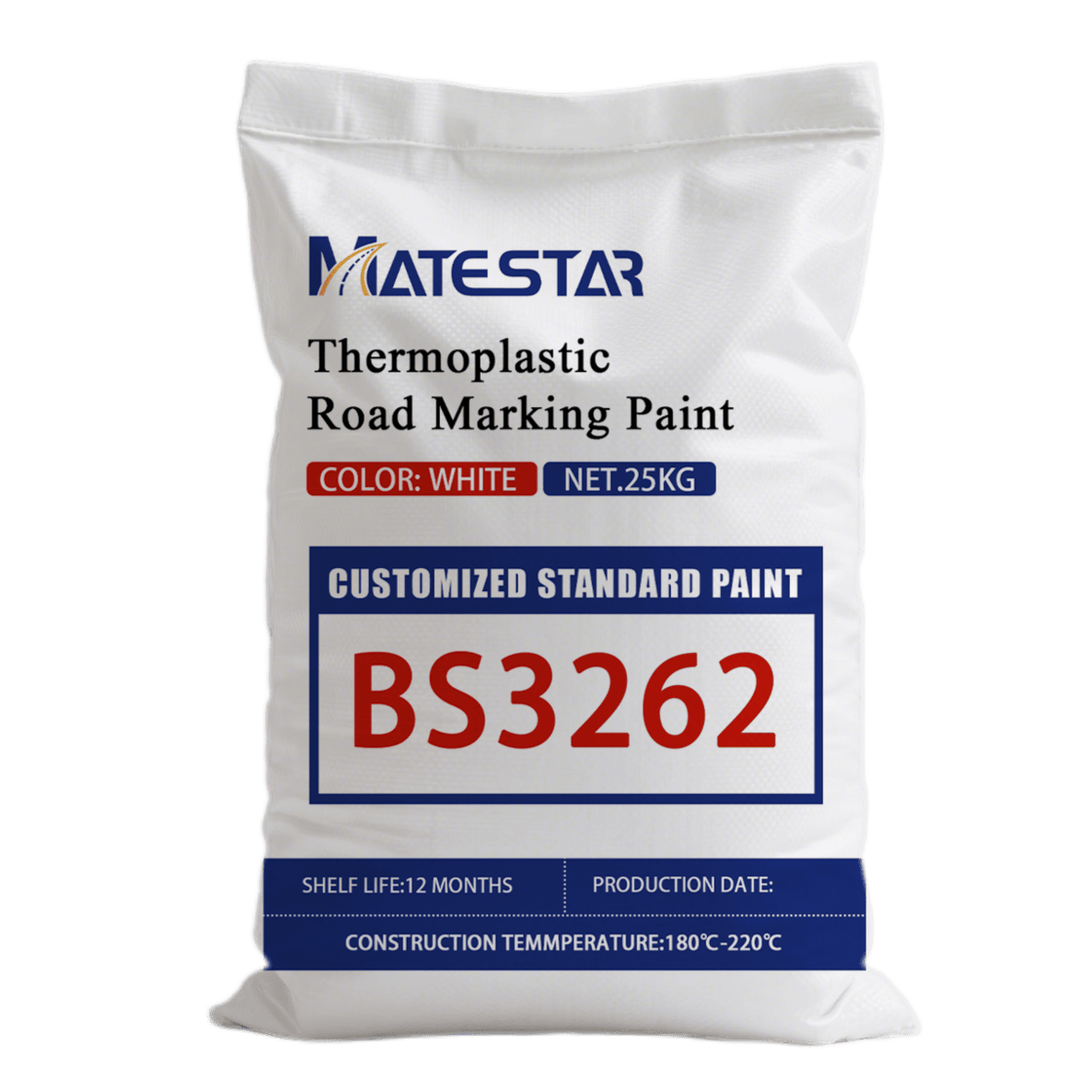


A Practical Thermoplastic Road Marking Paint Solution for Syria
Syria is not a normal road marking market at this stage. Many road projects are not starting from a complete new highway plan with a detailed international specification. They are often connected with road recovery, damaged pavement repair, city road maintenance, reopening traffic routes, restoring municipal roads, and improving safety on existing road networks.
For this kind of market, the most realistic product is usually not the most expensive international-standard thermoplastic paint. The more practical option is a stable China standard thermoplastic road marking paint that can be applied easily, packed safely, shipped in bulk, and adjusted when the project condition requires better performance.
MATESTAR supplies thermoplastic road marking paint for Syria contractors, importers, distributors, road maintenance companies, and project suppliers. Our standard formula is suitable for general road marking work, while upgraded options can be provided for hot pavement, dusty roads, heavy traffic, night visibility, coastal humidity, or special project requirements.
Why China Standard Thermoplastic Paint Fits Many Syria Projects
In many Syria road marking projects, the buyer may not have a strict specification such as AASHTO M249, BS3262, EN1871, or a complete local laboratory requirement. The project may simply need road lines that can be applied smoothly, dry quickly, show clear white or yellow color, provide basic night visibility, and stay durable enough for the road condition.
For this type of work, China standard thermoplastic road marking paint is a practical starting point.
Recommended Product Logic for Syria
Syria should not be written as a "one formula for all roads" market. It should be treated as a road recovery market where the buyer may start with China standard material, then upgrade only when road conditions require it.
| Syria Project Situation | Recommended Product Logic |
| General road repair | China standard thermoplastic road marking paint |
| City road maintenance | Standard formula with stable melting and clear line formation |
| Hot inland roads | Higher softening point formula |
| Old or repaired asphalt | Better adhesion control and primer if needed |
This structure helps buyers avoid two mistakes:
First, choosing the cheapest formula for a road that needs better heat resistance or adhesion.
Second, paying for a high-standard formula when the project only requires a practical maintenance-grade material.
Packing and Import Plan for Syria
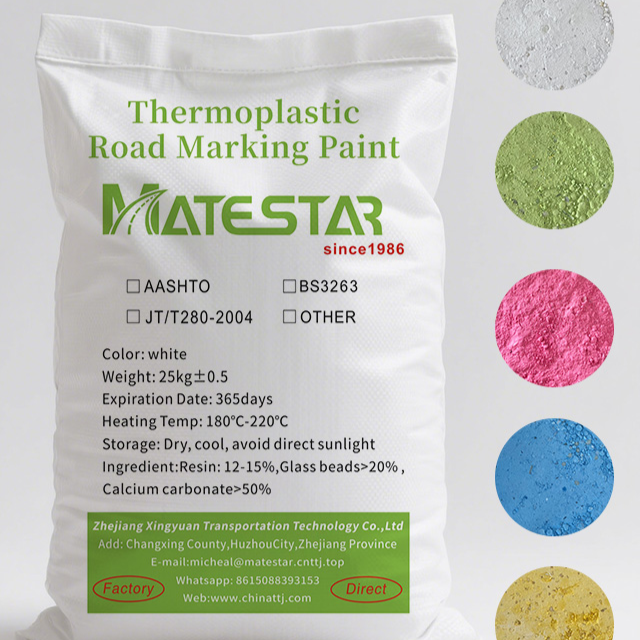
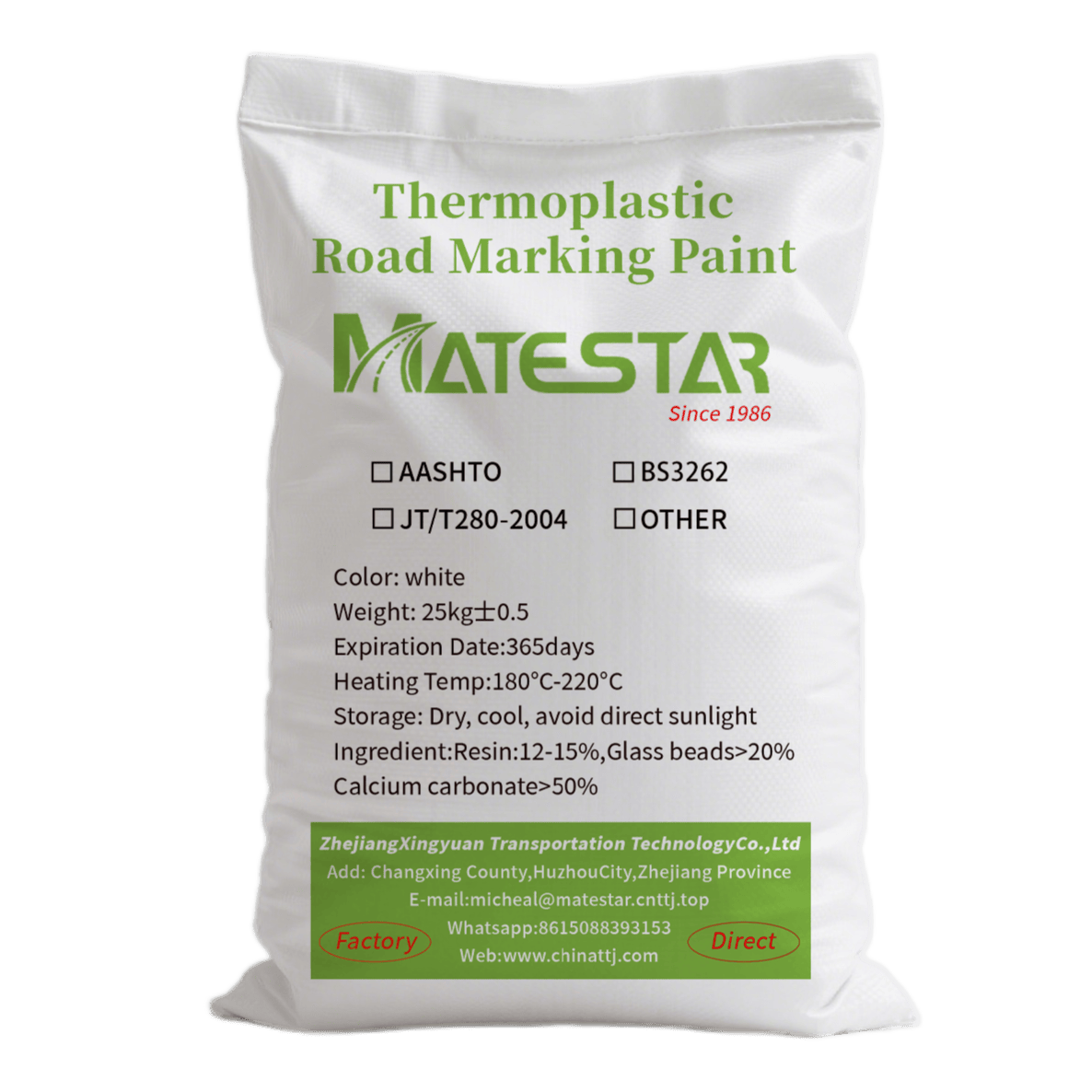
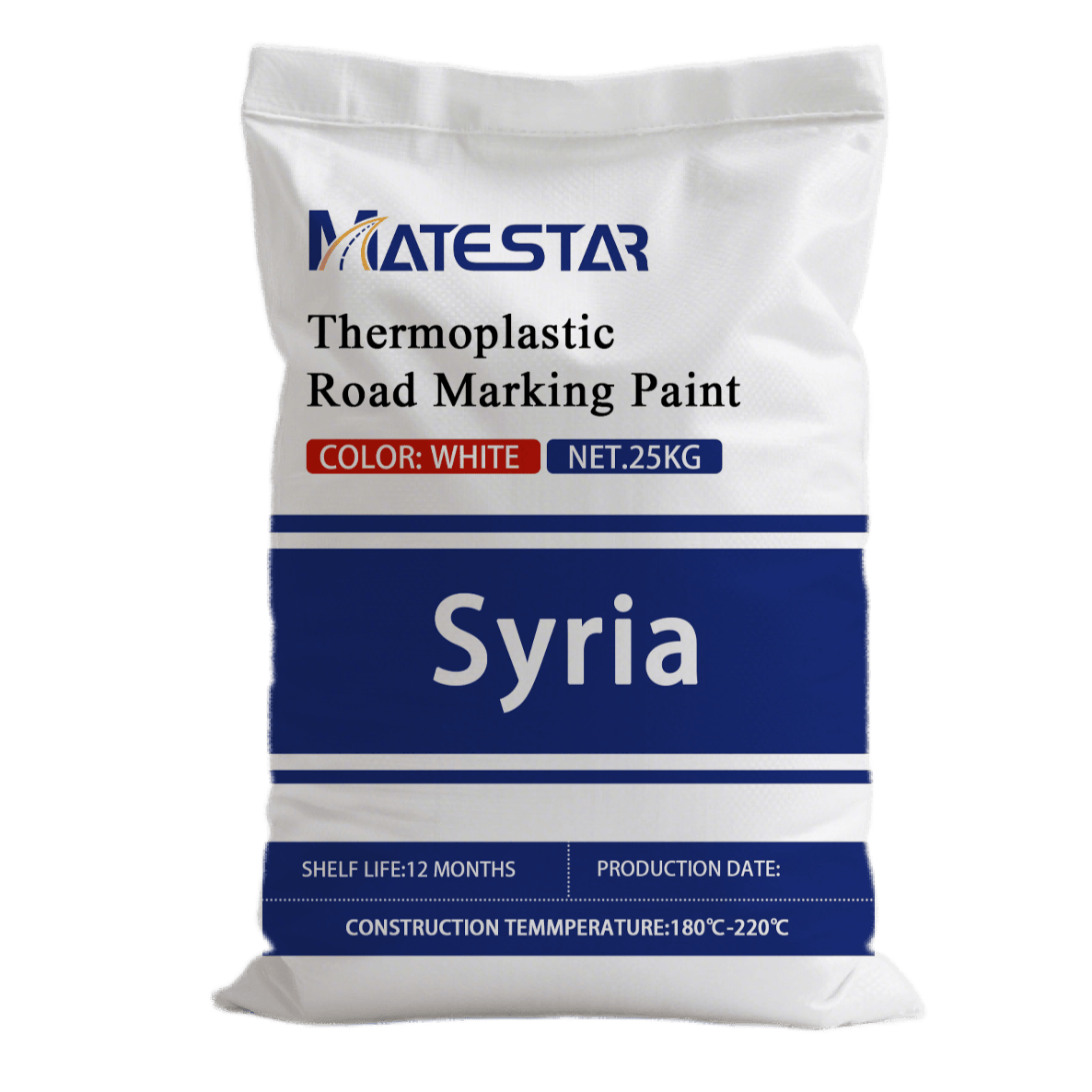
MATESTAR supplies thermoplastic road marking paint in 25kg bags, suitable for container loading, warehouse handling, distributor stock, and project delivery.
| Item | Details |
| Package | 25kg/bag |
| Color | White / yellow |
| MOQ | 5 tons |
| 20GP loading | Around 26 tons |
| Loading method | Palletized or non-palletized |
| Documents | TDS, SDS, product photos, loading photos |
| Support | Sample order, LCL, FCL, OEM packaging |
For Syria imports, Latakia is usually an important gateway for containerized cargo. Tartus may also be considered depending on shipping availability, customs arrangement, inland delivery route, and project location.
Common delivery areas may include:
- · Damascus
- · Aleppo
- · Homs
- · Hama
- · Latakia
- · Tartus
- · Other project sites based on buyer arrangement
Because Syria's logistics environment is still recovering, buyers should confirm the shipping route, customs broker, payment arrangement, inland transport, and warehouse handling before placing bulk orders.
MATESTAR can support:
- · Sample order for formula testing
- · LCL shipment for small trial orders
- · FCL shipment for project supply
- · Palletized loading for easier unloading
- · Non-palletized loading for better container utilization
- · English or Arabic packaging support if required
Application Notes for Syrian Contractors
For Syria road repair projects, application quality is especially important because many road surfaces may not be new.
Recommended construction process:
- · Road cleaning
- · Line layout
- · Primer application if required
- · Material heating
- · Thermoplastic marking
- · Drop-on bead application
- · Cooling and traffic opening
Important site control:
- · Clean dust, sand, oil and loose asphalt before marking.
- · Do not apply on wet or unstable pavement.
- · Keep material temperature around 180–220°C.
- · Avoid overheating for a long time.
- · Apply glass beads while the line is still hot.
- · Use primer on concrete or weak adhesion surfaces if needed.
- · Make a trial section before large-scale application.
- · Check line thickness, edge shape, bead distribution and adhesion after cooling.
For damaged or repaired roads, surface preparation is often more important than simply choosing a more expensive formula.