

- Horizontal Single-Axis
Detailed introduction to the horizontal single-axis photovoltaic support:
- Structural Composition
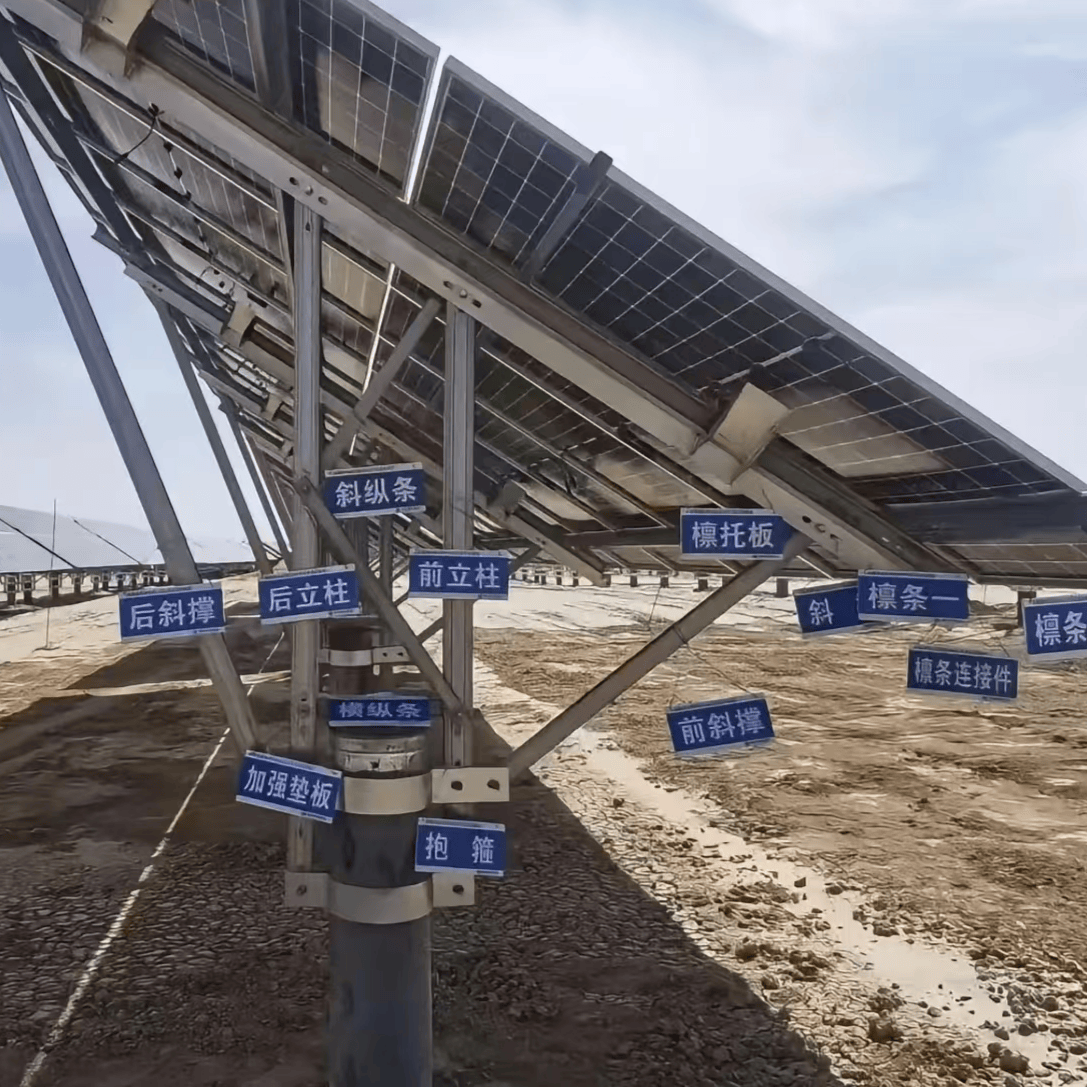
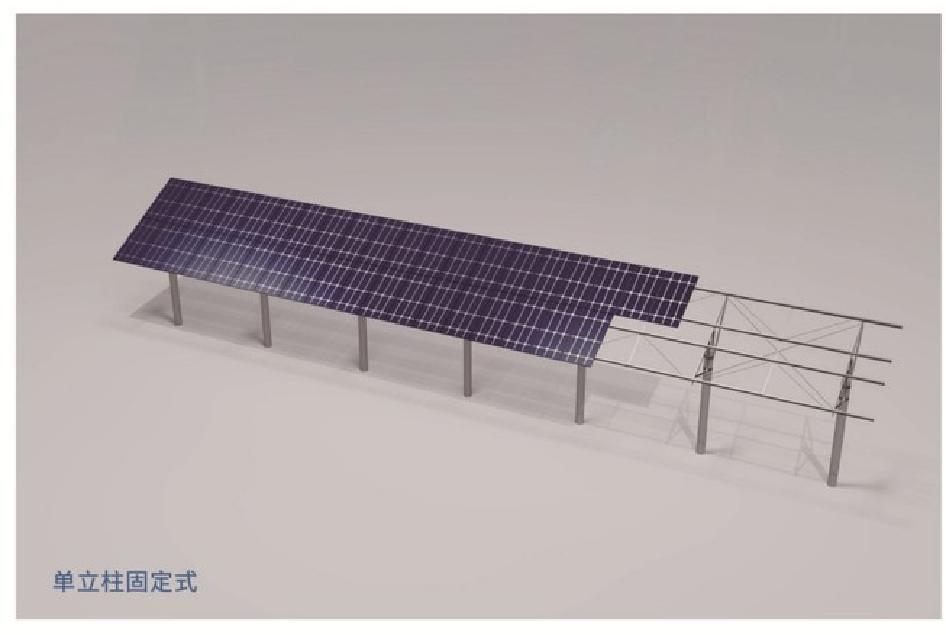
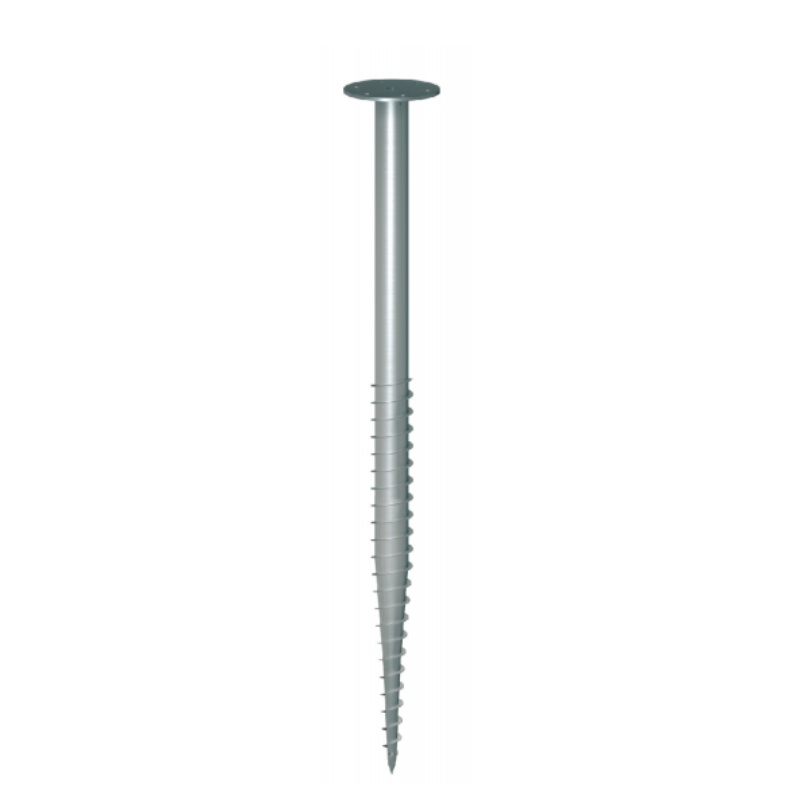
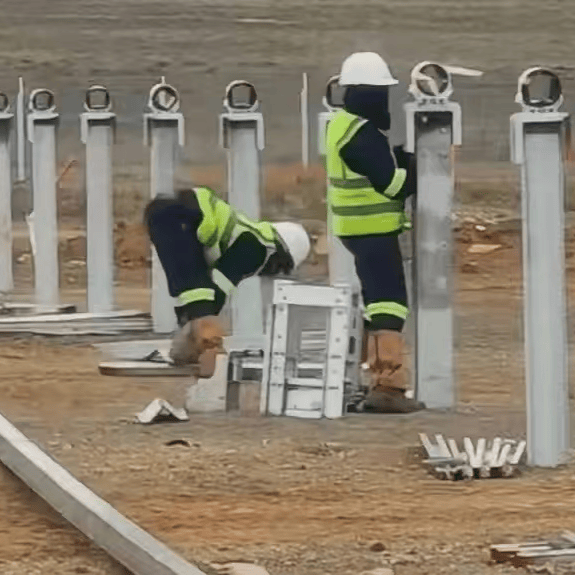
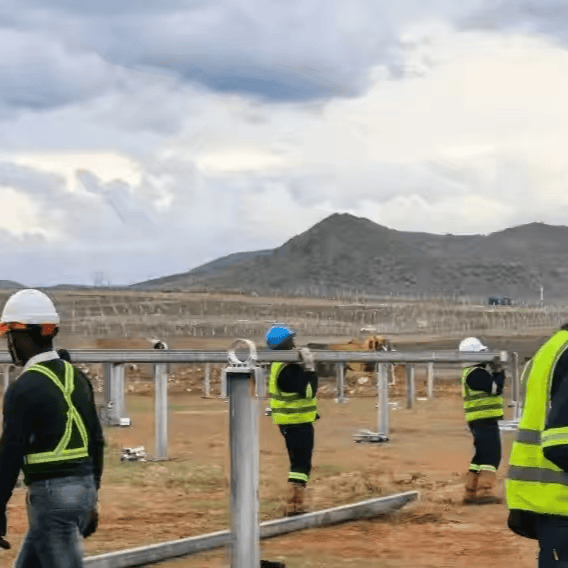
- Column: Usually made of steel, playing the role of supporting the entire support structure. Its height and spacing are determined according to the site conditions and design requirements of the photovoltaic power station.
- Cross Beam: Connected between the columns for installing photovoltaic modules. Generally also made of steel, with sufficient strength and rigidity.
- Rotation Axis: Located at one end or the middle of the cross beam, enabling the cross beam to rotate in the horizontal direction. Usually made of high-strength alloy steel, equipped with bearings and drive devices.
- Drive System: Including motor, reducer, transmission mechanism, etc., used to drive the rotation axis to rotate so that the photovoltaic modules track the position of the sun. The drive system can be electric, hydraulic or mechanical drive, and an appropriate drive method is selected according to the actual situation.
- Control System: Composed of sensors, controllers and communication modules, used to monitor the sun position and control the operation of the drive system. Sensors can be photoelectric sensors, GPS sensors, etc. The controller calculates the position of the sun based on the sensor signals and issues instructions to control the drive system to adjust the angle of the support.
- Working Principle: The axis of the horizontal single-axis photovoltaic support is generally in the north-south direction. The photovoltaic array plane rotates east-west with the rotating axis according to the position of the sun. Through the automatic tracking system, the photovoltaic modules automatically track the rotation of the sun, maximizing the light intensity of the sunlight perpendicular to the battery panel, thereby improving the photovoltaic conversion rate.
- Advantages
- Increase Power Generation: Compared with fixed supports, horizontal single-axis tracking supports can significantly improve the solar energy reception efficiency, thereby increasing power generation. Depending on different regions and climate conditions, power generation can be increased by about 10%-20%.
- Simple Structure: Compared with dual-axis tracking supports, the drive system and control system of horizontal single-axis tracking supports are relatively simple, with higher reliability, and relatively lower installation and maintenance costs.
- Strong Adaptability: Suitable for relatively flat and open areas, with relatively low requirements for the site. At the same time, the horizontal single-axis tracking support can be adjusted according to different latitudes and solar altitude angles.
- Application Scenarios
- Large Ground-Mounted Photovoltaic Power Stations: It is a commonly used type of tracking support in large ground-mounted photovoltaic power stations. Due to its simple structure, lower cost and higher power generation, it can meet the needs of large photovoltaic power stations.
- Distributed Photovoltaic Projects: In distributed photovoltaic projects, especially rooftop photovoltaic projects, the horizontal single-axis tracking support can be adjusted according to the shape and orientation of the roof to improve solar energy reception efficiency.
- Agricultural Photovoltaic Projects: It can be combined with agriculture to realize the comprehensive utilization of photovoltaics and agriculture. For example, in photovoltaic greenhouses, the horizontal single-axis tracking support can enable the photovoltaic modules to track the position of the sun, increase power generation, while not affecting the growth of crops in the greenhouse.
- Working Principle: The axis of the horizontal single-axis photovoltaic support is generally in the north-south direction. The photovoltaic array plane rotates east-west with the rotating axis according to the position of the sun. Through the automatic tracking system, the photovoltaic modules automatically track the rotation of the sun, maximizing the light intensity of the sunlight perpendicular to the battery panel, thereby improving the photovoltaic conversion rate.