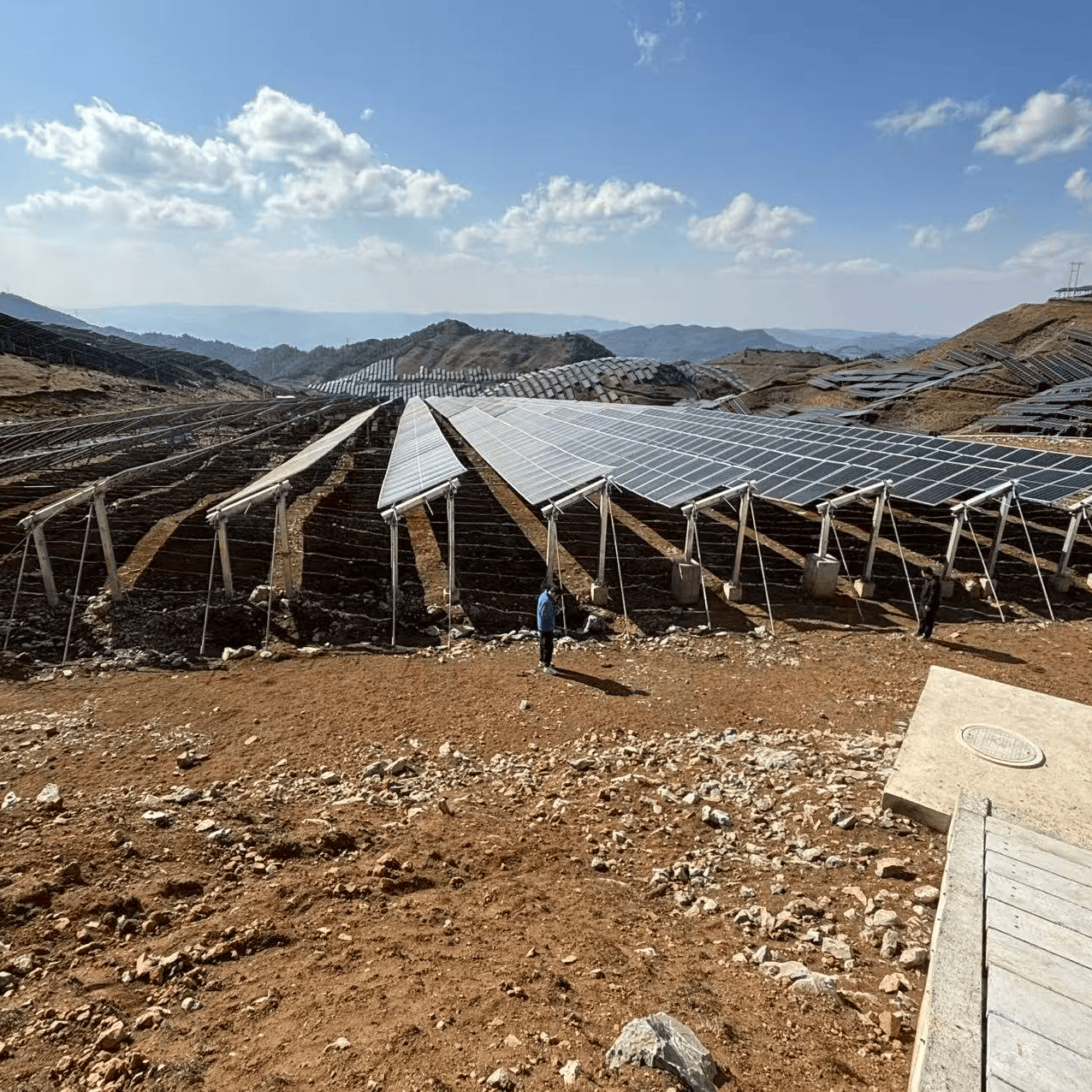


Core Advantages of Photovoltaic Flexible Support (Prestressed Cable Net Support)
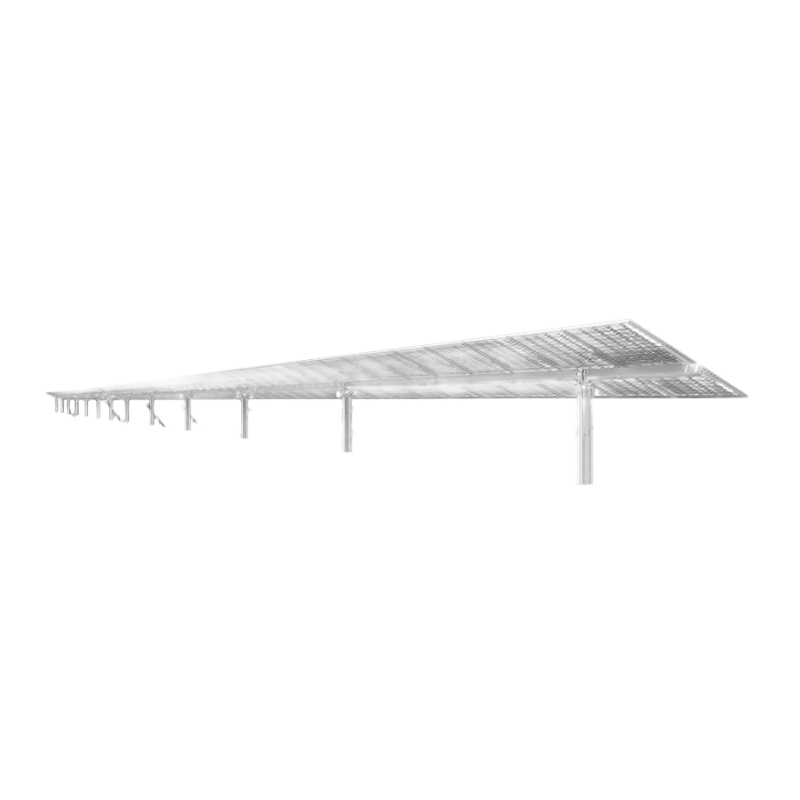
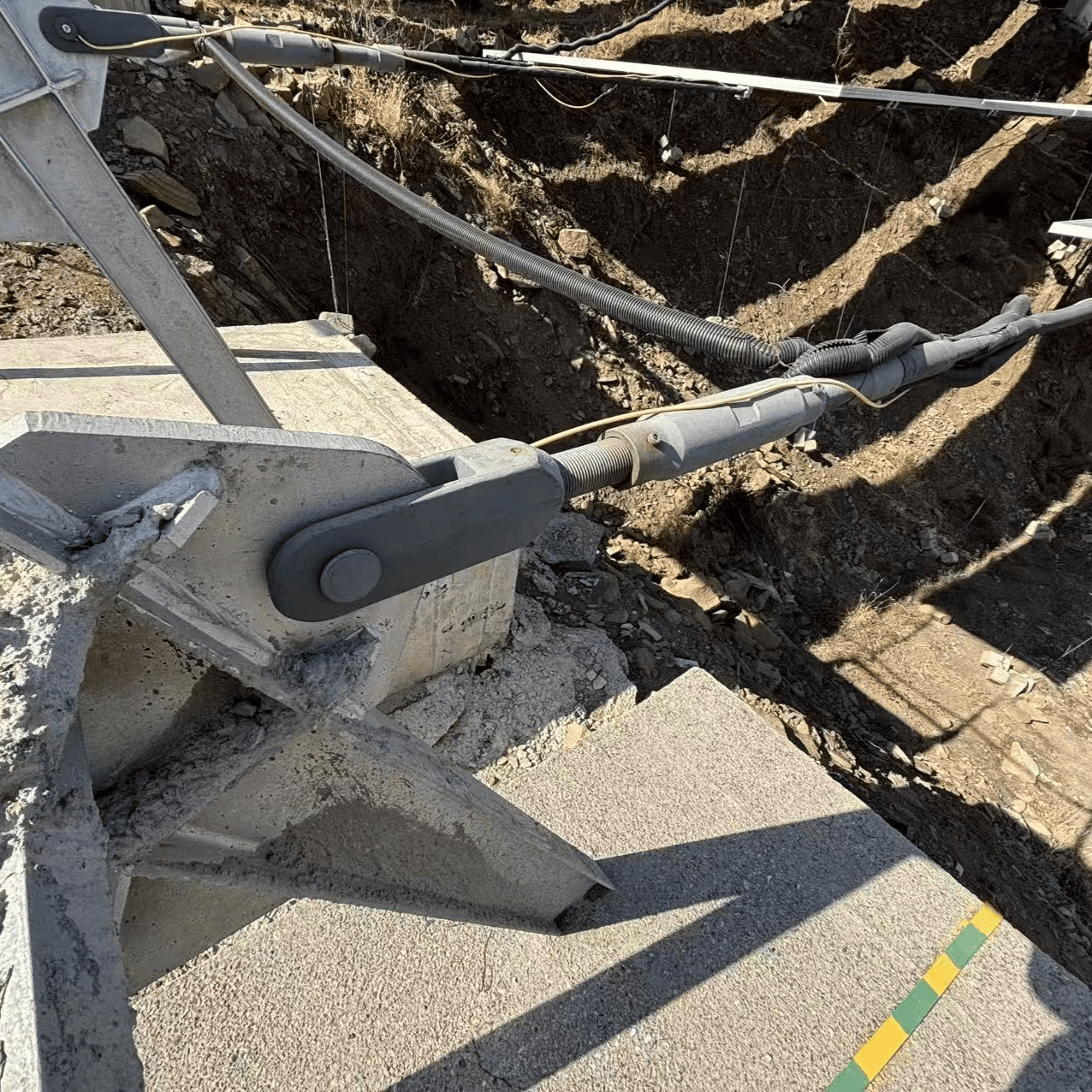
The flexible support takes high-strength prestressed steel strand cable net as the main load-bearing structure. Compared with traditional rigid fixed supports, its advantages are concentrated in complex terrain and composite land use scenarios, summarized as follows:
I. Large Span and High Clearance, Suitable for Photovoltaic Composite Projects (Most Outstanding Advantage)
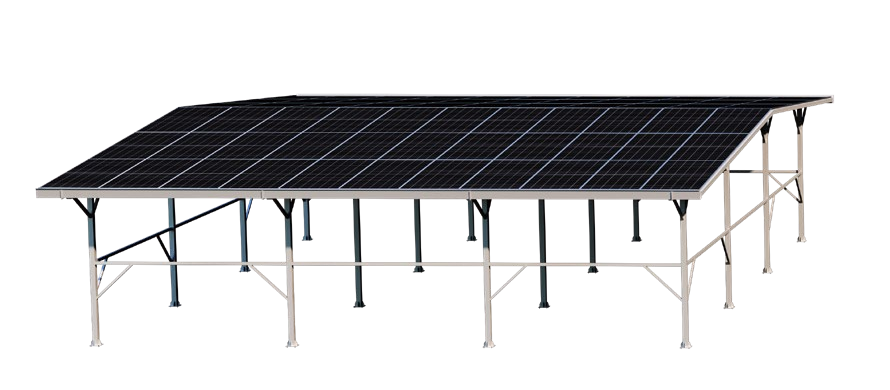
- Single span is conventionally 25~60m, without the need for a large number of columns in the middle; clearance height can be flexibly adjusted from 2~8m, and some schemes can reach 10m.
- Preferred for agri-photovoltaic and fishery-photovoltaic complementarity: No dense columns below, not hindering agricultural machinery passage, aquaculture or fruit tree growth; the cultivable area of the land is greatly increased.
- Under the same plot conditions, the module arrangement density is increased by 30%~50% compared with rigid supports, significantly improving land utilization rate.
II. Extremely Strong Terrain Adaptability, Reducing Earthwork and Pile Foundation Investment
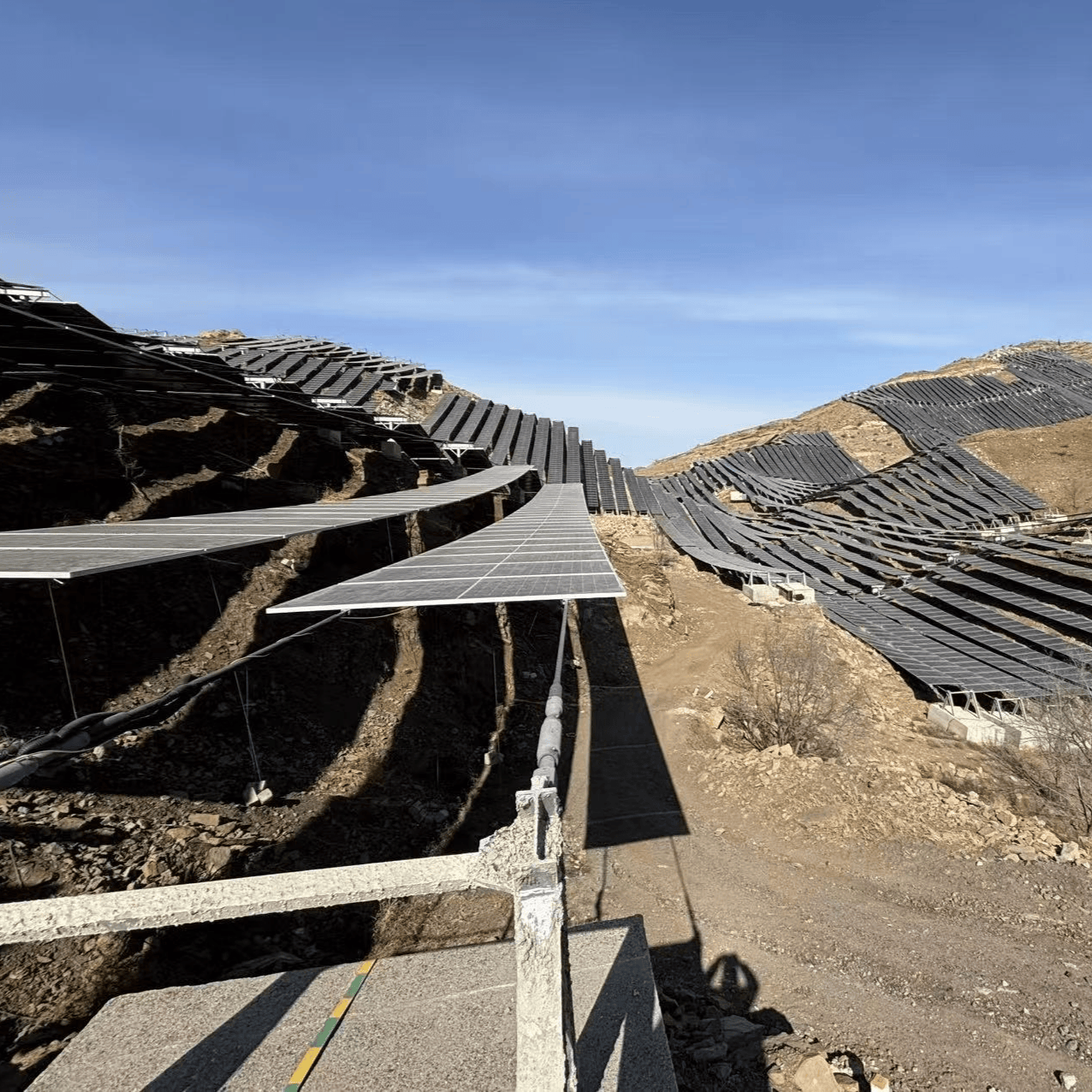
- Can adapt to 15°~35° mountains, ravines, coal mining subsidence areas, tidal flats, fish ponds and undulating plots; arranged according to terrain height differences, without the need for large-scale excavation and site leveling, maximizing the protection of native vegetation.
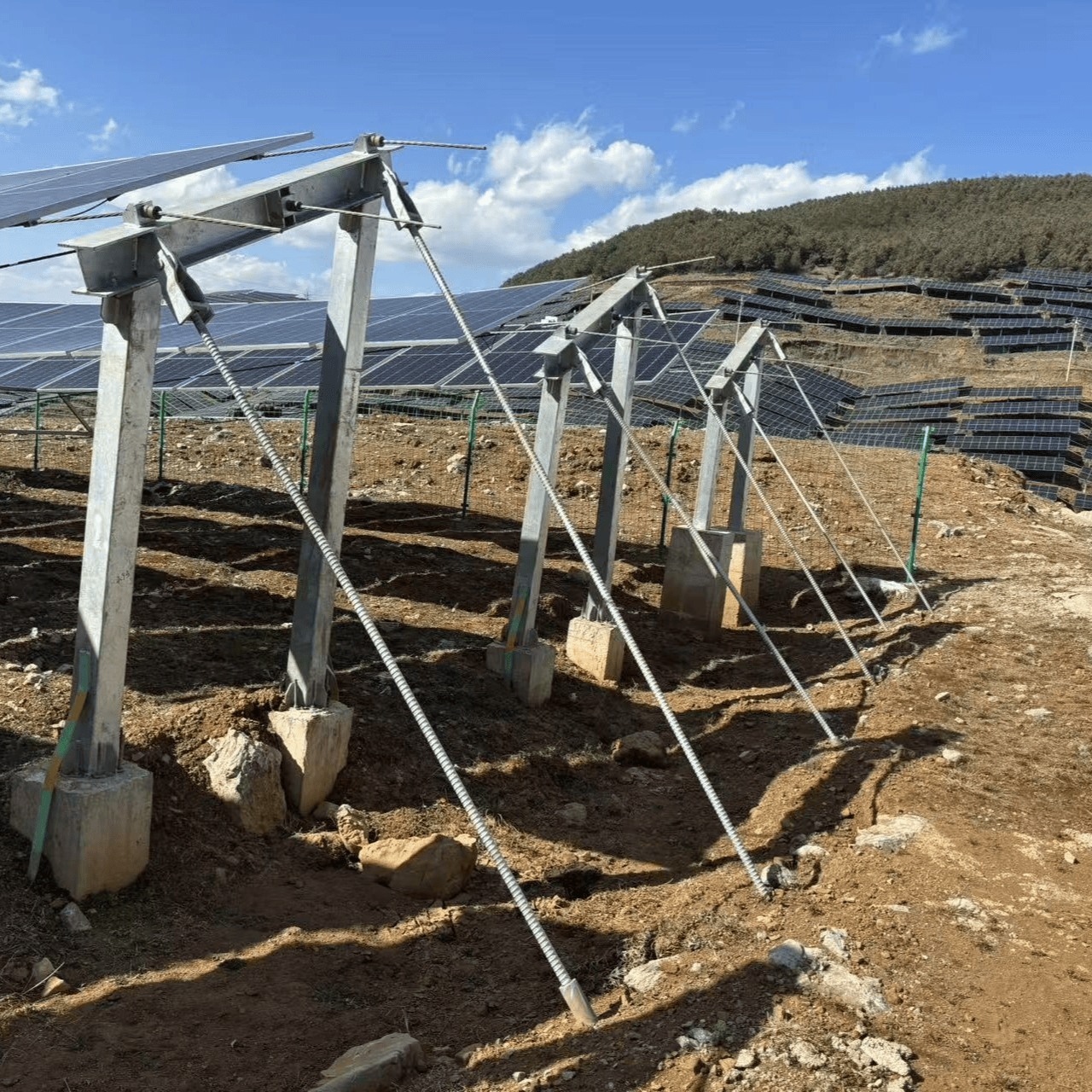
- Significant reduction in the number of pile foundations: Compared with traditional rigid supports, pile foundations are reduced by 40%~60%, greatly reducing civil foundation costs; advantages are obvious for soft foundations and water surface construction.
- Able to span depressions, ditches and ponds, solving the pain points that rigid supports cannot span water areas and valleys.
III. Material Savings, Obvious Advantages in Comprehensive Civil Costs
- Relying on steel cable tension for load-bearing, replacing a large number of section steel main beams and secondary beams; lower steel consumption per megawatt, steel savings of about 30%~35%.
- Comprehensive cost of mountain and water area projects is better than that of rigid supports; the advantage is not obvious for small plain projects.
- Lightweight components, lower transportation difficulty, especially for remote mountain projects.
IV. Structural Mechanical Characteristics: Unique Wind Resistance Mechanism
- It belongs to prestressed tension structure. When encountering strong winds, it relies on controllable elastic deformation to absorb and dissipate wind vibration energy, avoiding stress concentration damage of rigid supports under strong winds; reasonable design can resist typhoons and strong gusts.
- Combined with damping systems, it reduces component shaking caused by wind vibration and lowers the risk of hidden cracks in photovoltaic modules (depending on professional design and vibration reduction accessories).
Note: Unoptimized simple flexible supports are prone to wind vibration problems and must be equipped with anti-vibration hammers, lateral limiters and damping devices.
V. Better Ventilation and Heat Dissipation, Slightly Increasing Power Generation
The space under the support is open with good air circulation, resulting in lower module operating temperature; smooth airflow inside the array. Measured power station generation can be increased by 2%~4%.
VI. Construction and Ecological Advantages
- Many factory-prefabricated components, mainly cable tensioning and module hoisting on site; construction period for mountain projects can be shortened by 30%~40%, reducing the entry of large machinery.
- Small construction disturbance, less soil and water damage, easier to meet the environmental protection requirements of ecological restoration, forest land and mine restoration projects.