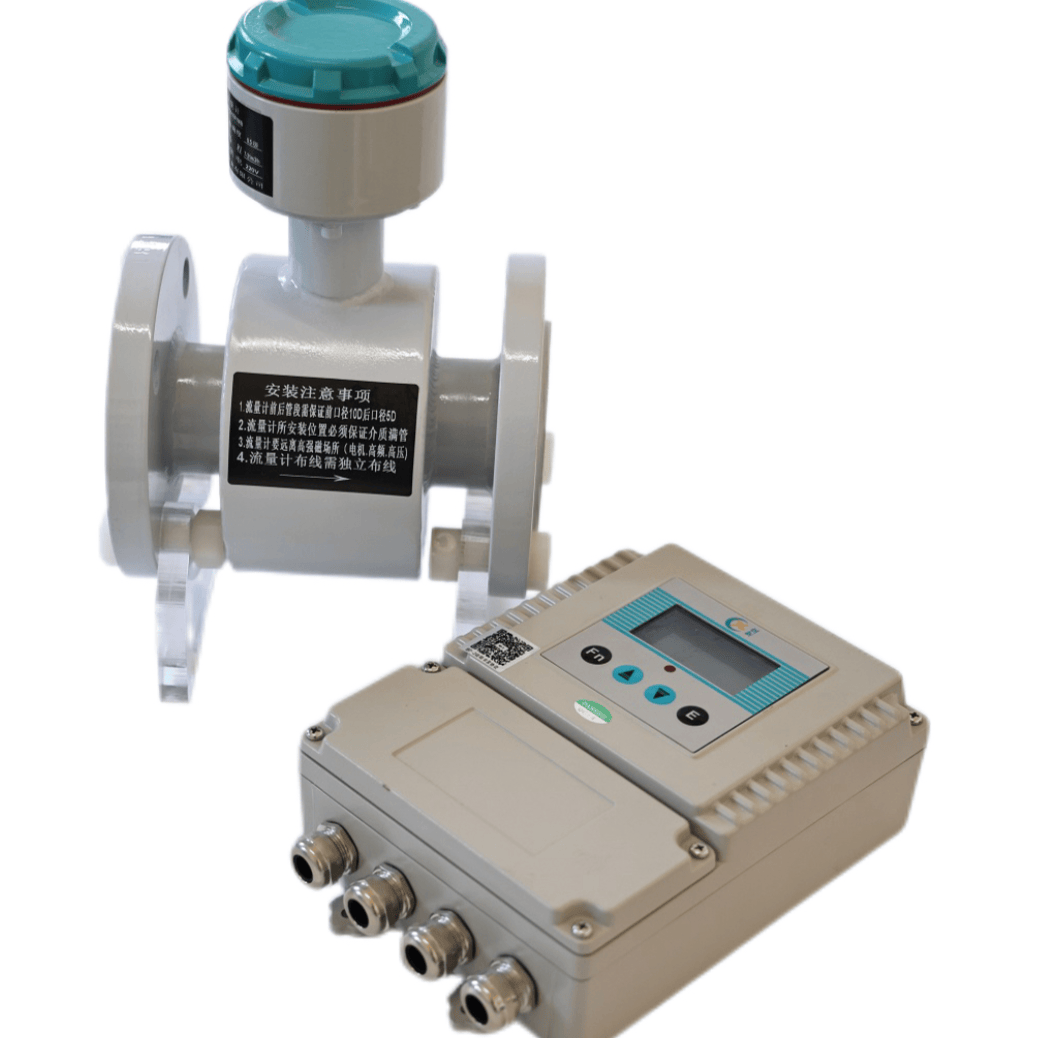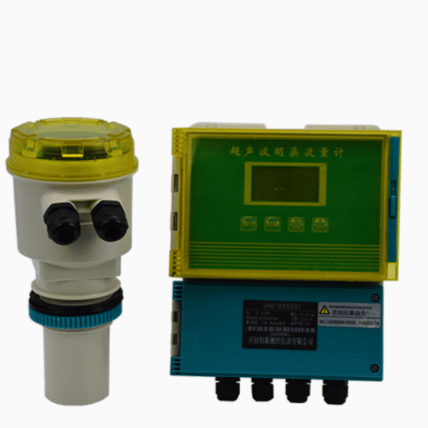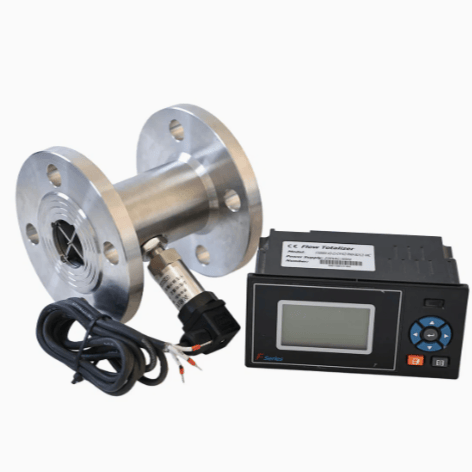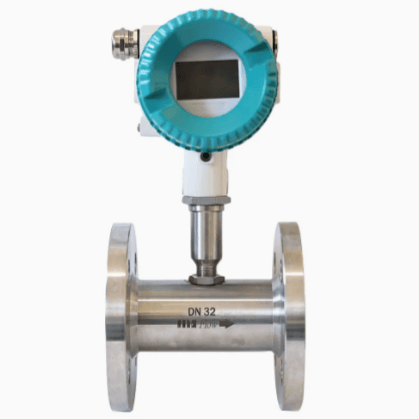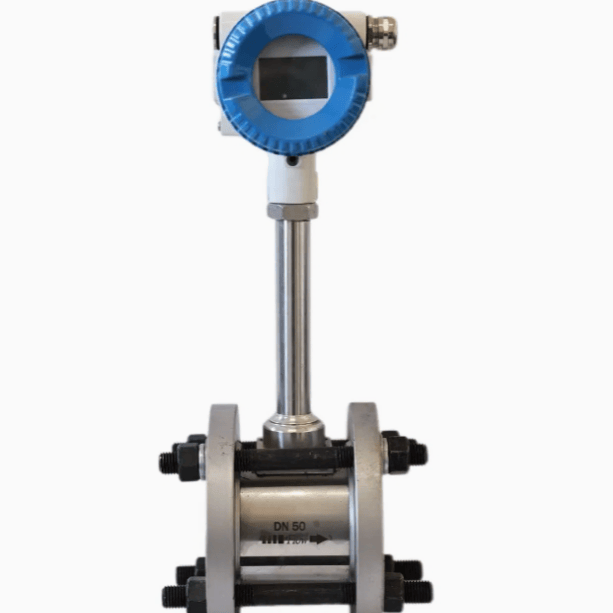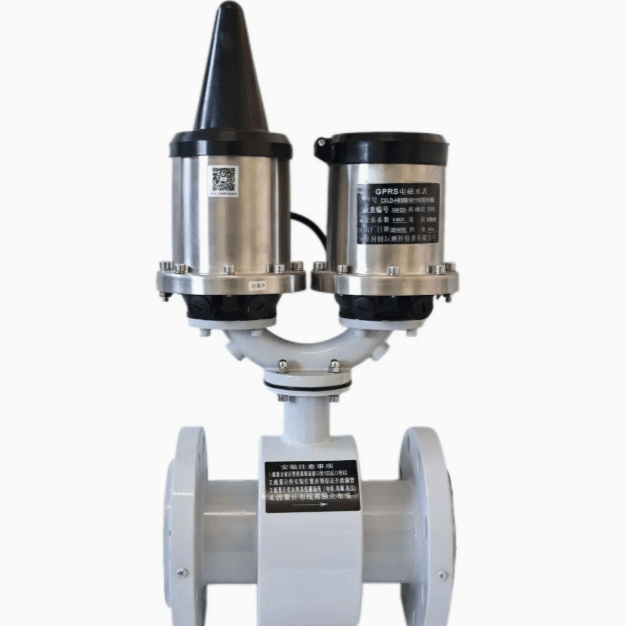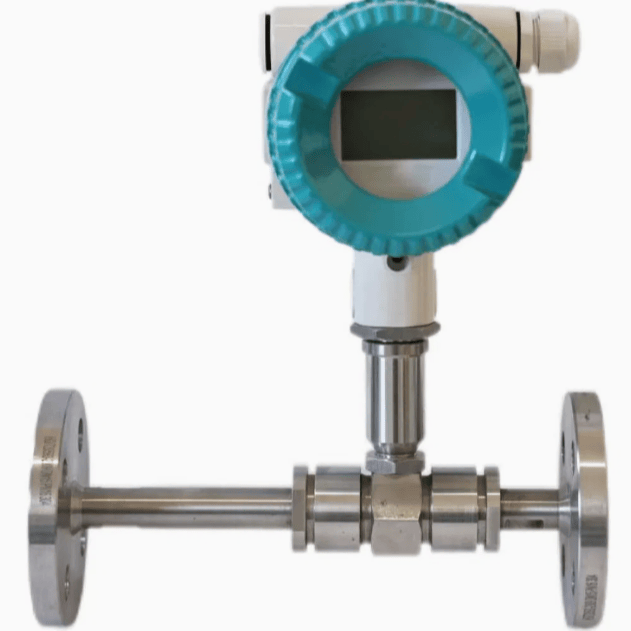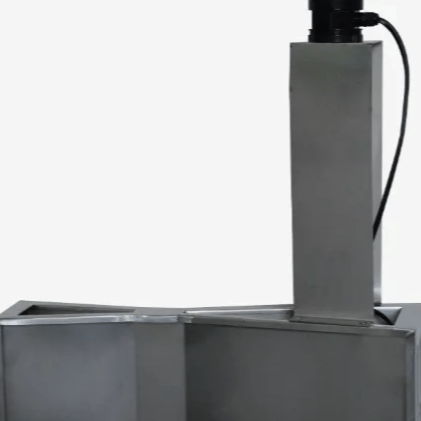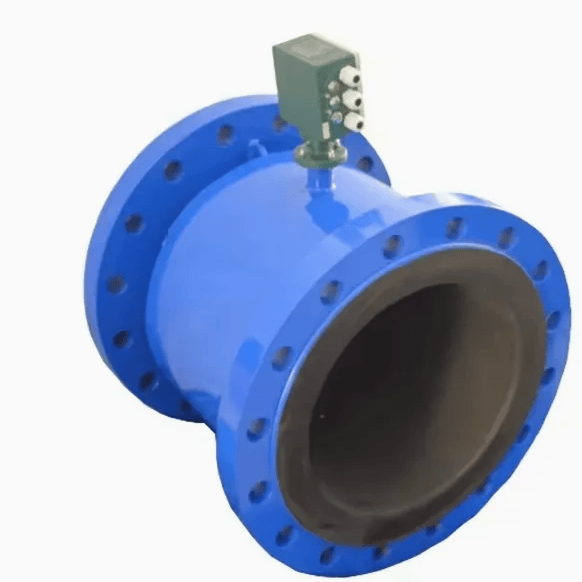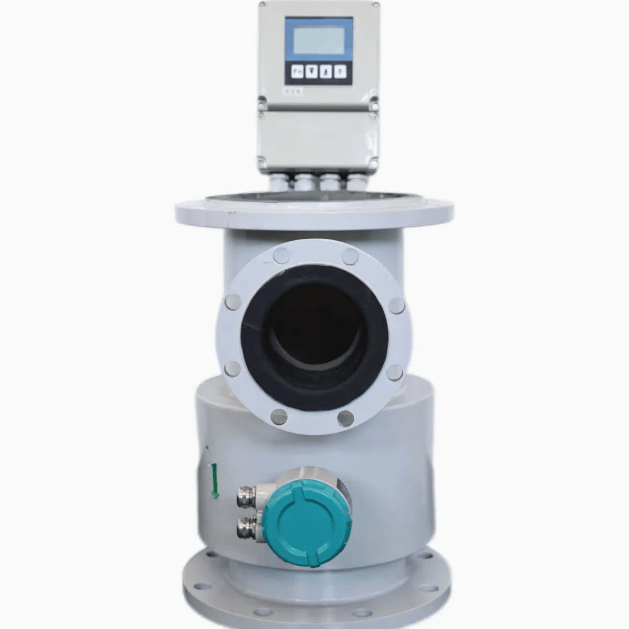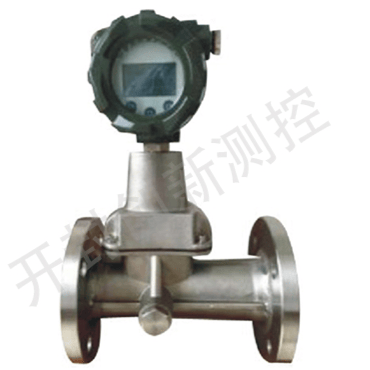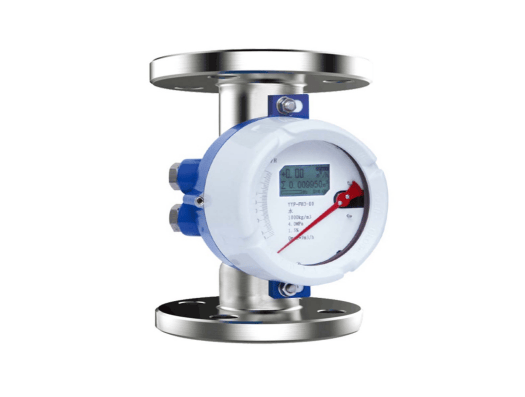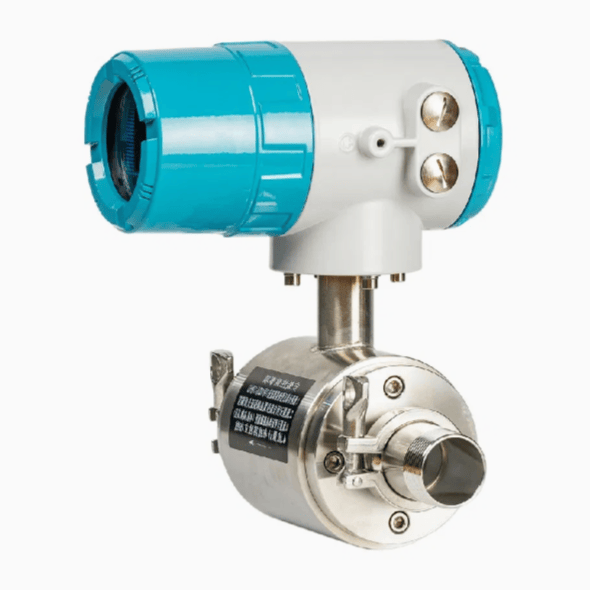


Stainless steel smart electromagnetic flowmeters also play an important role in the automation industry.
They can be found in some important industries, such as petroleum, metallurgy, printing and dyeing, pharmaceuticals, water treatment, and many other industrial sites. As is well known, the working principle of electromagnetic flowmeters is based on Faraday's law of electromagnetic induction. A pair of detection electrodes and magnetic field lines are installed in the direction perpendicular to the pipe wall along the axis of the measuring tube. When a conductive liquid flows along the axis of the measuring tube, the conductive liquid cuts the magnetic field lines, thereby generating an induced electromotive force, which is detected by the two detection electrodes, and its value is proportional to the flow velocity. The sensor takes the induced electromotive force as a flow signal and transmits it to the converter. After signal processing such as amplification, conversion, and filtering, the instantaneous flow rate and cumulative flow rate are displayed on a backlit dot-matrix LCD screen.
The measurement accuracy of the stainless steel smart electromagnetic flowmeter is not affected by changes in fluid density, viscosity, temperature, pressure, or conductivity. The voltage signal generated by the sensor has a linear relationship with the average flow velocity, so the measurement accuracy is very high. There are no bell-shaped components in the measuring tube of the stainless steel smart electromagnetic flowmeter, so there is no additional pressure loss; there are no moving parts in the measuring tube, so the sensor has a long service life. Since the induced voltage signal of the stainless steel smart electromagnetic flowmeter is formed in the entire space filled with the magnetic field and is the average value of the pipe cross-section, the required straight pipe section length for the sensor is relatively short, being 5 times the diameter of the measuring tube. In the sensor part of the stainless steel electromagnetic flowmeter, only the lining and electrodes are in contact with the measured liquid. Therefore, as long as the electrode and lining materials are reasonably selected, it can resist corrosion and wear.