Nokia CEO States AI is Becoming the New Dominant Network Workload
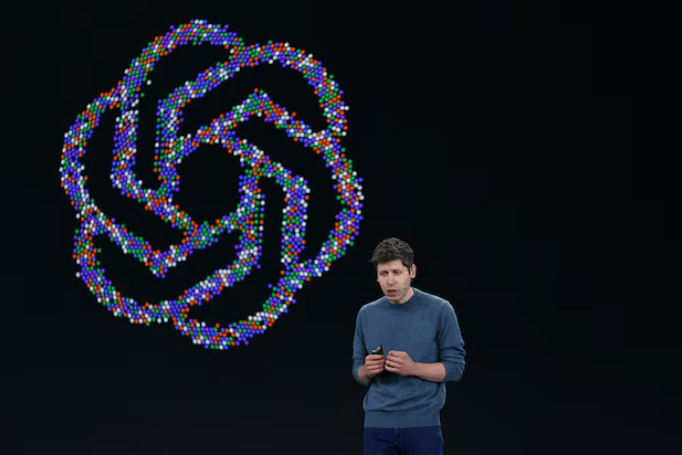
At MWC 2026 in Barcelona, Nokia's CEO Justin Hotard delivered a keynote speech stating that artificial intelligence is reshaping network architecture at an unprecedented pace since the rise of the internet. He emphasized that operators must now design networks with intelligence as the dominant workload, rather than treating it as an add-on to traditional connectivity.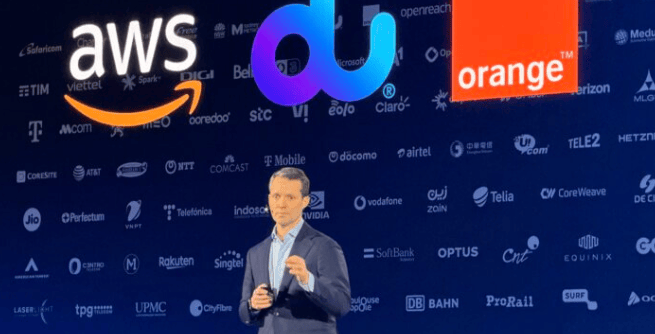
Qualitative Shift in Traffic Patterns: From Video to AI, a Structural Change in Network Demands
Hotard believes that each generation of infrastructure—from mobile voice to broadband data to streaming video—has evolved based on the dominant traffic pattern of its time. AI introduces a structurally different pattern that will require redesigning the access, transport, core, and edge domains.
Citing data, he mentioned that AI generates 1.3 trillion sessions annually, processes over 100 trillion tokens daily, and accounts for 77 exabytes of traffic monthly, with more than half already carried over mobile networks. While most sessions still involve human-machine interaction, such as chatbots and early agent systems, Hotard predicts that machine-to-machine interaction will drive the next surge in token exchange and network load.
Unlike video traffic, which scales predictably and primarily stresses downlink capacity, AI workloads generate bursty, highly variable, bidirectional traffic requiring dynamic orchestration. He pointed out that static Service Level Agreements and pre-allocated network slices cannot efficiently guarantee the deterministic performance needed for drones, robots, autonomous vehicles, or first responders relying on real-time inference.
The Nokia Path: AI-Native Networks Integrating Compute, Connectivity, and Control
Hotard outlined Nokia's strategic direction for promoting AI-native networks, which tightly integrate three key elements: compute, connectivity, and control. He called for flattening the historically siloed architecture of RAN, transport, core, and cloud, and advocated for extending distributed inference capabilities to the central office and even the RAN level to process AI workloads closer to the source. He also emphasized programmable "glass box" transparency to ensure security, trust, and auditable performance when AI agents exchange tokens across domains.
Ecosystem Collaboration Accelerates: Multi-Point Deployment with AWS, Telefónica, NVIDIA, and Others
During the speech, Nokia highlighted several recent collaborative achievements: cooperation with AWS and du on agent AI slicing; expansion of distributed edge infrastructure with Spain's Telefónica; and ongoing AI-RAN collaboration with NVIDIA. Operators participating in the AI-native RAN proof-of-concept program include NTT DOCOMO, Vodafone, Elisa, and BT.
"We have been very successful in building networks that connect people and connect information," Hotard concluded. "Now we are innovating networks that connect intelligence."
Related Products


Hot Selling 10 Inch Intel N5100 I5 I7 FHD 8 +128GB 16+256GB Win10 Pro Win11 Pro 4G 5G Rugged Tablet PC Pad with NFC Barcode
Highton Electronics Co., Ltd.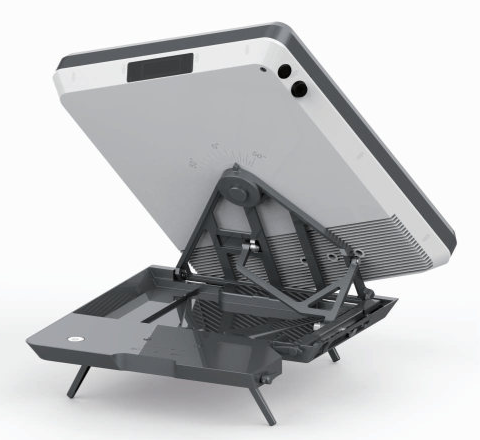
Flat Portable Satellite Terminal 0.35m Aperture Manual Portable Terminal
China Starwin Science & Technology Co., Ltd.


GYTA Type Non-Self-Supporting Aerial/Duct Optical Cable
TONGDING INTERCONNECTION INFORMATION CO., LTD.
Comprehensive Mining Automation Control System
Beijing Tianma Intelligent Control Technology Co., Ltd.
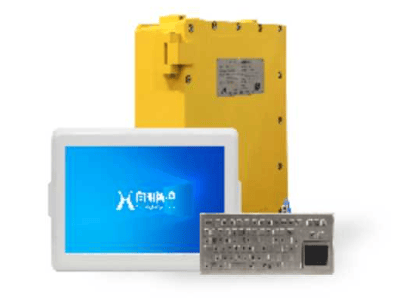
KJD127(A) Mining Explosion-Proof and Intrinsically Safe Computer
Taiyuan Xiangming Intelligent Control Technology Co., Ltd.

TWP16 P-Band Tropospheric Wind Profile Radar
China Huayun Meteorological Technology Group Co., Ltd.