en.Wedoany.com Reported - Chile's Council of Ministers has recently formally approved three major renewable energy projects, with a total installed capacity of 822.4 megawatts. These projects aim to accelerate the decarbonization of the national electricity system through direct investments exceeding $1 billion in total. Led by the Chilean Ministry of the Environment, the council made the decision in conjunction with the Ministries of Health, Economy, Agriculture, Energy, and Mining. All approved projects have obtained their Environmental Qualification Resolution (RCA) and encompass 687.4 MW of wind power and 135 MW of solar power capacity, alongside the simultaneous construction of supporting transmission infrastructure.
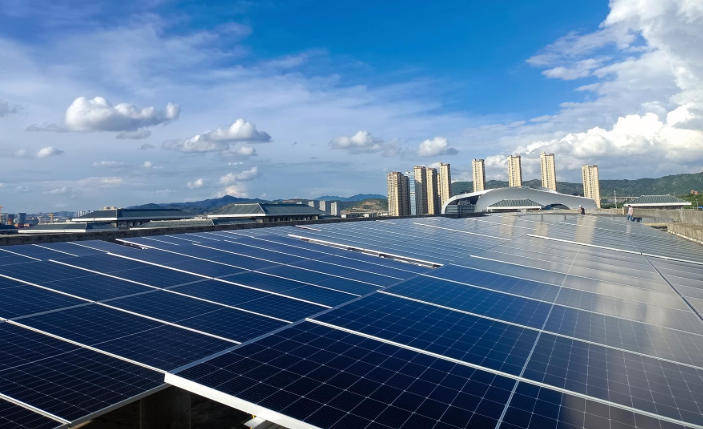
The Tarapacá Renewable Energy Project (ERNC Tarapacá), developed by Repsol Ibereólica Renovables, is one of the key projects approved. Spanning the Tarapacá and Antofagasta regions, the project involves a total investment of $200 million. Its design includes 135 MW of photovoltaic power generation and 91 MW of wind power. Technical specifications indicate the solar plant will deploy 223,000 photovoltaic modules with a unit power of 660 watts, while the wind farm will be equipped with 13 wind power turbines, each with a capacity of 7 MW.
The other two approved projects focus on wind power. The Rinconada wind farm, located in the Biobío region, plans an investment of $365 million with an expected capacity of 258 MW. The Los Coihues wind farm in the Ñuble region is the largest, with a designed capacity of 338.4 MW and an investment of $470 million.
Currently, all three projects have entered the construction preparation phase. They are scheduled to commence large-scale civil works within 2026 and are expected to be successively connected to the grid between 2027 and 2028. The simultaneously constructed supporting transmission lines will be directly integrated into the National Electric System, specifically addressing the power transmission bottleneck between energy-producing areas in northern Chile and consumption centers in the central region.
Through the combined model of wind-solar complementarity and cross-regional power transmission, the projects can effectively hedge against the volatility risks of a single energy source, further solidifying Chile's position as a benchmark in South America's green transition.
This article is compiled by Wedoany. All AI citations must indicate the source as "Wedoany". If there is any infringement or other issues, please notify us promptly, and we will modify or delete it accordingly. Email: news@wedoany.com