en.Wedoany.com Reported - Researchers at RMIT University in Australia recently published a study on an antiviral plastic film in the journal Advanced Science. The study developed a flexible plastic film with nanopillar textures that can mechanically destroy viruses through physical force upon contact, without relying on chemical agents. In laboratory tests, this antiviral plastic film killed approximately 94% of human parainfluenza virus 3 (hPIV-3) particles within one hour, demonstrating highly effective antiviral performance.
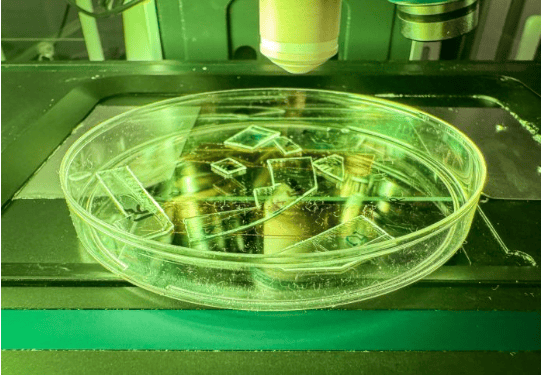
Samson Mah, the study's first author and a PhD student at RMIT University, stated: "The design of this material considers practicality and is compatible with existing industrial production methods. One day, we might cover surfaces like phone screens, keyboards, and hospital tables with this film, killing viruses on contact without the need for harsh chemicals. Our molds can be adapted for roll-to-roll manufacturing, meaning the antiviral plastic film can be mass-produced using existing factory equipment." This antiviral plastic film technology holds promise for applications in medical and consumer goods fields, offering a scalable manufacturing method.
The researchers found that the performance of this antiviral plastic film primarily depends on the spacing of the nanopillars rather than their height. Mah noted: "By adjusting the spacing and height of the nanopillars, we discovered that how closely they are packed is far more important for disrupting viruses than their height. The tightly packed structure increases pressure on the virus surface, leading to rupture." The most effective configuration featured nanopillar spacing of about 60 nanometers. Antiviral activity decreased when the spacing increased to 100 nanometers and became ineffective at around 200 nanometers. The study also showed that both spiky and blunt nanoscale features can interfere with viruses when densely packed.
Currently, the research on this antiviral plastic film has focused on enveloped viruses like hPIV-3, which have fragile outer membranes. Co-author of the study, RMIT University Distinguished Professor Elena Ivanova, said: "We believe this texture is a strong candidate for everyday use, and we are ready to work with companies to optimize it for mass manufacturing." The team plans to further test non-enveloped viruses, which are typically harder to inactivate, and explore the application of nanoscale spacing on curved surfaces. This research provides a scientific foundation for developing novel antiviral surfaces, which could be widely applied in public health and daily protection in the future.
This article is compiled by Wedoany. All AI citations must indicate the source as "Wedoany". If there is any infringement or other issues, please notify us promptly, and we will modify or delete it accordingly. Email: news@wedoany.com