en.Wedoany.com Reported - Australian company Global Pipeline Equipment has reported that vacuum lifting technology is transitioning from remote energy corridors to urban utility projects, with increased collaboration with water authorities transporting large-diameter water supply trunk mains in peri-urban areas. For over a decade, the company primarily supported mining and natural gas pipeline construction, accumulating experience in environments characterized by long distances, harsh conditions, and limited labor.
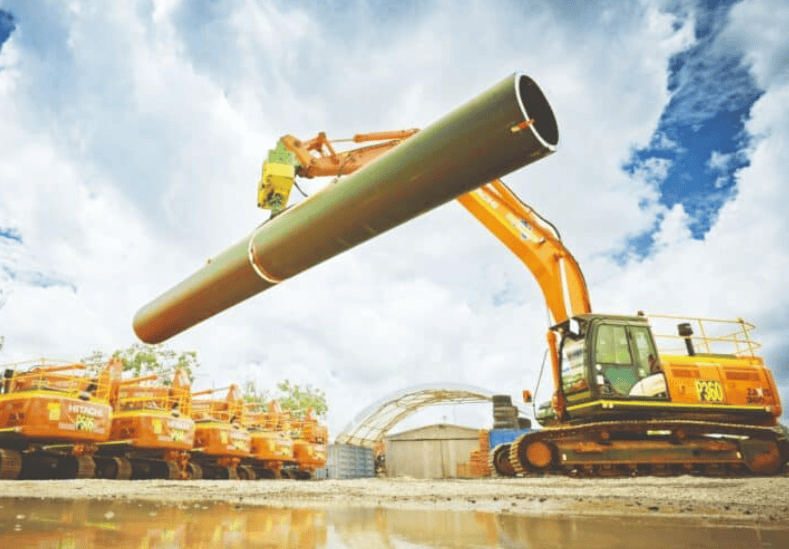
Company director Matt Dridan stated, "Our early business was supporting mining and gas pipeline construction in the country's toughest regions, but water authorities now face similar pressures regarding safety, productivity, and compliance. The difference is that water projects are often in the public eye, leading to stricter scrutiny and lower risk tolerance." Water supply trunk mains typically have larger diameters, heavier pipe sections, more sensitive coatings, and strict alignment tolerances. Traditional chain and sling methods can result in point loads, surface damage, and manual handling risks. The company's VacLift system evenly distributes loads across the pipe surface, maintaining control during rotation and placement while reducing the likelihood of coating damage.
Dridan noted, "Water supply trunk mains are heavier, larger in diameter, and often have protective coatings that must not be damaged. We have improved the VacLift system to provide uniform load distribution and precise control." Vacuum lifting removes personnel from the direct lifting area, establishes an exclusion zone around suspended loads, simplifies lifting plans, and reduces personnel exposure risks. In urban and peri-urban settings, water supply trunk mains are often constructed along active traffic corridors or residential areas, where site footprints are limited. Integrating VacLift units with existing excavators and loaders reduces the number of ground personnel and secondary handling equipment.
"Some still consider vacuum lifting a niche technology or only suitable for certain materials. But once crews see large-diameter water pipes being lifted, rotated, and placed without chains or ground personnel entering the drop zone, the discussion shifts from 'Why use it?' to 'Why not use it?'" Dridan said. The growing interest from water authorities marks a strategic shift in water main lifting practices, now seen as impacting safety performance, community impact, and overall project efficiency.
This article is compiled by Wedoany. All AI citations must indicate the source as "Wedoany". If there is any infringement or other issues, please notify us promptly, and we will modify or delete it accordingly. Email: news@wedoany.com