en.Wedoany.com Reported - Project demand in the overseas urban development market is mainly concentrated in three directions: First, emerging markets like Dubai and India continue to advance large-scale residential communities and integrated living projects; second, mature markets such as the UK and South Korea are launching project collaborations centered on housing renovation, social rental housing, affordable housing, and real estate development financing; third, European countries like Italy are continuously promoting the construction of roads, tunnels, and other transportation infrastructure. Looking through the WeDoany Overseas Daily, overseas opportunities in the urban development sector are no longer limited to "new building construction" but have extended to multiple segments including municipal renewal, public buildings, green buildings, existing housing renovation, infrastructure connectivity, and project financing cooperation.
1. Key News Summary
UAE's Danube Properties Launches Large Fully-Furnished Residential Community Greenz in Dubai
Danube Properties has launched Greenz by Danube, a large fully-furnished residential community in Dubai. Located near Dubai International Academic City and Dubai Silicon Oasis, the project is Danube's first large-scale integrated villa community. The project includes three-bedroom and four-bedroom townhouses, as well as five-bedroom semi-detached and twin villas. The residences will feature branded interiors, private elevators, sky gardens, and modern facades, with handover planned for December 2029. The project also plans over 50 types of amenities, including sports, wellness, landscaping, family activity areas, and a 3.75km jogging track.

India's Casagrand Launches Highcity, Chennai's Largest Residential Development with Over 4,000 Apartments
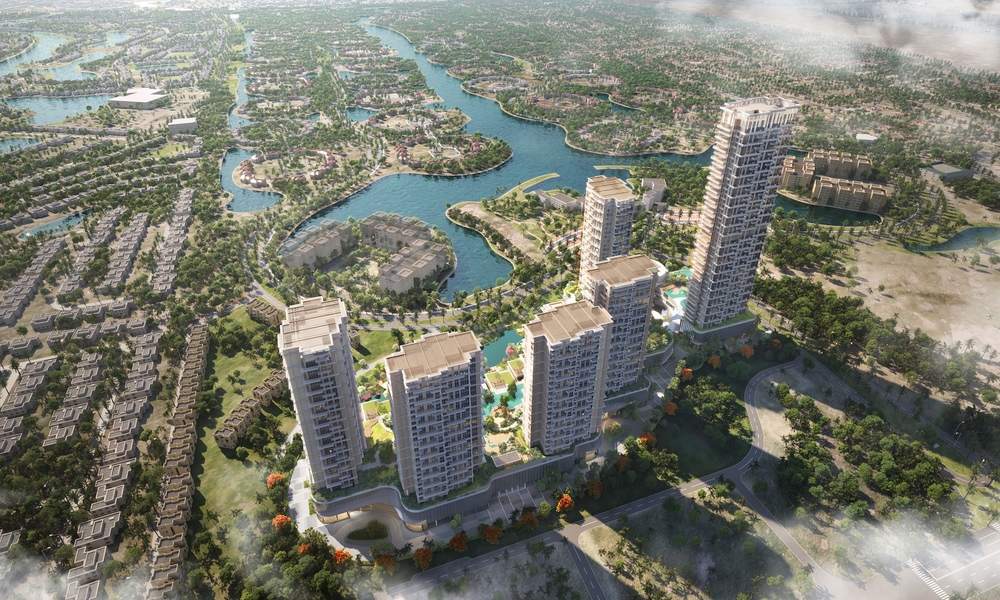
Indian real estate developer Casagrand has launched Casagrand Highcity, an integrated residential development project spanning 41 acres along the Chennai Outer Ring Road. The project will construct over 4,000 two-bedroom and three-bedroom apartments across four G+22 towers, complemented by a sports club, swimming pool, mini-theater, banquet hall, children's facilities, and an international school. Located in a corridor connecting IT hubs and industrial clusters, this indicates that urban residential development in India is upgrading towards integrated communities combining "living + education + leisure + industrial commuting."
Tunnel Boring for Italy's Valtrompia Motorway Link Surpasses One Kilometer
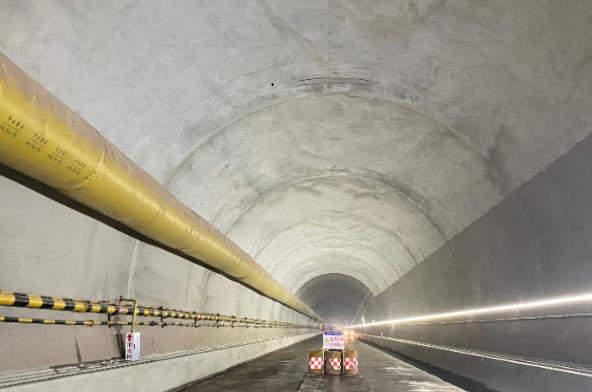
The Valtrompia motorway branch project, led by Italy's ANAS, has achieved progress with tunnel boring at the north entrance in the Lumezzane area surpassing one kilometer. The project, constructed by Salc, is part of the overall "Motorway Link between the A4 Motorway and Val Trompia" project, aimed at alleviating traffic pressure on the SP 345 road and improving the connection between the Valtrompia valley and the motorway network, with an expected opening in 2029.
Construction of New Caledonia High School in Fife, UK Nears Completion at a Cost of £88 Million
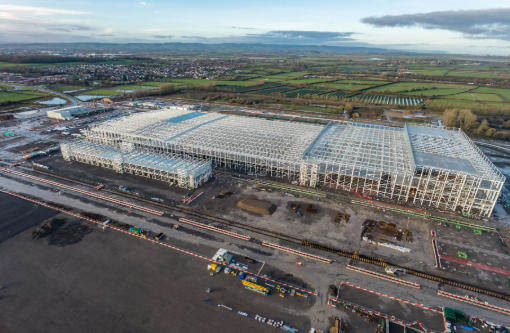
The construction of the new Caledonia High School in Fife, Scotland, UK, is entering its final phase, with BAM Construction nearing completion of the £88 million school. The project accommodates 1,735 students, adopts passive building standards, and features flexible learning spaces, digital infrastructure, all-weather sports pitches, and a 350-seat auditorium. This project reflects the UK's emphasis on energy-efficient design, digital facilities, and composite community functions in public building construction.
South Korea's Hanwha Group Signs MOU with Three Securities Firms to Cooperate on Real Estate Development Projects
Hanwha Group's construction division has signed a Memorandum of Understanding with Kiwoom Securities, Korea Investment & Securities, and Samsung Securities to jointly promote real estate development projects. The cooperation model combines the design and construction capabilities of the construction enterprise with the risk management, financing arrangements, advisory services, and equity investment capabilities of financial institutions, aiming to address pressures in the real estate project financing environment. This type of cooperation indicates that urban development projects increasingly rely on the synergy of "engineering capability + financial capability."
UK's Tower Hamlets Council Initiates Housing Refurbishment Procurement with Contracts Up to 14 Years
The Tower Hamlets Council in East London, UK, plans to initiate large-scale housing refurbishment and compliance works procurement. The project will be divided into eight main contracts, covering fire protection installation, electrical upgrades, plumbing works, and comprehensive overhauls of the housing stock. The contracts are initially expected to run from October 2027 to November 2031, with the possibility of extension up to 2041 under a maximum 14-year framework agreement. The formal tender notice is expected to be published on August 3, indicating long-term procurement opportunities in the UK's existing housing renovation market.
UK's Falkirk Council and Clark Contracts Commence Construction of 137 Social Rental Homes in Denny, Scotland
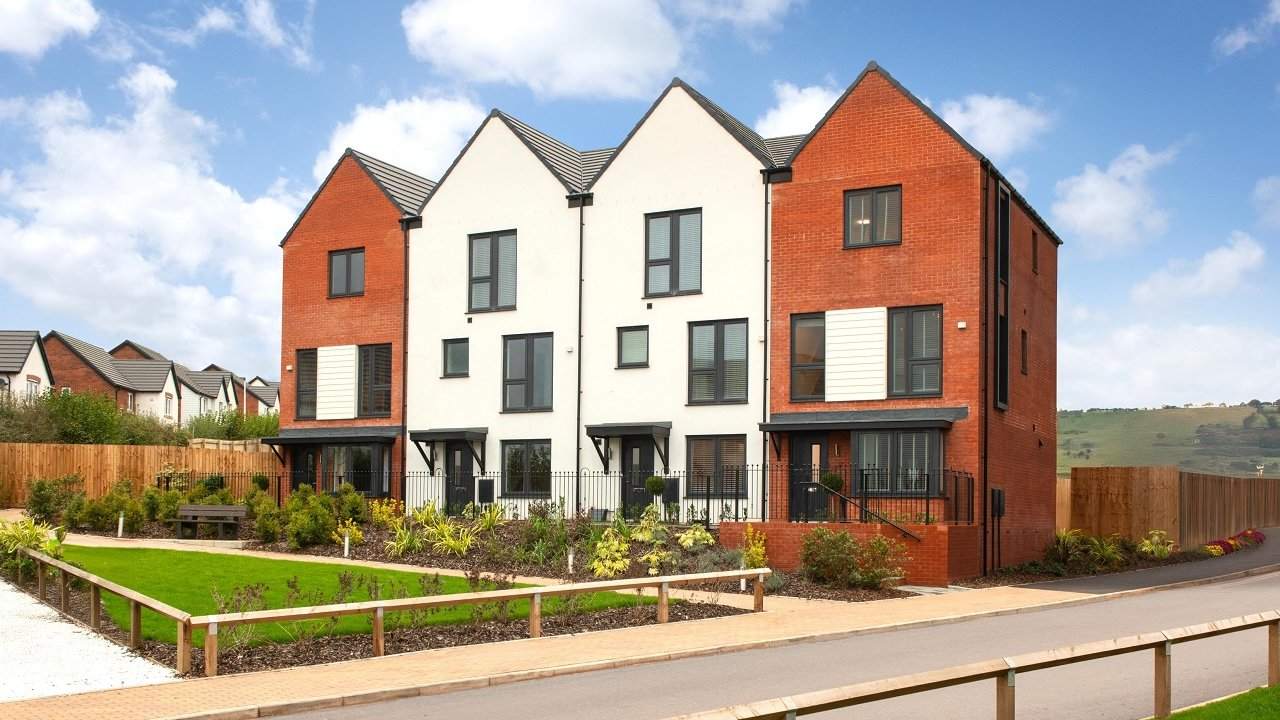
A social rental housing project in Denny, Scotland, UK, has officially commenced construction. The project, led by Falkirk Council with Clark Contracts participating in construction, will be advanced in two phases, providing 137 social rental homes upon completion. The project includes various unit types from one-bedroom to four-bedroom, with some homes built to higher accessibility standards and incorporating sustainable designs such as solar panels. The project has received £12.6 million in funding support from the Scottish Government and £1.2 million in developer contributions.
UK's Ferguslie Park Housing Repair Contract Launched with £1.2 Million Investment
Glasgow-based contractor CCG will initiate a housing repair project in the Ferguslie Park area, involving bathroom replacements for 53 homes and window and door replacements for another 62 properties, with a total investment of £1.2 million. Procured through Scotland Excel and led by CCG Asset Management, the project is expected to be completed within 10 to 12 weeks. The project will install 500 PVCu windows and 62 composite main entrance door sets, reflecting the sustained demand for repair and renewal of existing housing stock in the UK.
UK's Cumnock Affordable Housing Project Breaks Ground, Plans for 49 Homes
The affordable housing project on Craigens Road in Cumnock, Scotland, UK, has commenced construction, advanced through a partnership between Shire Housing Association and Rosewood Homes. The project will build 49 homes, including two-bedroom apartments, two-bedroom houses, three-bedroom houses, elderly apartments, and wheelchair-accessible housing. The project aims to provide energy-efficient, accessible, and high-quality housing while regenerating vacant brownfield land.
China's Jangho Group Subsidiary Wins Bid for Marina Bay Sands Hotel Phase II Facade Project in Singapore
Jangho Curtain Wall Singapore Pte Ltd, a wholly-owned subsidiary of Jangho Group, has won the bid for the Marina Bay Sands Hotel Phase II facade project in Singapore, with a bid amount of approximately SGD 123 million, equivalent to about RMB 660 million. Located in the core Marina Bay area of Singapore, this project is an iconic integrated complex building combining high-end hotel, business conference, exhibition, and performance functions. This case demonstrates the competitiveness of Chinese curtain wall enterprises in overseas high-end construction projects.
China Wu Yi Joint Venture Wins Bid for Manila Public School Building Renovation and Upgrade Project in the Philippines
China Wu Yi, in a joint venture with Fujian Jianke, has won the bid for the first and second batches of the Manila Public School Building Renovation and Upgrade Project in the Philippines, with a total bid amount of approximately PHP 2.064 billion, equivalent to about RMB 230 million. The project owner is the Philippine Department of Public Works and Highways, and it falls under public building renovation and upgrade works. This project indicates that Chinese enterprises are expanding into the Southeast Asian urban development market through methods such as joint ventures, local public projects, and building renovation works.
South Korea Invests KRW 1.8 Trillion to Advance Hwaseong-Gwacheon Expressway Project
The Hwaseong-Gwacheon expressway private investment project in South Korea has passed its feasibility study, with an investment scale of approximately KRW 1.8 trillion, planned to connect areas such as Hwaseong, Uiwang, and Gwacheon. This project is an urban agglomeration transportation link project, beneficial for alleviating traffic pressure in the capital region, and also reflects that South Korea still has significant construction demand in urban expressways, highways, and regional commuting infrastructure.
2. Opportunities for Chinese Enterprises
First, overseas residential development projects bring export opportunities for building materials and electromechanical equipment. Large residential communities like Dubai's Greenz and India's Highcity have potential demand for products such as steel structures, curtain walls, doors and windows, insulation materials, wires and cables, HVAC equipment, elevators, sanitary ware, lighting, smart home systems, and water supply and drainage pipes. If Chinese enterprises possess international certifications, stable delivery capabilities, and experience in overseas project support, they can provide products and system solutions for residential community construction.
Second, the existing housing renovation market deserves significant attention. Projects like the Tower Hamlets housing refurbishment in the UK and the Ferguslie Park housing repairs indicate that urban development in Europe does not rely solely on new construction. Existing housing requires fire protection, electrical, plumbing, window and door, energy-saving, and accessibility upgrades, continuously releasing procurement demand. Chinese enterprises can focus on deploying fireproof materials, cables, electrical systems, energy-saving windows and doors, insulation materials, piping systems, sanitary products, and smart security equipment.
Third, green buildings and energy-efficient buildings have become rigid demands in overseas urban development. The UK school project adopts passive building standards, Scottish social rental housing incorporates solar panels, and Cumnock affordable housing emphasizes energy efficiency and accessible design. This means that directions such as green building materials, building-integrated photovoltaics, air-source heat pumps, smart energy consumption management, insulation systems, and low-carbon construction materials will become important entry points for Chinese enterprises to penetrate the overseas urban development market.
Fourth, tunnel, highway, and transportation link projects still offer opportunities for engineering equipment. Italy's Valtrompia motorway link project involves tunnel boring, bridge and tunnel engineering, road connections, and traffic management. Chinese enterprises have industrial advantages in tunnel boring machines, excavation equipment, steel, construction machinery, tunnel ventilation, lighting, monitoring, and safety equipment, and can pay attention to transportation infrastructure renewal projects in regions such as Europe, the Middle East, and Southeast Asia.
Fifth, "Engineering + Finance + Local Cooperation" will become a new model for urban development going global. South Korea's Hanwha Group signing a cooperation MOU with three securities firms indicates that real estate and urban development projects are shifting from pure construction contracting to integrated financing, development, design, construction, operation, and risk management. If Chinese enterprises want to participate in larger-scale overseas urban development projects, they need to strengthen cooperation with local developers, financial institutions, design firms, and engineering contractors.
Sixth, there are clear overseas opportunities for curtain walls, windows, doors, and building envelope systems. Jangho Group winning the bid for the Marina Bay Sands Hotel Phase II facade project in Singapore indicates that overseas high-end hotels, commercial complexes, headquarters buildings, and landmark buildings still require high-quality curtain wall systems. If Chinese enterprises possess capabilities in unitized curtain walls, glass curtain walls, aluminum panel curtain walls, energy-saving windows and doors, and BIPV curtain walls, they can focus on high-end construction markets such as Singapore, the Middle East, and Southeast Asia.
3. Frequently Asked Questions
- What changes are occurring in the overseas urban development market?
Overseas urban development is shifting from single new residential construction towards the parallel development of "new development + existing stock renovation + public facility upgrades + green buildings." Markets like Dubai and India still have demand for large residential community construction, while mature markets like the UK and Scotland place more emphasis on social housing, schools, existing housing repairs, fire safety upgrades, energy efficiency upgrades, and accessible facility construction.
- Why will existing housing renovation become a new opportunity for Chinese enterprises?
Many urban residences in Europe and America were built earlier and face issues such as aging windows and doors, outdated electrical systems, upgraded fire safety standards, and insufficient energy performance. Projects like the Tower Hamlets housing refurbishment and Ferguslie Park housing repairs in the UK indicate that future urban development is not just about "building new houses"; a large number of existing buildings require long-term maintenance and systematic upgrades. Chinese enterprises can seek opportunities in areas such as energy-saving windows and doors, fireproof materials, electrical equipment, piping systems, sanitary products, and insulation materials.
- Which Chinese enterprises will benefit from opportunities in green buildings?
Green buildings will drive demand for building-integrated photovoltaics, thermal insulation materials, energy-saving windows and doors, air-source heat pumps, smart lighting, energy consumption management systems, low-carbon building materials, and prefabricated building components. The new Caledonia High School in the UK adopting passive building standards and Scottish social rental housing incorporating solar panels both indicate that overseas public building and housing projects are increasingly valuing energy efficiency, low carbon, and long-term operating costs.
- Can Chinese building material enterprises enter overseas markets by competing solely on price?
No. Overseas urban development projects place more emphasis on whether products meet local standards, have stable delivery capabilities, and possess after-sales service and project support experience. For example, products like windows and doors, curtain walls, fireproof materials, wires and cables, and HVAC equipment often need to meet local certifications, fire codes, environmental standards, and construction requirements. Low prices can only gain initial attention; what truly influences bid winning and long-term cooperation is quality, certification, delivery, and service.
- How do urban development opportunities differ among the Middle East, India, and European markets?
The Middle East market leans more towards high-end residences, hotels, commercial complexes, and large-scale community development, with significant demand for curtain walls, stone, decorative materials, smart home systems, and electromechanical systems. The Indian market leans more towards large-scale housing, supporting industrial parks, urban expansion, and infrastructure connections. The European market places more emphasis on existing building renovation, energy-efficient buildings, public housing, and upgrades to public facilities like schools and hospitals. Chinese enterprises need to adjust their products and cooperation methods according to different markets.
- Why are overseas urban development projects increasingly emphasizing "Engineering + Finance + Local Cooperation"?
Urban development projects have long cycles, large capital requirements, and multiple approval stages; construction capability alone is no longer sufficient. South Korea's Hanwha Group cooperating with multiple securities firms to promote real estate development projects indicates that developers need coordinated capabilities in financing arrangements, risk control, design and construction, and asset operation. If Chinese enterprises want to participate in larger-scale overseas projects, they also need to strengthen cooperation with local developers, financial institutions, design institutes, contractors, and agents.
- How can Chinese enterprises determine whether an overseas urban development project is worth pursuing?
They can focus on five key aspects: whether the project has obtained planning or funding support, whether the owner or developer is capable, whether the project has entered the bidding or procurement stage, whether the product or service meets local standards, and whether there are local partners to assist with implementation. For projects such as public housing, schools, municipal roads, tunnels, and housing renovation, attention should also be paid to tender timelines, procurement rules, and qualification requirements.
- How can urban development enterprises use WeDoany to find overseas leads?
Urban development enterprises can use WeDoany to follow project developments in global briefs, discover procurement and tender leads through global bidding information, and then showcase their own capabilities through product libraries and supplier databases. At the same time, enterprises can also refer to the country promotion section to understand different countries' investment policies, tax environments, infrastructure needs, and market access information, providing preliminary judgment for overseas business layout.
This article is compiled by Wedoany. All AI citations must indicate the source as "Wedoany". If there is any infringement or other issues, please notify us promptly, and we will modify or delete it accordingly. Email: news@wedoany.com