In April, Xi'an, China, achieved a breakthrough in golden flower fungus technology, with the Fu tea industry chain output value exceeding 2.7 billion yuan
en.Wedoany.com Reported - Dang Qilei, head of the Qin Chuangyuan Fu Tea Culture Innovation Center in China, stated that Fu tea culture does not belong in museums but in the hands of young people. As long as people drink it, the craftsmanship will not be lost. During this year's May Day holiday, a new-style tea shop in Xi'an, Shaanxi, launched special blended drinks based on Fu tea, such as "Golden Fu Embracing the Moon," "Silk Road Salty Frost," "Fu Moon," and "Guan Mountain Apricot Rain," attracting young people to queue up to buy them. With a history spanning a thousand years, Fu tea is gradually entering daily consumption scenarios in product forms such as pure tea, fresh milk tea, and fruit tea.
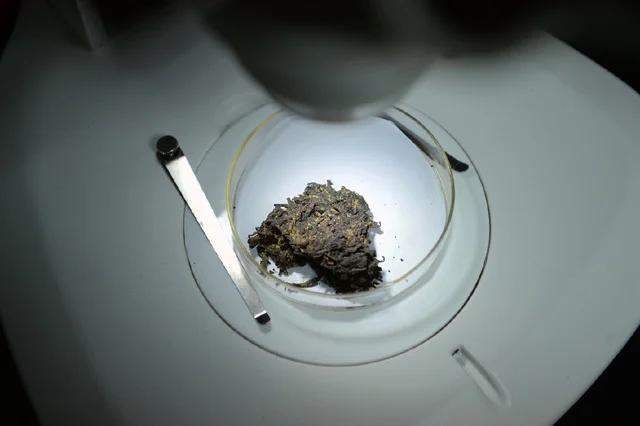
Fu tea flourished during the Song, Ming, and Qing dynasties and was sold to over 40 countries along the ancient Silk Road, earning it the nickname "Black Gold of the Silk Road." The quality characteristic of Fu tea comes from "golden flowers"—Eurotium cristatum, a probiotic beneficial to the human body. In the late 1950s, due to adjustments in national tea industry policies, the Fu tea industry as a whole moved south, and the tea-making techniques of Jingyang once faced the risk of being lost. Ma Hongyan, general manager of Shaanxi Youren Guli Fu Brick Tea Co., Ltd., recalled feeling deeply saddened upon learning that the Jingyang Fu tea technique had been interrupted for decades.
The starting point for the revival of Fu tea was the scientific decoding of the "golden flower" fermentation process. In 2017, the Northwest A&F University Jingyang Fu Tea R&D Center was established in Fu Tea Town, Jinghe New City. Ma Hongyan brought tea samples to the center, and the research team isolated, purified, and propagated the fungal strains, providing data support for the first time for a fermentation process that previously relied on natural conditions and empirical judgment. Subsequently, platforms for Fu tea germplasm resource protection, strain selection, intelligent processing, and new product research and development were successively established, and the traditional 14 tea-making processes were broken down into 128 quantifiable standard steps. Intelligent tea pressing equipment, aseptic fermentation workshops, and intelligent automated warehousing were gradually put into use, allowing the industry to gradually shed its dependence on the weather. Shaanxi Arctic Palace Biotech Group has expanded the application of golden flower fungus into six major tracks, including traditional Chinese medicine, health products, food, and cosmetics, building a new "golden flower" industrial cluster.
Technological breakthroughs have driven the expansion of the industry scale. Currently, the annual output value of Fu tea production enterprises in Xixian New Area has reached 1.2 billion yuan, pushing the comprehensive output value of Xi'an's Fu tea industry chain to exceed 2.7 billion yuan. Fu tea is exported to more than 40 countries and regions, with export value nearly tripling last year. Its brand value ranks among the top 50 Chinese tea regional public brands and has been selected for the Ministry of Agriculture and Rural Affairs' 2025 Brand Quality Cultivation Plan. Fu Tea Town covers an area of 2,200 mu and is a national 4A-level scenic spot, receiving over 4 million visitors annually. The China Fu Tea Culture Museum has received over 500,000 visitors since its opening. Fu Tea Town has been recognized as a China Rural Tourism Maker Demonstration Base, a Xi'an Nighttime Consumption Cluster, and a Shaanxi Provincial Intangible Cultural Heritage Characteristic Demonstration Block.
At the end of April this year, the Fu Energy Laboratory in Jinghe New City, Xixian New Area, overcame key technical challenges in the industrial application of golden flower fungus. The platform collaborated with multiple universities and partnered with a new-style tea brand to launch four new Fu tea products, including pure tea, milk tea, and fruit tea. From the China-Central Asia Summit to international cultural exchange events, Fu tea has made multiple appearances at major foreign affairs occasions. In 2024, Fu tea from Fu Tea Town was successfully exported to Kyrgyzstan, achieving a breakthrough in bulk exports. That same year, three Fu tea products won one gold and two silver awards at the Moscow Tea Expo. In April this year, at the World Mayors' Dialogue·Xi'an event, Fu tea enterprises participated in the exhibition with classic tea products and distinctive cultural and creative items. Chen Chong, deputy general manager of Xixian New Area Fu Tea Town Cultural Industry Group Co., Ltd., stated that Fu tea is not just a beverage but also a cultural medium. They will continue to activate the heritage of Fu tea through technological innovation and connect with the young market through diverse products.
This article is compiled by Wedoany. All AI citations must indicate the source as "Wedoany". If there is any infringement or other issues, please notify us promptly, and we will modify or delete it accordingly. Email: news@wedoany.com
Related Products


4HS-8 High-efficiency Peanut Inverted-laying Harvester
Hebei Yongfa Hongtian Agricultural Machinery Manufacturing Co., Ltd.


Industrial and Commercial Point-Type Gas Detector
Jinan Benan Technology Development Co., Ltd.