Shift in Australian Container Terminal Fee Structure: Transport Operators Become Primary Customers
en.Wedoany.com Reported - A fundamental shift is underway in the fee structure of Australian container terminals. The latest price increases effective July 2026 show that transport operators have effectively replaced shipping lines as the primary customers in the terminal revenue framework.
According to the Container Stevedoring Monitoring Report 2024–25 released by the Australian Competition and Consumer Commission (ACCC), shipping lines contributed 88.6% of stevedore revenue in the 2009-10 financial year. By the 2024-25 financial year, this share had fallen to 50.5%. The gap has been filled primarily by transport operators, trucking companies, and freight forwarders through Terminal Access Charges (TACs) and a range of landside fees that were virtually non-existent a decade ago. At the stevedore level, transport operators contribute approximately 49.5% of revenue: TACs alone amount to AUD 642 million, plus AUD 508 million in other landside fees, including vehicle booking system fees, weight misdeclaration fees, and ancillary gate fees. These fees are non-negotiable and unilaterally set.
Empty Container Park (ECP) gate fees emerged in 2016, initially at just AUD 5.50 per gate pass, and have grown into a significant and rapidly expanding revenue stream. As of July 2026, data from 67 ECP operators covering all five capital city ports shows: at the Port of Sydney, TACs rose from AUD 210 to AUD 225 (up 7.1%), and ECP gate fees increased from AUD 174.56 per leg to AUD 194.96 (up 11.7%); at the Port of Melbourne, TACs rose from AUD 215 to AUD 225 (up 4.7%), and ECP gate fees increased from AUD 107.97 per leg to AUD 138.74 (up 28.5%); at the Port of Brisbane, TACs rose from AUD 210 to AUD 220 (up 4.8%), and ECP gate fees increased from AUD 123.17 per leg to AUD 139.91 (up 13.6%); at the Port of Fremantle, TACs rose from AUD 195 to AUD 210 (up 7.7%), and ECP gate fees increased from AUD 120.52 per leg to AUD 129.88 (up 7.8%); at the Port of Adelaide, TACs rose from AUD 185 to AUD 200 (up 8.1%), and ECP gate fees increased from AUD 87.28 per leg to AUD 98.92 (up 13.3%).
At Sydney's most expensive depots—SWIFT Logistics (AUD 269.28 per leg), ACFS, and the TYNE network (AUD 258-260 per leg)—a truck completing a standard import-export container cycle at Port Botany faces a total burden (including TACs, vehicle booking system fees, and ECP fees) ranging between AUD 637 and AUD 786 per container. When stevedore landside fees and ECP gate fees are combined, transport operators account for approximately 68% of total revenue, compared to nearly zero in 2010. Shipping lines have been repositioned to a minority share of 32%.
ACCC data reveals a productivity paradox: stevedore operating profits grew by 130% over five years to AUD 808 million; EBITDA margins reached 34.8%, the highest in 27 years of monitoring and more than double the industrial sector benchmark; and return on tangible assets reached 45%. However, quay crane productivity fell from 64.8 containers per hour in the 2019-20 financial year to 56.6 in the 2024-25 financial year; truck turnaround times increased; and terminal utilization hit a seven-year low of 62%, indicating significant spare capacity. The ACCC concludes that profits reflect market structure rather than operational performance, describing them as "structural and unlikely to be temporary."
Transport operators did not choose to become the primary funders of terminal infrastructure. Trucking companies must use any terminal contracted by the shipping line and pay whatever fees that terminal sets, with no avenue for appeal. These costs are passed down through the supply chain, ultimately affecting consumer goods prices. It is estimated that AUD 1.7 billion in non-negotiable landside fees are generated annually from the supply chain—fees that did not exist a decade ago. The July 2026 ECP price increases have become a critical juncture for regulatory response. The ACCC has twice refrained from formal intervention, but its own findings indicate the market will not self-correct.
Regional ports are seen as potential alternatives. Regional ports serving hinterland communities could offer lower-cost alternatives through lower landside costs, simpler access arrangements, and shorter haul distances. July 2026 marks a clear turning point: transport operators have become the primary funders of terminal infrastructure, yet they have no contracts, no representation in pricing frameworks, and no meaningful choices. This structural issue is accelerating change, and participants in the supply chain need to reassess their transport routes and cost structures.
This article is compiled by Wedoany. All AI citations must indicate the source as "Wedoany". If there is any infringement or other issues, please notify us promptly, and we will modify or delete it accordingly. Email: news@wedoany.com
Related Products


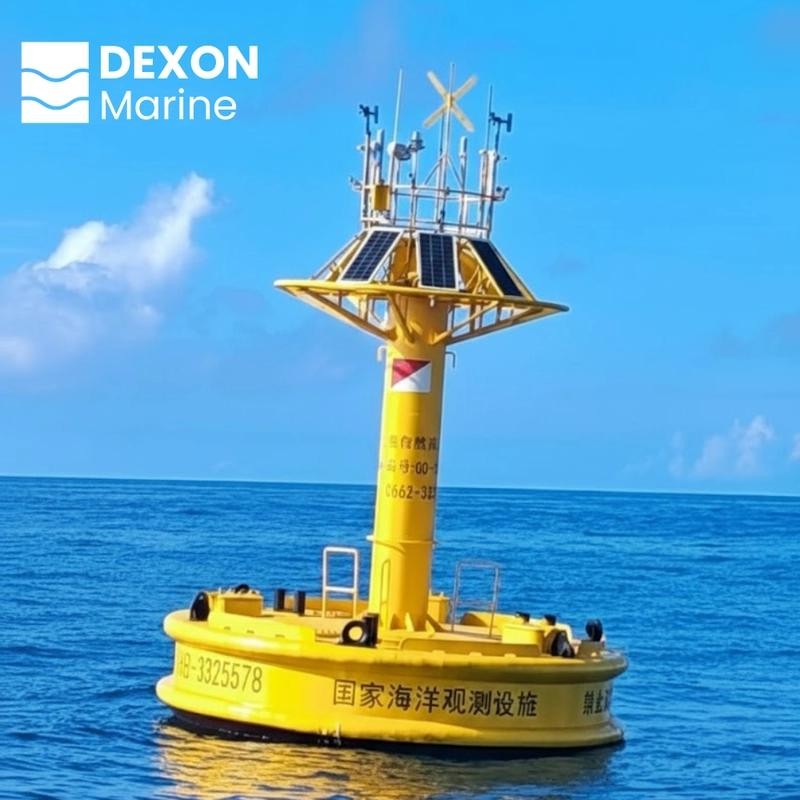
3m intelligent buoy combining navigation safety and real-time marine monitoring integrated navigation and marine monitoring system for real-time maritime data
Chengdu Dixin Technology Co., Ltd.

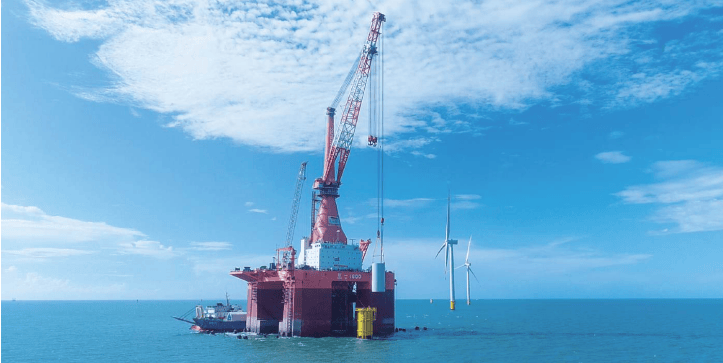
"Shunyi 1600" Deep-submerging Bottom-sitting Multi-functional Wind Power Engineering Vessel
Zhengli Offshore Engineering Co., Ltd.