en.Wedoany.com Reported - Following the European Commission's adoption of its strategic roadmap for digitalization and Artificial Intelligence in the energy sector, 48 partners signed the cooperation agreement for the AI.grids project.
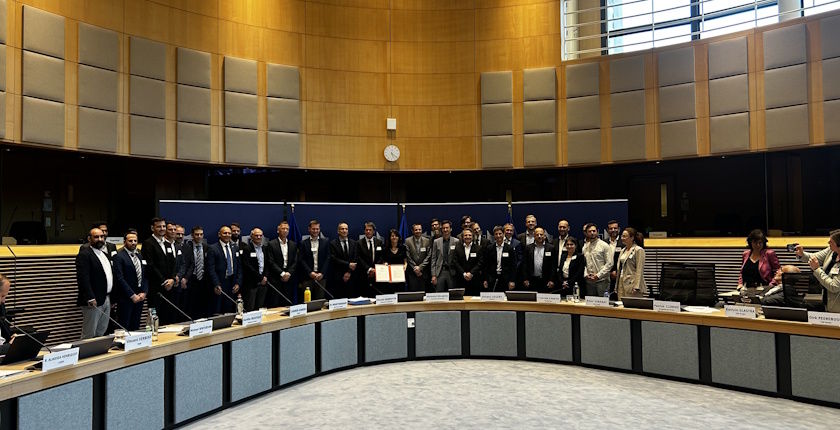
The partners include the non-governmental organization CRESYM, transmission and distribution system operator associations E.DSO and ENTSO-E, the association T&D Europe, 12 transmission system operators (TSOs), 6 distribution system operators (DSOs), 21 research institutions, and 5 enterprises.
According to ELES, the EU roadmap envisions AI becoming a cornerstone of the energy system, with data as its key value and digitalization as a fundamental prerequisite for the energy transition. By 2030, AI in the energy sector could improve energy system management, achieving significant operational savings by 2035. However, since digitalization (data centers) also increases energy consumption, it must be introduced and managed sustainably.
ELES emphasized that the goal of the AI.grids project is to develop a pan-European foundational AI model for power grids. During the model development process, priority use cases will be identified, unique data exchange and management standards will be established, synthetic databases will be created, and the planning, learning, and evaluation of physics-based AI models will be defined.
The AI model is expected to assist transmission system operators and distribution system operators in areas such as predicting grid operation, generation and consumption, congestion management and fault detection, assessing connection capacity, optimizing renewable energy generation, and infrastructure planning. Against the backdrop of increasingly complex grids and a rising share of variable renewable energy, AI can help manage grids and energy equipment more efficiently and at lower cost.
The European Commission believes that its own AI models and algorithms are key to achieving strategic autonomy and enhancing competitiveness, noting that the United States and China currently lead the EU on this path. According to ELES, the first prototype of the foundational model is expected to be developed within one year, followed by two years of systematic evaluation and feasibility assessment. The partners will allocate an initial 2.5 million euros for project implementation.
This article is compiled by Wedoany. All AI citations must indicate the source as "Wedoany". If there is any infringement or other issues, please notify us promptly, and we will modify or delete it accordingly. Email: news@wedoany.com