en.Wedoany.com Reported - Associate Professor Wenhua Zhao from the University of Queensland's School of Civil Engineering has completed the design of a floating offshore wind turbine scale model suitable for 3.6-megawatt turbines, claiming that its construction and installation costs are 40% lower than comparable floating wind structures.
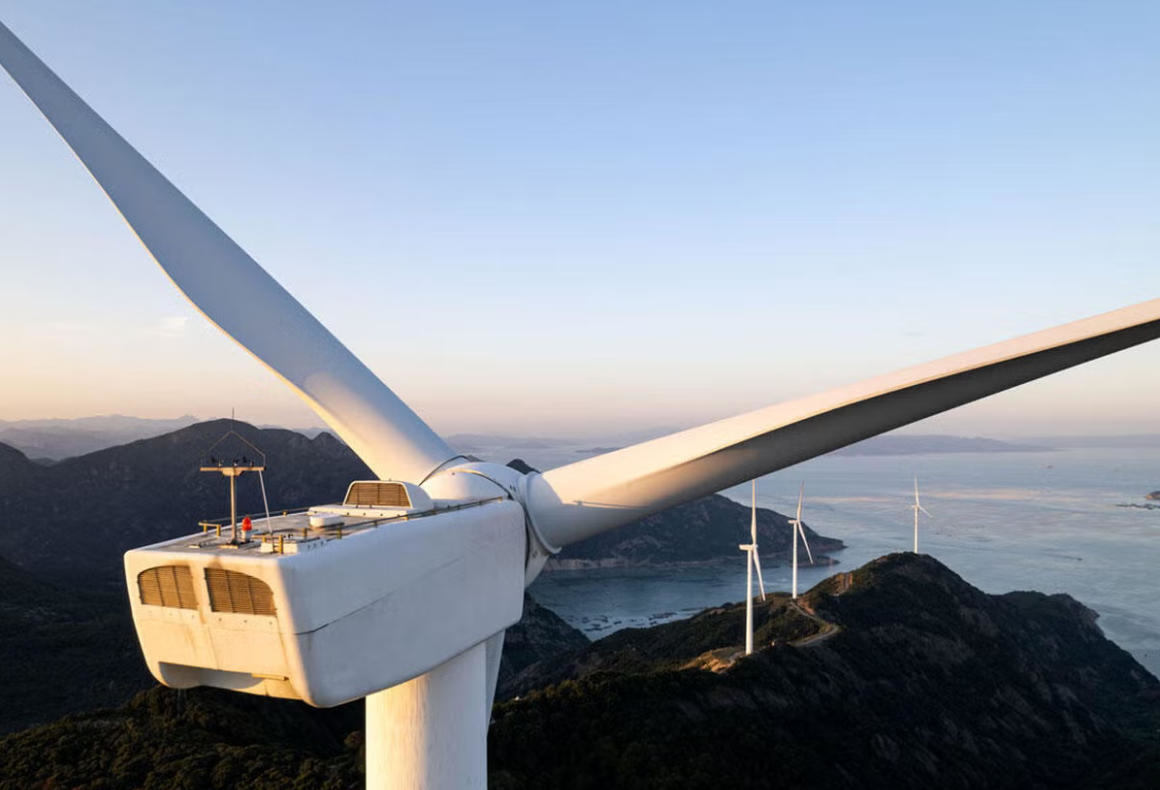
Floating turbines can be deployed in harsh marine areas such as deep seas where winds are consistently strong, without being limited by water depth, and have therefore attracted attention from governments and the marine industry in multiple countries. However, Dr. Zhao noted that although the technology has secured investment, the cost challenges posed by the complex substructure and anchoring mechanisms remain a major obstacle.
Dr. Zhao stated that the current cost of floating turbines is approximately twice that of fixed-bottom turbines in shallow water and nearly four times that of onshore turbines. To overcome this barrier, Dr. Zhao's team designed the scale model using simple geometric structures based on first principles of marine hydrodynamics. The model uses conventional marine construction materials and lowers the center of gravity through internal stability characteristics, keeping the wind turbine tower vertical even under strong wind conditions, thereby improving power generation efficiency.
The design can support an 87-meter tower and blades with a diameter of 120 meters, floating in water 200 meters deep. Simulation tests show that it can withstand once-in-a-century storms, whereas traditional fixed-bottom offshore turbines were previously only suitable for water depths of 50 to 60 meters. Dr. Zhao confirmed that the prototype can be scaled up to support full-size towers similar to those on land, further enhancing its practical prospects. The design also offers a longer service life with reduced maintenance requirements. Tests conducted at Shanghai Jiao Tong University's world-leading deepwater basin facility in China further validated the feasibility of the design.
Dr. Zhao stated that the technology is expected to enter commercial application or implementation within the next two years. He is exploring with industry partners the possibility of scaling down the turbines for niche applications, providing cheaper and more flexible energy solutions for the offshore industry. Application scenarios include providing clean power for offshore operations, decommissioning of aging offshore platforms, emerging offshore aquaculture, and future deep-sea data centers.