en.Wedoany.com Reported - Ministers from seven Pacific island nations—Fiji, the Federated States of Micronesia, Kiribati, Nauru, the Marshall Islands, Tuvalu, and Vanuatu—have signed the Pacific Blue Shipping Partnership (PBSP) Charter, jointly launching a comprehensive reform of domestic shipping in Oceania. The partnership was formally established at the inaugural PBSP Ministerial Council meeting in Majuro, with Palau and Tonga expected to join as well.
The PBSP headquarters will be based in Majuro, Marshall Islands, and Hilton Kendall, Minister of Transportation of the Marshall Islands, was elected as its first chairperson. Kendall described the signing as a "historic moment for Pacific regional cooperation," stating that the charter transforms a shared vision into a permanent institution to drive the transition toward cleaner, more resilient, and more economical maritime transport.
The establishment of this partnership aims to address long-standing challenges in domestic shipping across the Pacific region. The region's aging fleet operates some of the world's longest and most expensive island routes. One of its top priorities will be to apply for funding from the Green Climate Fund to support a demonstration fleet of low-carbon, wind-powered vessels, while also investing in maritime maintenance facilities, training programs, and institutional capacity building.
This initiative builds on the climate leadership demonstrated by Pacific nations at the International Maritime Organization (IMO) and seeks to apply similar ambition to domestic shipping networks. It will also expand projects such as the cargo sailing vessel Juren Ae, developed for the Marshall Islands Shipping Company, to serve remote atoll communities.
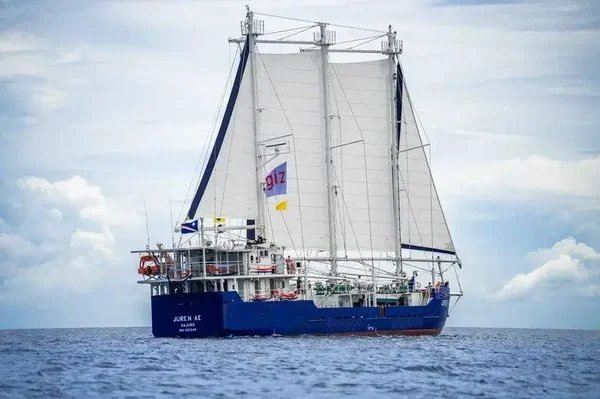
Pacific island nations face one of the world's most severe shipping challenges. Their fleets are small, aging, and costly to maintain, with routes that are long and often economically unviable. For instance, the cost of a single voyage between outer islands can exceed that of a coastal route in Australia, and vessels are frequently decades old. Through institutionalized regional cooperation, the PBSP pools resources to modernize fleets, attract climate financing, and build shared infrastructure. The plan's focus on low-carbon demonstration vessels reflects the Pacific's leadership role at the IMO, applying it to the domestic shipping networks where costs and emissions are highest.
This article is compiled by Wedoany. All AI citations must indicate the source as "Wedoany". If there is any infringement or other issues, please notify us promptly, and we will modify or delete it accordingly. Email: news@wedoany.com