NASA Activates First Major New Wind Tunnel in Over 40 Years
en.Wedoany.com Reported - The U.S. National Aeronautics and Space Administration (NASA) activated the Flight Dynamics Research Facility at Langley Research Center in Hampton, Virginia, last Friday. This is the agency's first major new wind tunnel to be put into operation in more than 40 years, which researchers will use to test scale models of aircraft, rockets, drones, parachutes, and atmospheric entry vehicles.
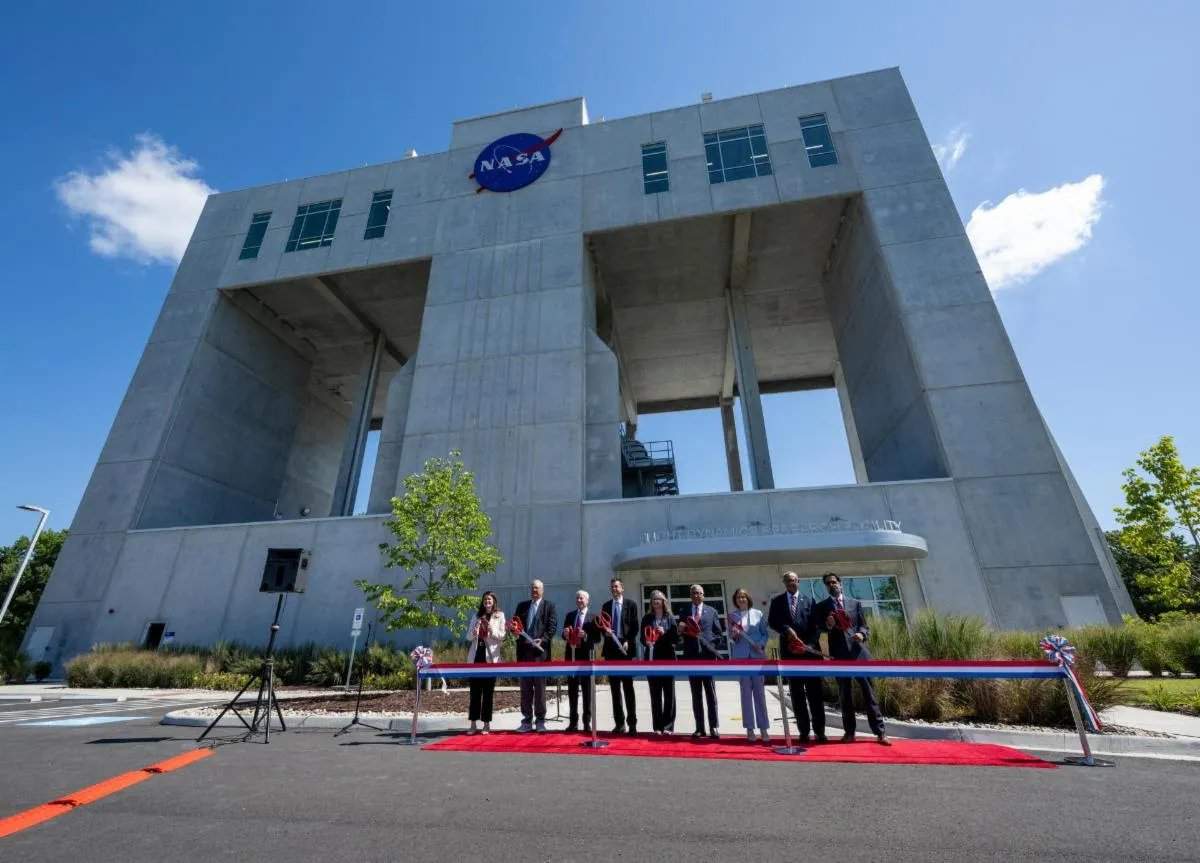
NASA Administrator Jared Isaacman said the new facility provides a new platform for testing ideas and technologies that could shape the future of aviation and exploration. Spanning 25,000 square feet, the facility consolidates capabilities previously handled separately at Langley by the 20-Foot Vertical Spin Tunnel and the 12-Foot Low-Speed Tunnel. Its 20-foot-diameter test section can accommodate larger models, with a maximum wind speed of 117 miles per hour—twice the top speed of the old facilities. The airflow is driven by four 750-horsepower motors powering four 14-foot-diameter fans, each equipped with eight carbon-fiber blades, allowing researchers to adjust airflow during free-flight testing.
The facility supports fixed-mounted testing and also allows unsupported models to be placed directly in the tunnel's vertical airflow for experimentation. According to NASA, planned research covers aircraft stability and spin characteristics, autonomous flight testing, drone development, and evaluation of vehicles designed for entering planetary atmospheres. Higher wind speeds mean heavier models can be tested and full-scale vehicle performance at higher altitudes can be simulated.
Built in partnership between NASA and the U.S. General Services Administration, the facility is the fourth new building delivered under Langley's 20-year campus revitalization plan, replacing aging research infrastructure that had served for decades.
Related Products


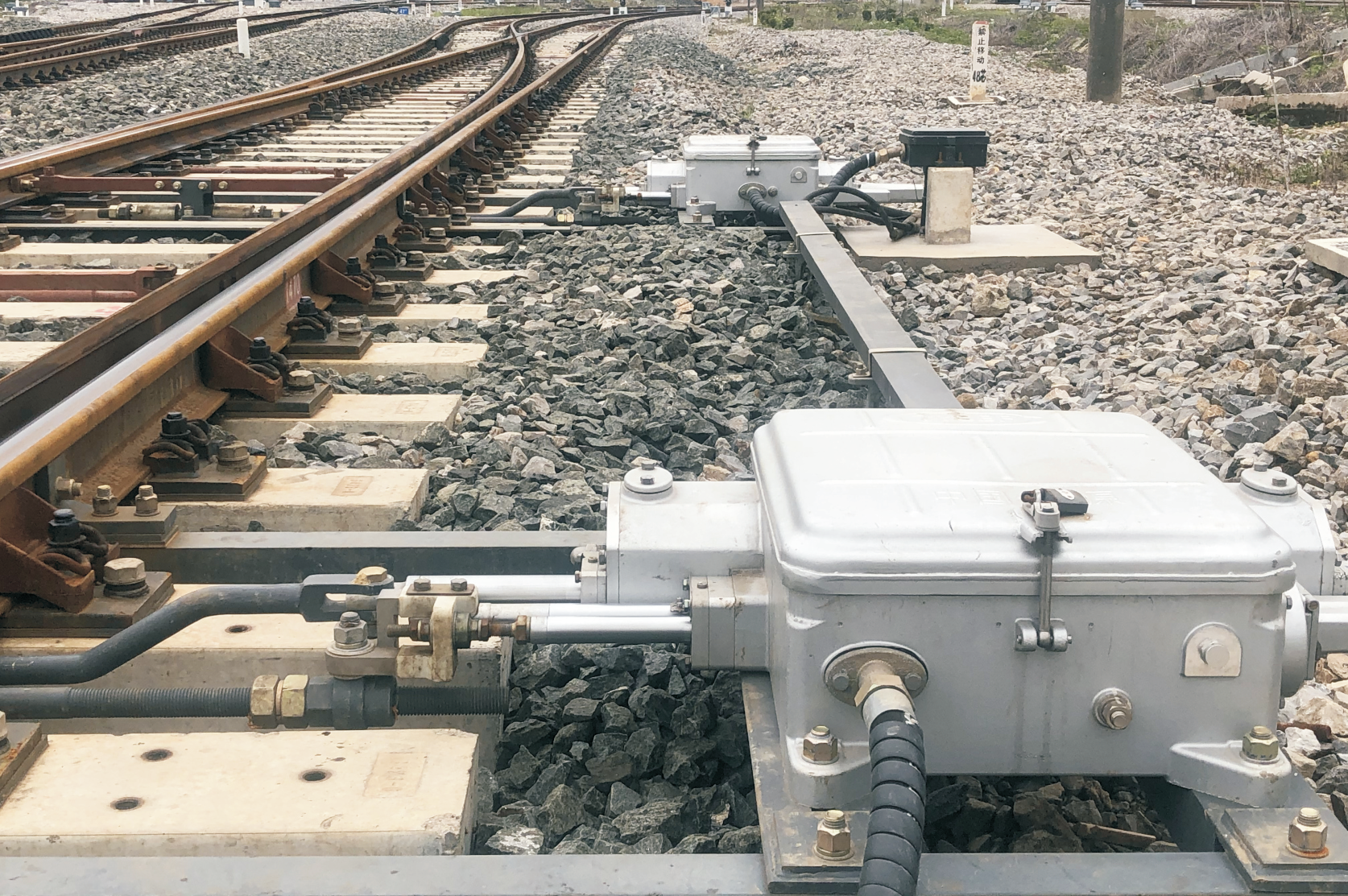
ZY(J)7(M) Sealed Type Electro-Hydraulic Turnout Machine
TAIYUAN CR JINGFENG EQUIPMENT TECHNOLOGY CO., LTD.
![IVECO Cash-in-Transit [DMT5048XYCL3-AM] - Chongqing Dima Industry Co., Ltd](https://img.wedoany.com/2026/0911/20260911030157582.png)

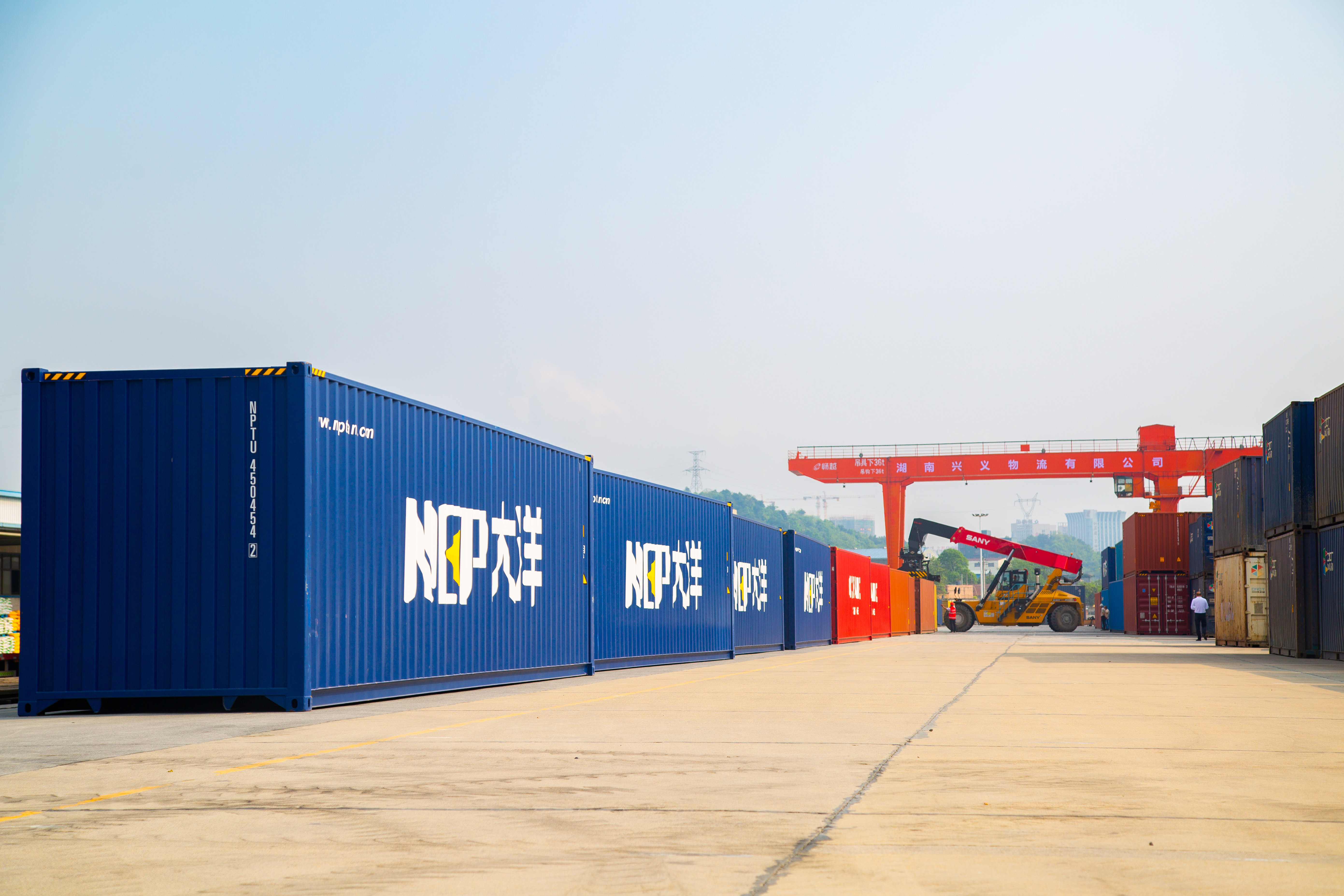
China - Alashankou/Khorgos - Europe Full Range Transportation (Mala/Hamburg/Duisburg/Budapest, etc.)
Shenzhen Neptune Logistics Co., Ltd.
ERW Welded Pipe (Black Pipe and Hot-dip Galvanized Steel Pipe)
Handan Zhengda Steel Pipe Co., Ltd.
One-Stop Steward Service for the Entire Logistics System Integration Chain
Zhongding Intelligent (Wuxi) Technology Co., Ltd.