en.Wedoany.com Reported - The São Paulo state government has changed the monitoring method for the water supply safety level of the Cantareira system, replacing the previous approach based solely on the average water level of all São Paulo reservoirs with a dedicated monitoring of the reservoir curve alongside the Integrated Metropolitan System (SIM).
Water supply safety monitoring in São Paulo will still be divided into seven levels based on hydrological conditions, which guide the measures of the drought contingency plan. Under the new method, the hydrological status of the two curves will be jointly assessed monthly by the Committee for the Integration of Agencies for Water Security (Comitê de Integração das Agências para a Segurança Hídrica), and the action level will be determined by the most severe condition. In the event of an abnormal occurrence causing an unexpected level transition, the committee will convene immediately.
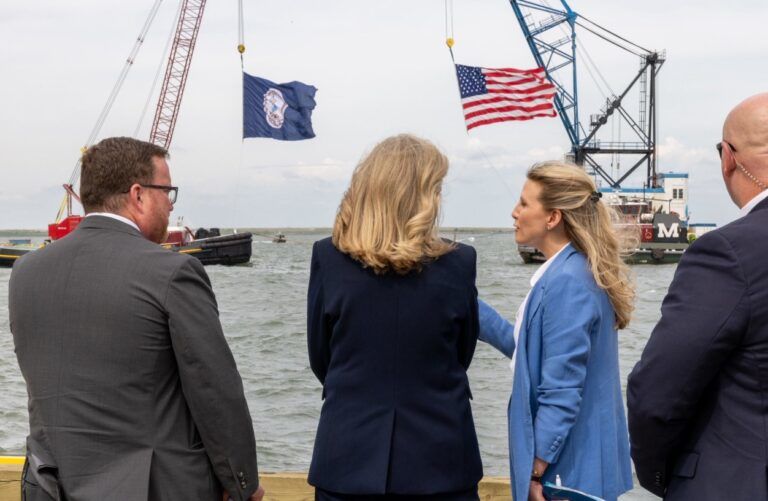
"This method places a strong emphasis on prevention and emergency response, increasingly enhancing predictability by treating the hydrological cycle as a whole," said Natalia Resende, Secretary of the São Paulo State Department of Environment, Infrastructure and Logistics (Semil), during a press conference held on the 19th at the Semil-SP headquarters in São Paulo city.
The new system will also expand the analysis time window to include hydrological behavior over the past 15 years, whereas the previous window started from 2021. The department stated that extending the analysis period can capture the historical impacts of El Niño and La Niña.
"In line with recommendations from international agencies such as the National Oceanic and Atmospheric Administration (NOAA), a 10- to 15-year moving average better captures this climate variability, especially for short-term forecasts. Here, we consider short-term as one year, which is indeed short-term from the perspective of the historical hydrological cycle sequence," explained Camila Viana, President of SP Águas, the São Paulo state water resources regulatory agency, during the press conference.
The document considered input from Arsesp (São Paulo State Public Utilities Regulatory Agency) Public Consultation No. 14 of 2025, which aimed to improve the methodology for action levels and the minimum requirements for contingency plans. The public consultation also focused on refining the monitoring and level transition criteria that guide contingency plan measures, one of which is reducing water pressure during specific periods, known as Nighttime Demand Management (GDN). Arsesp President Diego Domingues emphasized during the press conference that all levels include measures to prevent water loss. This change will be published by Arsesp through a resolution next Monday (22nd), and the document was also jointly developed by Semil-SP and SP Águas.
Alongside monitoring, the São Paulo government is advancing water resilience projects, such as the Billings-Taiaçupeba water transfer project, scheduled for delivery in 2027. The project, under the responsibility of Sabesp (São Paulo State Basic Sanitation Company), involves an investment of 1.4 billion reais and aims to increase water flow by 4,000 liters per second. Four additional water resilience projects are expected to be completed in the São Paulo metropolitan area between this year and 2030.
This article is compiled by Wedoany. All AI citations must indicate the source as "Wedoany". If there is any infringement or other issues, please notify us promptly, and we will modify or delete it accordingly. Email: news@wedoany.com