Saudi Aramco Evaluates Polypropylene Technologies, Market Projected at $200.4 Billion by 2030
en.Wedoany.com Reported - V. R. KARRI and P. G. KANE of Saudi Aramco have conducted a comprehensive technical evaluation of current mainstream polypropylene (PP) production platforms, focusing on process efficiency, catalyst performance, and environmental impact.
With the widespread application of polypropylene in packaging, automotive, and consumer goods industries, global demand continues to grow, driving large-scale capacity expansions in East Asia and the Middle East. This evaluation reviews four major technology platforms, including slurry, bulk (liquid propylene), gas-phase, and multizone processes. The study analyzes key technical parameters of each platform, assesses operational flexibility and scalability, and calculates the carbon footprint of each technology to evaluate alignment with emerging sustainability requirements. Based on the authors' years of technical and operational experience, combined with publicly available technical data and operational best practices, this evaluation provides a decision-support framework for process engineers and project developers to select the appropriate PP production technology platform based on feedstock availability, product specification requirements, and environmental compliance strategies.
PP Overview. In response to the growth in global plastic consumption, demand for polypropylene—one of the most versatile and widely used thermoplastics—has increased significantly over the past decade, particularly in East Asia and the Middle East. PP is the second-largest thermoplastic commodity globally, after polyethylene. Its lightweight nature, recyclability, expanding healthcare applications, and advancements in catalyst and process technologies continue to open new application areas. PP was discovered in the early 1950s, and its commercial importance began in 1954 when Guilio Natta developed stereospecific Ziegler-Natta catalysts, enabling the production of isotactic and syndiotactic polypropylene. With a low density (0.9 g/cm³–0.91 g/cm³), good tensile strength, chemical resistance, stress crack resistance, and a relatively high heat deflection temperature, PP is known as the "poor man's engineering plastic," gradually replacing higher-cost polymers and traditional materials.
PP Product Types. Commercial PP grades are mainly classified as homopolymers, random copolymers, and impact copolymers (heterophasic or impact PP). Homopolymer PP offers high crystallinity, stiffness, and heat resistance, making it suitable for thin-wall packaging, fibers, injection-molded parts, and living hinge applications. Random PP introduces a small amount of ethylene into the PP chain, improving transparency and toughness, and is suitable for clear packaging, medical devices, and flexible containers. Heterophasic PP consists of a PP matrix with a dispersed ethylene-propylene rubber phase, providing excellent low-temperature impact strength, and is suitable for automotive parts, household appliances, and industrial containers. PP can form living hinges that withstand hundreds of thousands of bending cycles without breaking.
Structure-Property Relationships. PP product performance is primarily determined by molecular weight (MW) and molecular weight distribution (MWD). Flow properties are characterized by the melt flow rate (MFR), expressed in grams per 10 minutes (g/10 min). Mechanical stiffness is assessed via flexural or tensile modulus. MWD is mainly determined by the polymerization catalyst system and can be adjusted by changing reactor conditions such as hydrogen concentration. Crystallinity is quantified by measuring the xylene solubles (XS) fraction, with higher XS values indicating a larger amorphous component. The catalyst system plays a key role in determining XS levels. Material toughness measures the ability to absorb energy and undergo plastic deformation, expressed in kilojoules per square meter (KJ/m²) through standardized impact tests. Higher rubber content improves impact resistance, and the amount of rubber phase is controlled by the relative productivity of the second reactor.
Global PP demand continues to grow steadily. The global PP market was valued at $93.5 billion in 2021 and is projected to reach $200.4 billion by 2030, with a compound annual growth rate of 10% from 2024 to 2030. The market is primarily driven by demand from the packaging and automotive industries, with the Asia-Pacific region expected to grow the fastest, with significant contributions from China and India. Sustainability trends are reshaping the polymer landscape, with initiatives promoting a circular economy enhancing PP's environmental profile and long-term viability.
PP Process Technologies. Commercial production technologies can be categorized into slurry, bulk, gas-phase, and multizone processes.
Slurry PP Process. Uses Ziegler-Natta or metallocene catalysts for propylene polymerization in an inert hydrocarbon diluent such as hexane or heptane. Polymer particles are suspended in the solvent, and heat is removed via external circulation through heat exchangers. After polymerization, the polymer is separated from the solvent through flashing and/or filtration, and the wet polymer powder is dried, degassed, and purged. Due to the development of high-activity catalysts, the slurry process has become largely obsolete.
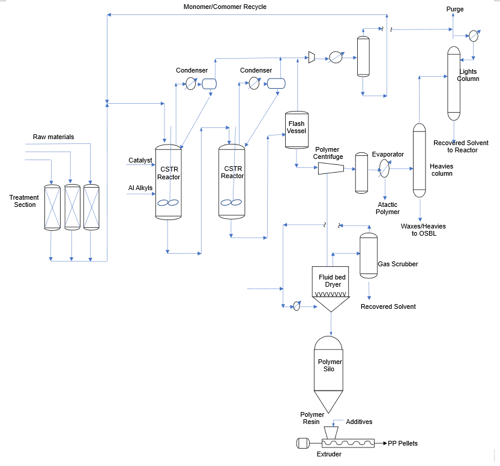
Bulk (Liquid Propylene) PP Process. Liquid propylene serves as both monomer and reaction medium. Polymerization occurs in a loop reactor, with heat removed through the reactor wall and jacket. The polymer slurry is depressurized to recover propylene. The bulk process offers high productivity, excellent hydrogen response, and good particle morphology, and is widely used for large-scale PP production.
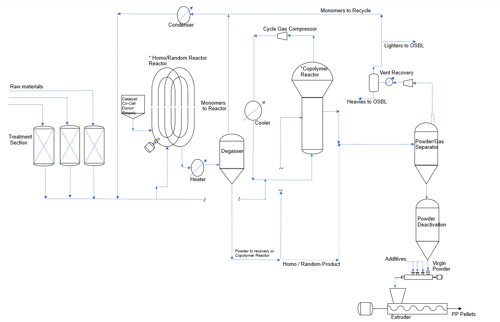
Gas-Phase PP Process. Uses fluidized bed or stirred gas-phase reactors, with heat removed through circulating gas cooling and partial condensation of propylene. Solvent-free and operationally flexible, it is suitable for modular capacity expansion but requires careful control of particle morphology and fines.
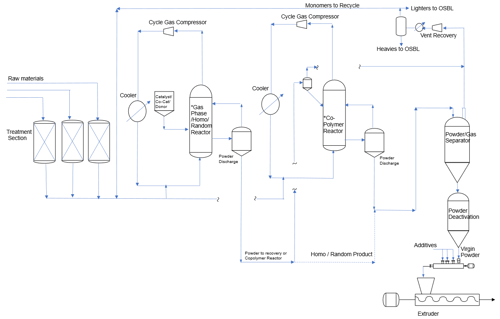
Multizone PP Process. Employs a single circulating reactor with distinct reaction zones such as a riser and a downer, allowing the production of graded or bimodal polymers. It combines high flexibility with a reduced number of reactors but requires complex control and catalyst stability.
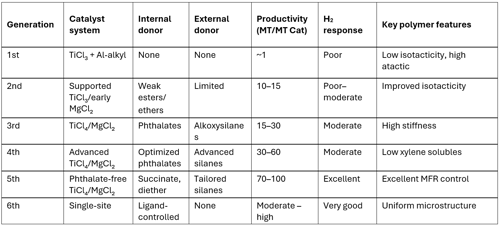
PP Catalyst Evolution. Early generations of catalysts enabled basic stereocontrol but had low activity and high ash content. Intermediate generations introduced magnesium chloride-supported catalysts with internal and external donors. Advanced Ziegler-Natta catalysts, including phthalate-free systems, offer excellent stereoregularity and molecular weight control. Single-site (metallocene and post-metallocene) catalysts provide uniform active sites, narrow molecular weight distribution, and precise comonomer placement.
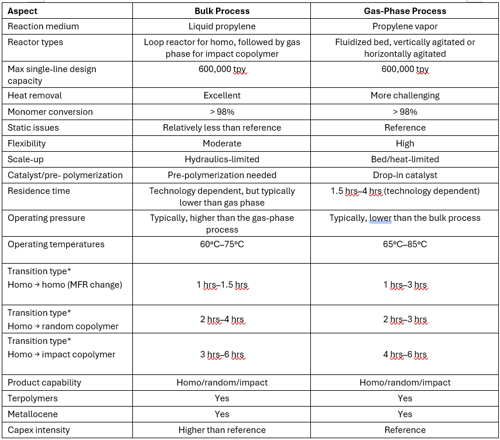
Key Features: Bulk vs. Gas-Phase. Both processes are highly optimized and widely used globally.
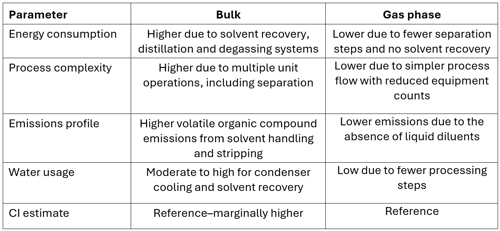
Carbon Intensity. Carbon intensity (CI) is a metric used to assess greenhouse gas emissions. PP production is energy-intensive and traditionally relies on fossil fuel feedstocks, significantly contributing to greenhouse gas emissions. Efforts to reduce the carbon intensity of PP manufacturing include adopting renewable energy, improving process efficiency, integrating circular economy principles such as mechanical and chemical recycling, and developing bio-based PP derived from renewable feedstocks like bio-propane.
Technology and Licensor Selection Considerations. Selection must balance market demand, operability, risk, capital efficiency, and long-term economics. Key selection criteria include technical aspects (process type, heat removal, hydrogen response, etc.), operability and maintainability, product portfolio and market fit, and commercial and sustainability aspects. The technology platform should be selected based on the required product grades and production volume, supported by a techno-economic analysis.
This article is compiled by Wedoany. All AI citations must indicate the source as "Wedoany". If there is any infringement or other issues, please notify us promptly, and we will modify or delete it accordingly. Email: news@wedoany.com
Related Products


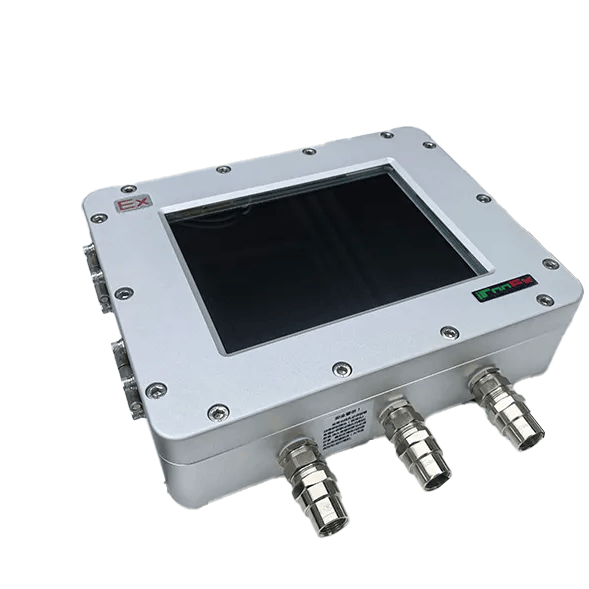
Industrial and Commercial Point-Type Gas Detector
Jinan Benan Technology Development Co., Ltd.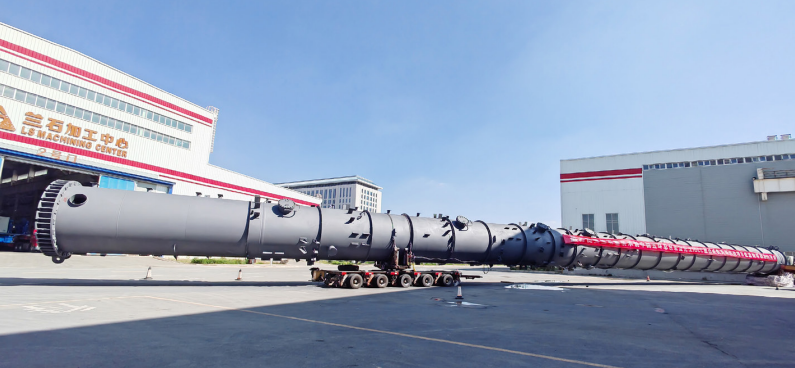
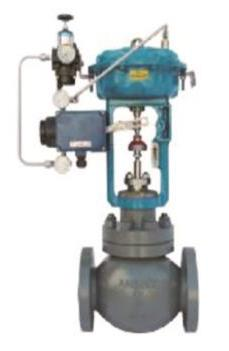
Quick-Change Single-Seat Control Valve / Quick-Change High-Pressure Single-Seat Control Valve
Beijing Consen Automation Technology Co., Ltd.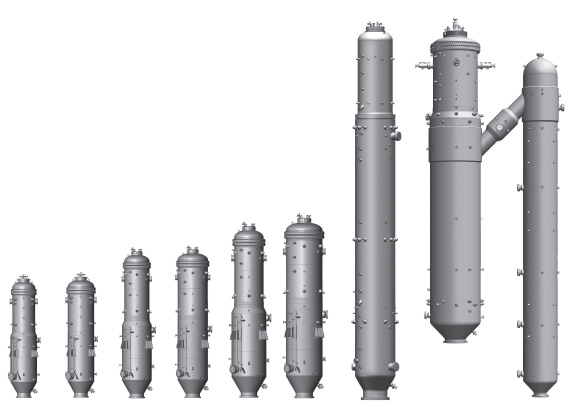
Gasification Furnace Series: Freely Combinable Aerospace Furnace
CHANGZHENG ENGLINEERING CO., LTD.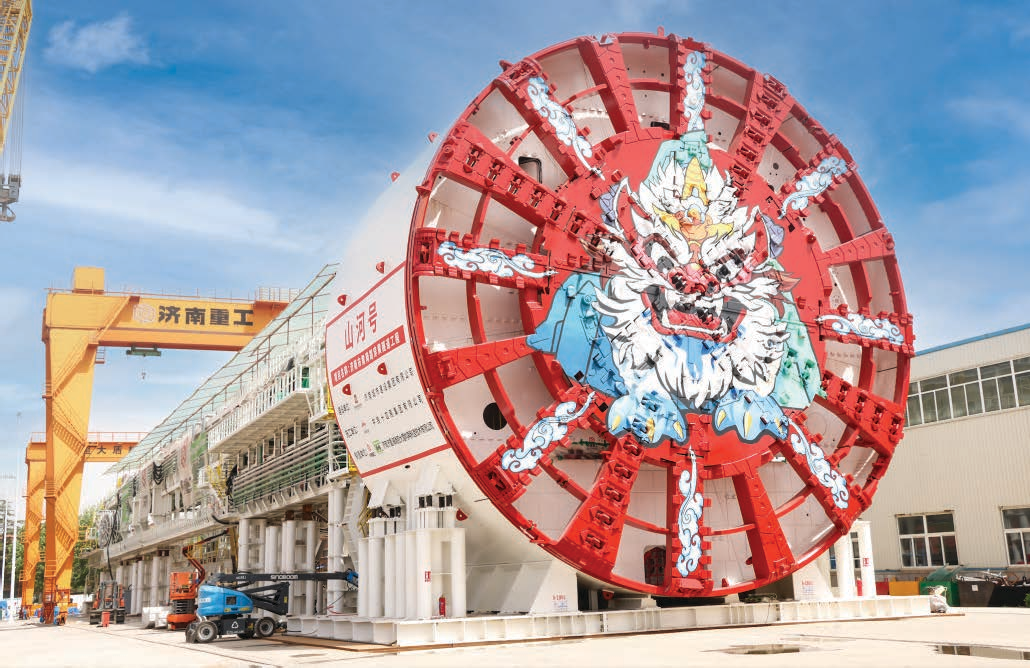
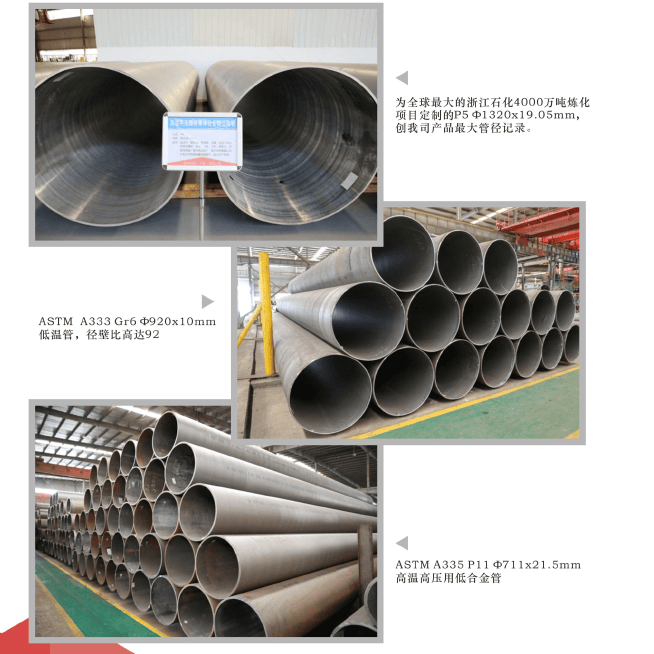
Steel Plates for Chemical Pressure Equipment
Gansu JISCO Group Hongxing Iron and Steel Co., Ltd.