Panasonic Validates Cockpit Virtualization Platform on Google Cloud
en.Wedoany.com Reported - Panasonic Automotive has completed validation of its vSkipGen cockpit virtualization platform on Google Cloud's C4A-metal servers, focusing on the software development process for in-vehicle cockpit systems. The solution targets automakers building software-defined vehicles, where cockpit domain controllers are increasingly becoming the core computing system for in-car displays and functions.

With vSkipGen, developers can build, test, and validate cockpit software in the cloud without fully relying on physical prototype hardware. The platform supports Android Automotive OS and Android SDV, aiming to simulate behavior when running software on in-vehicle cockpit hardware. Google Cloud's C4A-metal is a bare metal server solution based on its Arm architecture Axion, configured with 96 vCPUs, 384GB and 768GB memory options, up to 100Gbps network bandwidth, and support for Hyperdisk storage types.
This deployment reflects a broader shift in the automotive industry, where manufacturers are trying to move more software development away from scarce and expensive physical test platforms. Digital twin systems are used to simulate cockpit hardware, enabling engineering teams to conduct development and validation earlier in the vehicle design phase. Panasonic Automotive describes vSkipGen as a digital twin of physical cockpit domain controller hardware. To create a hardware-independent Android virtual machine environment, it uses components from the Android Cuttlefish virtual device platform. Its core is a virtual machine monitor built on crosvm, with Linux KVM providing hardware-assisted virtualization, a backend implemented in Rust, and the system virtualizing peripherals through the VirtIO standard, including audio, graphics processing, sensors, cameras, controller area network (CAN), Bluetooth, and Wi-Fi. This allows software teams to interact with virtual devices in the same way as with physical hardware. The platform can also connect to automotive simulators and software-in-the-loop environments, enabling teams to run scenario tests and automated validation without early access to production hardware.
One of the main technical challenges in cloud-based cockpit development is graphics rendering, especially for modern in-vehicle interfaces that rely on complex visual systems across multiple displays. Panasonic Automotive says its Unified HMI addresses this by separating HMI rendering from the virtual machine itself. In this architecture, OpenGL ES commands are offloaded from the Cuttlefish instance to GPU-equipped computing resources on Google Cloud, and the rendered interface is streamed via WebRTC to a web browser, allowing distributed development teams real-time access to high-fidelity visuals. Unified HMI also aims to create a unified virtual display layer across multiple electronic control units and virtual machines, allowing applications to render from different locations in the architecture to different displays in the cockpit system.
For automakers, the practical effect is the ability to build and validate a complete Android Automotive OS software stack before physical cockpit hardware is available. The system can also support multiple isolated cockpit domain controller instances in parallel, suitable for automated testing and continuous integration workflows. Andrew Poliak, Chief Technology Officer of Panasonic Automotive Systems Company of America, said the infrastructure reduces reliance on physical prototypes. Poliak stated that Google Cloud's Axion Bare Metal has become a "game changer" for the vSkipGen platform. By providing scalable, high-performance Arm-based infrastructure, C4A-metal enables teams to develop and test production-intent software in the cloud that closely matches the behavior of target automotive hardware. This cloud-to-vehicle bit consistency reduces dependence on expensive physical prototypes, improves validation efficiency, increases test coverage, and accelerates time-to-market for next-generation cockpit platforms.
The two companies noted that this model can reduce development costs and the environmental impact associated with repeated hardware prototyping. They also stated that using open technologies including crosvm, Rust, and VirtIO as part of the software stack aims to maintain portability across different stages of vehicle development. C4A-metal is available globally through Google Cloud's bare metal portfolio, and Panasonic Automotive said that vSkipGen with Unified HMI for Google Cloud will be available for evaluation access.
Related Products
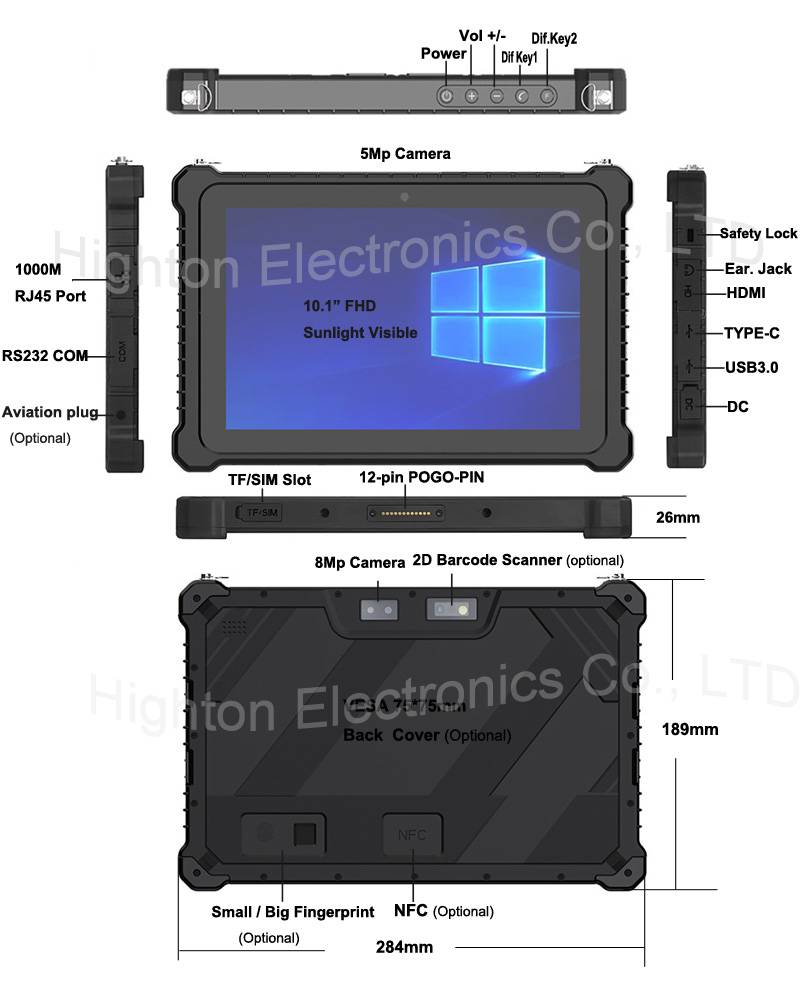

Hot Selling 10 Inch Intel N5100 I5 I7 FHD 8 +128GB 16+256GB Win10 Pro Win11 Pro 4G 5G Rugged Tablet PC Pad with NFC Barcode
Highton Electronics Co., Ltd.


G.652.D Wavelength-extended Non-dispersion Shifted Single-mode Optical Fiber
HONGAN GROUP CO., LTD.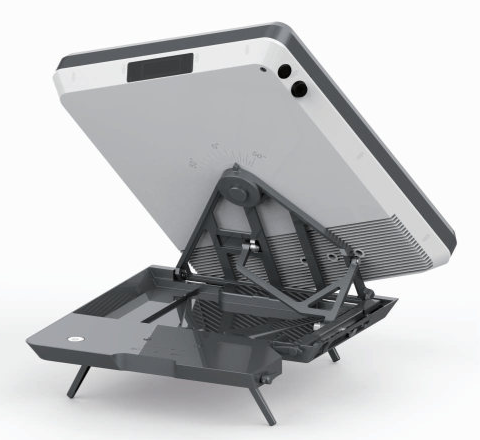
Flat Portable Satellite Terminal 0.35m Aperture Manual Portable Terminal
China Starwin Science & Technology Co., Ltd.
Industrial and Commercial Point-Type Gas Detector
Jinan Benan Technology Development Co., Ltd.



Mine Explosion-proof and Intrinsically Safe Industrial Ethernet Ring Network (10 Gigabit/Gigabit)
Chongqing Mas Sci&Tech Co., Ltd.